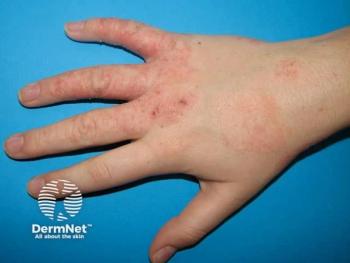
New review explores why eczema and ADHD often overlap in youth, highlighting sleep loss, itch-driven inflammation, plus screening and treatment tips.
Experts discuss innovative topical therapies for pediatric AD, emphasizing individualized treatment and the importance of managing itch and sleep quality.
Shanna Miranti, MPAS, PA-C; Tina Bhutani, MD, MAS; and Walter Liszewski, MD, recently shared evolving perspectives on managing moderate to severe pediatric atopic dermatitis (AD), highlighting both the expanding range of topical therapies and the essential role of individualized treatment approaches, in a recent Dermatology Times Expert Perspectives custom video series. Each expert brought unique clinical insights to the discussion, underscoring the complexity of treating pediatric AD and the critical importance of quality-of-life considerations, especially for young patients and their families.
A Growing Arsenal of Topical Treatments
Miranti, a board-certified physician assistant at Riverchase Dermatology in Florida and a Dermatology Times editorial advisory board member, described an exciting shift in pediatric AD management thanks to the increasing availability of nonsteroidal topical options. Agents such as ruxolitinib (Opzelura; Incyte), tapinarof (Vtama; Organon), and roflumilast (Zoryve; Arcutis Biotherapeutics) offer flexibility in tailoring treatment plans based on age, disease severity, and caregiver involvement.
In younger children, particularly those aged 2 to 5 years, Miranti often prefers tapinarof, which is approved by the FDA for that age group and suitable for sensitive areas like the eyelids and groin. For patients 6 years and older, roflumilast 0.15% is a favorable option, especially in cases with seborrheic features. Ruxolitinib, approved for patients 12 years and older, is typically reserved for adolescents experiencing severe itch, although upcoming FDA approvals aim to expand its use to younger children by late 2025.
Miranti emphasized that topical therapies remain essential, even when introducing systemic or biologic agents. She likened topicals to “touch-up paint”—a necessary adjunct for managing flares, residual inflammation, or localized itch, reinforcing the idea that multimodal strategies are key for long-term disease control.
Managing Itch, Sleep, and Burden
Across all the discussions, itch relief emerged as a top therapeutic priority. Miranti noted that rapid antipruritic effects, especially those seen with ruxolitinib cream within 15 minutes, can dramatically improve adherence and patient satisfaction. The ability to promise swift relief is particularly impactful for caregivers, who often rank itch just behind sleep disruption as a major concern.
Sleep loss remains a central issue in pediatric AD, affecting not only the child’s development and emotional well-being but also the household’s functionality. Miranti stressed that effective treatment is not just about symptom control; it’s about restoring critical physiological processes like sleep, which are foundational to a child’s growth and recovery.
Shared Decision-Making
Bhutani, CEO of Synergy Dermatology in San Francisco, California, and associate clinical professor at the University of California, San Francisco, emphasized the importance of collaborative decision-making with families. Given the increasing number of topical options, Bhutani narrows choices to a few viable agents and then engages caregivers in the final selection. When needed, she offers gentle guidance framed in relatable terms—“If this were my child, I’d choose this”—to build trust and improve adherence.
Bhutani also considers quality-of-life factors such as impaired sleep, growth delays, or nutritional concerns when deciding whether to escalate pediatric patients to systemic therapy. Although topical agents remain her mainstay for younger children—where adherence is typically higher due to caregiver involvement—she does not hesitate to advance to systemic options in moderate to severe AD cases where the disease disrupts overall functioning.
Looking ahead, Bhutani expressed enthusiasm for the anticipated FDA approval of ruxolitinib cream for children as young as 2 years. She also highlighted ongoing studies involving roflumilast and tapinarof in infants younger than 2 years, which could further expand the treatment landscape for the youngest and most vulnerable patients.
Navigating Chronic AD with Precision
Liszewski, a clinician at Northwestern University, brought a highly relevant perspective to the conversation, especially for adolescent patients and those with long-standing disease. He emphasized that many patients with AD have lived with the condition since early childhood, which often leads to diverse expectations about treatment intensity and outcomes.
Liszewski continues to rely on topical corticosteroids but is increasingly turning to nonsteroidal agents for long-term management, especially in delicate areas such as the face, neck, and genital region. He favors roflumilast for its lack of propylene glycol, which is important for patients with contact sensitivities, and appreciates its “cosmetic elegance.”
He also highlighted topical JAK inhibitors, particularly ruxolitinib, for their rapid onset of action. Like their oral counterparts, topical JAK inhibitors can deliver meaningful itch relief within hours, making them an excellent option for focal, severe disease. For chronic hand eczema, which often includes atopic and irritant components, Liszewski finds JAK inhibitors highly effective.
One limitation he noted is body surface area restrictions, especially with smaller-sized topical tubes. For extensive disease, he often combines potent agents like ruxolitinib for high-priority areas with less potent or larger-volume treatments such as tacrolimus for milder regions. This strategic layering optimizes treatment coverage while managing cost and access constraints.
Expanding Access and Future Options
All 3 clinicians agreed that although topical innovation has transformed pediatric AD care, further progress is needed. Miranti and Liszewski highlighted the demand for larger tube sizes, as limited quantities can impede effective treatment for widespread disease. Liszewski also expressed hope for simplified dosing schedules, such as once-daily or even every-other-day regimens, to improve long-term adherence.
Ultimately, the future of pediatric AD care lies in more targeted, tolerable, and versatile topicals that can address inflammation and itch without the risks associated with chronic steroid use. With agents such as ruxolitinib, tapinarof, and roflumilast leading the way, clinicians are better equipped than ever to tailor therapy to each child’s unique presentation—improving outcomes for patients and their families.
12 months ago
Dermatology Times September 2025 Print Recap12 months ago
Cosmeceutical Myths12 months ago
Research-Inspired Tips From DERM 2025about 1 year ago
Balancing Cure and Cosmesis in Mohs Surgeryabout 1 year ago
Undertreated, Underdiagnosed: Experts Address Genital Psoriasisabout 1 year ago
A New Perspective on Seborrheic Dermatitis Managementabout 1 year ago
What Works for Patients with Alopecia Areata