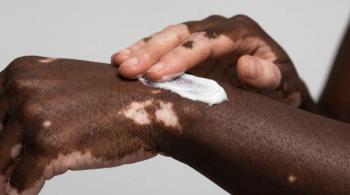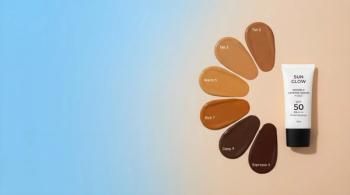
Though convenient, SPF-infused cosmetics rarely deliver their labeled protection level in real-world use, underscoring the continued need for a dedicated broad-spectrum sunscreen as the foundation of any routine.
Cosmeceutical myths abound! Why? Because there are so many varied sources of skin care information delivered through different venues by people of differing educational backgrounds with diverse goals. The internet, social media, and influencers have all adopted skin care as a significant area of interest because of the widespread interest. While this is flattering as it puts dermatology at the forefront of conversation, it also provides an opportunity to disseminate incorrect data. This column will examine some of the popular myths in cosmeceutical science.
Hyaluronic acid is the moisturizing ingredient of the moment. The ability to synthesize hyaluronic acid at an affordable price for topical application has led to the migration of the ingredient from the injectable market into the mass market for skin care. Many formulations include multiple sizes of hyaluronic acid with larger molecular weights staying on the skin surface, medium molecular weights entering the stratum corneum, and lower molecular weights entering deeper into the epidermis.
Hyaluronic acid is not a source of water for skin hydration. Rather, it is like a sponge that helps the skin hold water. This means that if you put pure hyaluronic acid on dry skin, transepidermal water loss will increase, and the skin will get drier. Hyaluronic acid can draw water from the atmosphere only at high ambient humidity, around 70%. So, how does hyaluronic acid work? Hyaluronic acid is combined with other occlusive moisturizers, such as dimethicone, shea butter, petrolatum, and mineral oil. The hyaluronic acid draws water from the viable epidermis and dermis to the skin surface, functioning as a humectant. This water is trapped in the skin with the occlusive moisturizing ingredients, thus increasing skin water content and moisturizing the skin.
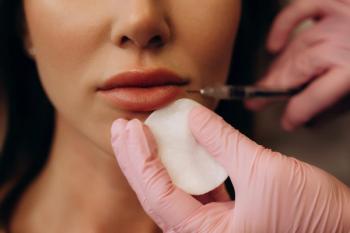
Microneedling has become a popular in-office procedure for the face and back of the hands to create controlled columns of tissue wounding and increase collagen regeneration. Microneedling aids in skin poration and has also been popularized as a procedure to increase the effect of topical serums containing growth factors, peptides, antioxidant vitamins, botanical antioxidants, exosomes, etc. The theory is that the needles create channels into the epidermis and dermis, bypassing the stratum corneum, and allow active ingredients access directly to the target site. Is this a good practice?
Most cosmeceutical serums contain oil and water-soluble ingredients requiring an emulsifier to keep the emulsion stable, antioxidants to prevent the oil-soluble ingredients from becoming rancid, and preservatives to protect the water-soluble ingredients from bacterial contamination. None of these ingredients are skin-friendly. They are designed to sit on top of the skin and not enter it; however, microneedling over the serum might push some of the serum into the skin emulsifiers, antioxidants, preservatives, and all. This is problematic. The situation is no better if the serum is applied after microneedling, except that the pores created by the device snap closed quickly due to the elastic properties of the skin, and less product probably penetrates.
In summary, special preparations that do not contain ingredients that are injurious to the skin should be used for microneedling. These formulations should be developed with skin penetration in mind to ensure safety.
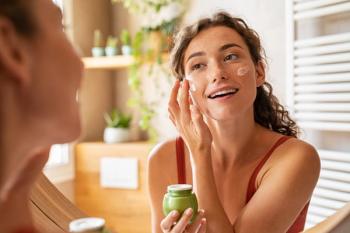
The most common myth I see in consumer news is the concept that moisturizers somehow add water to the skin. The first ingredient in most liquid moisturizers is water. The water is not present in the formulation to add water to the skin, but rather to act as a diluent and viscosity adjustor to create a thin film over the face. The water rapidly evaporates, leaving behind whatever other ingredients were in the moisturizer. These ingredients include oil-soluble substances that retard the evaporation of water, known as transepidermal water loss. The purpose of a moisturizer is to trap water in the skin and prevent evaporation. The water comes from within the skin and not from outside the skin.
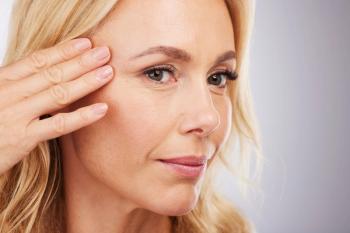
Increased skin water content makes the skin firmer and less flexible, thus minimizing fine lines. Most moisturizers also put a film over the skin surface that smooths out fine lines, much like a wood filler takes the uneven surface of a board and fills in the irregularities. The moisturizer may also contain optical modifiers that add shine to the skin by including light-reflective materials, such as synthetic mica. Not all of the improvement in fine lines and wrinkles seen with moisturizers is due to enhanced skin water content.
Zoe Diana Draelos, MD, is a consulting professor of dermatology at Duke University School of Medicine in Durham, North Carolina, and a Dermatology Times’ editor in chief emeritus.
12 months ago
Dermatology Times September 2025 Print Recap12 months ago
Research-Inspired Tips From DERM 2025about 1 year ago
Balancing Cure and Cosmesis in Mohs Surgeryabout 1 year ago
Undertreated, Underdiagnosed: Experts Address Genital Psoriasisabout 1 year ago
A New Perspective on Seborrheic Dermatitis Managementabout 1 year ago
What Works for Patients with Alopecia Areata