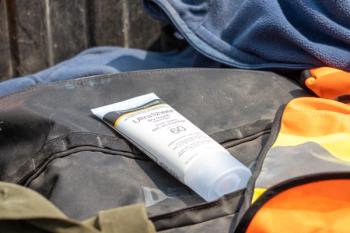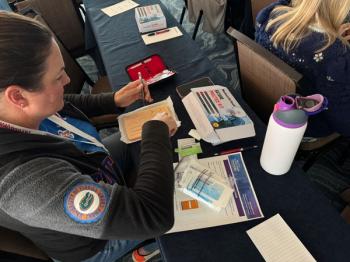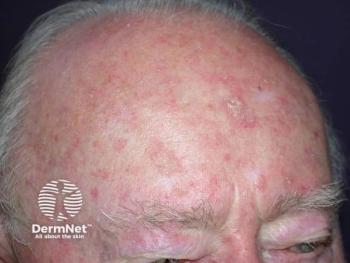
Faculty from the Cutaneous Oncology Workshop answer practical questions spanning skin cancer prevention, diagnosis, treatment, and follow-up.
Explore cutting-edge insights from DERM 2025, focusing on innovative treatments and emerging research in dermatology for improved patient care.
Attendees and speakers agreed: The Dermatology Education Foundation’s DERM 2025 NP/PA CME Conference in Las Vegas, Nevada, was filled with practical tips to improve patient care.
Posters Highlighted New Data and Expert Insights
Attendees had access to more than 70 posters that covered advances in atopic dermatitis, chronic hand eczema, psoriasis, acne, and other dermatology disorders. Dermatology Times spoke with James Song, MD, about early findings from the phase 4 UnlIMMited trial (
“We saw risankizumab works well in both of these areas, with high levels of clearance,” Song told Dermatology Times. “But the patient-reported outcomes—that is what I get really excited about.”2
The early findings at week 16 found 69.1% and 60.8% in the genital psoriasis and scalp psoriasis groups, respectively, achieved clear or almost clear skin in the treatment group, compared with 13.0% in the placebo group. In addition, more than 70% of patients with genital psoriasis said it no longer affected their sexual activity, and 60% reported improved quality of life with their disease having little to no impact. Song expects 52-week data and insights to be available early next year.
Clinical Pearl:To overcome discomfort with discussing genital psoriasis, Song suggests a conversational approach: “Have you ever had a rash in your private areas that you weren’t sure what it was? If so, would you want me to take a look? Because the good news is that we have so many great treatments now for genital psoriasis.”
Scratching at Solutions: Considerations in Chronic Pruritus
Adam Friedman, MD, asked attendees: “Is it an itch that rashes, meaning you are manipulating the skin by scratching and now create visible change, or is a rash that itches a primary skin disease that is pruritic?”3
To answer that question, Friedman emphasized the importance of an initial laboratory workup, ie, differential and comprehensive metabolic panels, considering the kidneys, liver, thyroid, and even potential malignancies.3
In terms of treatment, Friedman told attendees to be aggressive. “Probably the hottest things out there are going to be your topical JAK [Janus kinase] inhibitors and PD-4 inhibitors, both of which have a unique influence on sensory neurons,” he told Dermatology Times. “And then take a little from aisle A, take a little from aisle B. Meaning: Go after neuropathic or nerve-targeting therapies such as SSRIs [selective serotonin reuptake inhibitors], gabapentinoids, in combination with anti-inflammatories.”4
Friedman reminded attendees to consider the basics: soft cotton clothing, nonalkaline soaps, lukewarm water for bathing, and avoiding heat, dry climates, alcohol, spicy food, and frequent bathing. He also noted off-label treatment options, including immunomodulating agents, alternative/complementary medicine, and rescue agents.
Finally, Friedman reported that there are many emerging therapies on the horizon looking at various pathways (eg, JAK1, JAK2, JAK3, IL-13, IL-31RA, OSMRβ, TSLP, KOR agonist, MOR antagonist, NK1R, TrkA, PDE4, TSLP), which will give clinicians and their patients more options.4
Clinical Pearl: For best outcomes, Friedman said, “Be creative, ask lots of questions, don’t forget to look, and absolutely climb the therapeutic ladders that focus on the nerves and inflammation.”
“Forever” Problems: Talking to Patients About Lurking Dangers
Per- and polyfluoroalkyl substances (PFAS), otherwise known as “forever chemicals,” may be causing harm to your patients, Michelle Hure, MD, MS, FCAP, FAAD, reported.5
Hure shared research linking PFAS exposure to atopic dermatitis. For instance, a 2-year longitudinal study of 687 mother-newborn pairs found an increased risk of AD following in-utero exposure, and a 4-year longitudinal study of 839 mother-newborn pairs reported an increased risk of AD with exposure.6,7 Similar studies have linked PFAS with the development of psoriasis, endocrine disruption, decreased vaccine efficacy, and even carcinogenesis.
There are more than 12,000 known PFAS compounds, she explained, and they can be found in everything from nonstick cookware to fast food and candy packaging to water-resistant clothing and stain-resistant products and personal hygiene items such as dental floss and shampoos. One of the biggest culprits of this is cosmetics, Hure added. All of these are bioaccumulative and can adversely impact health.5
Hure encouraged clinicians to talk to their patients about their cosmetic and beauty products, looking especially at those with buzzwords indicative of potential PFAS (eg, wear-resistant, long-lasting, waterproof/water-resistant, and glass skin), as the PFAS may not be listed on the label. It is important to help them understand the risks these products pose to their skin, she said, adding that discontinuing the use of these products should also improve current skin disorders.
Clinical Pearl:When chatting with patients, avoid fearmongering and aim to help them make more mindful choices. “I’m not saying to get rid of everything,” she said. “If you have the choice between the long-wear foundation or the smudge-proof lipstick, maybe it’s worth it to just reapply.”
References
1. Song EJ, Ackerman L, Anschutz T, et al. Safety and efficacy of risankizumab in genital and scalp psoriasis in the UnlIMMited phase 4 randomized clinical trial at week 16. Poster presented at: DERM 2025 NP/PA CME Conference; July 23-26, 2025; Las Vegas, Nevada.
2. Song J, Duerr HA. UnlIMMited data demonstrate risankizumab efficacy in genital and scalp psoriasis. Dermatology Times. July 23, 2025. Accessed August 15, 2025. https://www.dermatologytimes.com/view/unlimmited-data-demonstrate-risankizumab-efficacy-in-genital-and-scalp-psoriasis
3. Friedman A. Itch break: wiping out chronic pruritus. Poster presented at: DERM 2025 NP/PA CME Conference; July 23-26, 2025; Las Vegas, Nevada.
4. Friedman A, Duerr HA. Scratching the itch of pruritus with Adam Friedman, MD. Dermatology Times. July 25, 2025. Accessed August 15, 2025. https://www.dermatologytimes.com/view/scratching-the-itch-of-pruritus-with-adam-friedman-md
5. Hure M. Surfing the toxic stew: forever chemicals and microplastics in dermatology. Poster presented at: DERM 2025 NP/PA CME Conference; July 23-26, 2025; Las Vegas, Nevada.
6. Chen Q, Huang R, Hua L, et al. Prenatal exposure to perfluoroalkyl and polyfluoroalkyl substances and childhood atopic dermatitis: a prospective birth cohort study. Environ Health. 2018;17(1):8. doi:10.1186/s12940-018-0352-7
7. Wen HJ, Wang SL, Chen PC, Guo YL. Prenatal perfluorooctanoic acid exposure and glutathione s-transferase T1/M1 genotypes and their association with atopic dermatitis at 2 years of age. PLoS One. 2019;14(1):e0210708. doi: 10.1371/journal.pone.0210708
12 months ago
Dermatology Times September 2025 Print Recap12 months ago
Cosmeceutical Mythsabout 1 year ago
Balancing Cure and Cosmesis in Mohs Surgeryabout 1 year ago
Undertreated, Underdiagnosed: Experts Address Genital Psoriasisabout 1 year ago
A New Perspective on Seborrheic Dermatitis Managementabout 1 year ago
What Works for Patients with Alopecia Areata