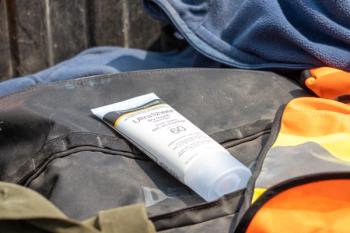
Two new Neutrogena facial sunscreens incorporate bemotrizinol, the first new sunscreen active ingredient added to the US OTC monograph in decades.
Explore insights from Renata Block DMSc, MMS, PA-C, and James Del Rosso, DO, on interpreting clinical trial data in dermatology for enhanced patient care and outcomes.
In this Derm Dispatch interview, Renata Block DMSc, MMS, PA-C, spoke with James Del Rosso, DO, a board-certified dermatologist, Mohs micrographic surgeon, Editor‑in‑Chief of the Journal of Clinical and Aesthetic Dermatology, and Research Director at JDR Dermatology Research in Las Vegas. Known for his dynamic presence in dermatology, Del Rosso joined Block to discuss how clinicians should interpret study data beyond the surface-level numbers presented at conferences and in journal articles.
Del Rosso explained that clinical trials, unlike NASA-level engineering, are not exact sciences. Parameters such as EASI or PASI scores, “clear/almost clear” outcomes, or meta-analyses are often treated as precise measurements, but in reality, they reflect ranges and subjective assessments by multiple investigators at numerous sites. He stressed that clinicians must remember these inherent variabilities before applying findings to patient care.
“Sometimes we focus on those numbers like they're exact,” Del Rosso noted. “They're based on a range of results. It's not an exact science, and we have to remember that, but it's presented as if it is, and people hang on to it as if it is, and that’s really a big mistake we’re making in dermatology, in my mind.”
The discussion also focused on how practitioners read abstracts. Block noted that many clinicians skim abstracts like “CliffsNotes” to decide if a study is relevant. Del Rosso agreed this is practical but cautions against assuming abstracts are free of “spin.” He recommends paying attention to study type, sample size, and consistency of data while recognizing that case series and real-world reports may sometimes offer more meaningful insights than randomized controlled trials. Both emphasized the value of peer journal clubs and group discussions to critically evaluate findings rather than simply absorb them.
Patient-reported outcomes—such as itch reduction or improved sleep—rarely serve as primary endpoints, Del Rosso says, yet they are often what matters most in practice. He applauds the trend toward quality‑of‑life measures in newer studies but urges more collective efforts to publish case series on under‑studied conditions like hidradenitis suppurativa, vitiligo, lichen planus, or rare pustular variants of psoriasis. In the conversation with Block, he issued a “call to action” for clinicians to collaborate and submit such data.
Del Rosso also critiqued lesion count methodology in acne and rosacea trials, noting that simple counts fail to capture lesion quality and visible improvement. A reduction in raw numbers may look unimpressive statistically but be striking to patients in real life. Throughout the interview, he underscored the need to translate research into practical, patient-centered insights. Overall, Del Rosso and Block reinforced the theme that dermatology must look beyond numbers to truly improve patient care.