A retrospective claims analysis of 2897 matched pairs found hazard ratios of 0.48 to 0.67 for new atopic disease with dupilumab vs systemic corticosteroids in children.

Brian Kim, MD, FAAD, explores the Cell Symposia: Neuro-immune Axis, highlighting neuroimmunology's impact on dermatology and systemic medicine.
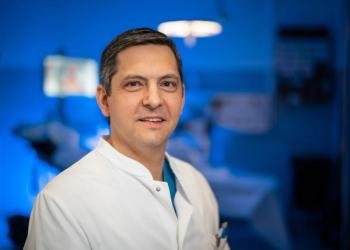
In a recent interview with Dermatology Times, Brian Kim, MD, FAAD, vice chair of research and professor of dermatology at the Icahn School of Medicine at Mount Sinai, discussed the genesis and impact of the
Kim, who also directs the Mark Lebwohl Center for Neuroinflammation and Sensation and the Allen Discovery Center for Neuroimmune Interactions, explained that the decision to host the symposium came at a pivotal moment when neuroimmunology had begun to gain mainstream recognition. Although the endeavor carried financial and reputational risk, the turnout and enthusiasm validated the importance of the field. His goal was not only to highlight the science but to catalyze its acceleration across disciplines.
“There was a lot of skepticism about whether this was, in fact, the right time. I felt very strongly it was, and it was worth taking, in some ways, the risk to say, ‘We're going to do this and put it together,’” Kim noted.
Significantly, the symposium was designed not as a dermatology- or immunology-focused meeting, but as a truly interdisciplinary event. Kim emphasized that modern medicine is moving away from organ-based specialties toward process-based understanding. Diseases like atopic dermatitis (AD), asthma, and food allergy often share common pathophysiological pathways, and thus, therapeutic development is shifting toward targeting these shared mechanisms. For dermatology specifically, Kim sees the specialty as a gateway to solving broader medical challenges. His vision is to use insights from skin diseases to inform systemic medicine, a goal that his laboratory and affiliated centers actively pursue.
“I've said many times over that the goal of my career was to solve big problems in dermatology but also use dermatology to solve big problems in the field of medicine...And this meeting, in many ways, encapsulates that for me on a personal level, but it also is able to showcase all the great science that's being done by so many different labs in the field, and how they're cross-pollinating across many different fields and medical specialties,” Kim said.
Among the most exciting research presented at the meeting was the FDA approval of a vagus nerve stimulation device developed by SetPoint Medical, co-founded by Kevin Tracey, MD. This device leverages the inflammatory reflex to treat biologic-refractory rheumatoid arthritis, with future implications for skin diseases like psoriasis. Another major highlight was work from Asya Rolls, PhD’s group, demonstrating that the brain can “remember” inflammation, suggesting a neurological basis for disease memory and reactivation in conditions like AD.