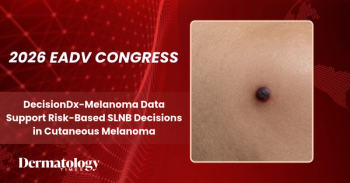
Prospective data suggest DecisionDx-Melanoma may help refine SLNB decisions and identify recurrence risk beyond conventional staging.
Many participants in the mobile screening program have never previously seen a dermatologist.
Mobile dermatology outreach programs are emerging as a pragmatic strategy to address persistent gaps in access, early detection, and patient engagement. In a recent discussion with Dermatology Times, co-founder and dermatologist Karen Babcock Nern, MD, MBA, FAAD, and executive director and biomedical engineer Tamara Terzian, MS, PhD, highlighted the evolution and impact of the
Originally developed through the Colorado Melanoma Foundation, the Sun Bus has expanded into a multi-state program that integrates clinical service with public health research. The model is intentionally multidisciplinary, bringing together dermatologists, scientists, trainees, and community stakeholders. According to Nern and Terzian, this collaborative structure has enabled not only service delivery but also the rapid development of research infrastructure, including multiple IRB-approved studies focused on screening behavior, access barriers, and outcomes.
A central theme of the program is accessibility. Traditional dermatologic care often requires advance scheduling, time off work, and geographic proximity to specialists—barriers that disproportionately affect underserved populations. The Sun Bus addresses these challenges by embedding screening services directly within community settings, including large public events. Convenience, rather than symptom severity alone, appears to be a major driver of participation. Notably, many individuals present without prior dermatologic evaluation; Terzian noted in 2025, more than 65% of surveyed participants reported never having seen a dermatologist.
Clinically, the program functions as a triage system rather than a substitute for longitudinal care. Approximately one-third of participants are referred for further evaluation, suggesting a meaningful yield of potentially concerning lesions. By identifying higher-risk individuals and facilitating earlier referral, the model may help prioritize clinic resources and reduce delays for patients requiring urgent assessment. At the same time, individuals without concerning findings can be reassured and educated, potentially decreasing unnecessary demand on specialty clinics.
Beyond screening, education is a core pillar. The informal, patient-centered environment allows participants to engage with dermatologic care at their own comfort level, addressing common anxieties around full-body skin examinations. This approach may be particularly relevant for populations hesitant to seek traditional care due to stigma, fear, or misconceptions. The program also extends education to medical trainees, offering early exposure to dermatology through hands-on participation and opportunities for scholarly writing. Alongside this initiative, Nern recently launched
Importantly, the initiative has broadened its scope from a primarily skin cancer–focused effort to a more comprehensive skin health program. This shift reflects an understanding that inflammatory and chronic skin diseases also contribute significantly to disease burden and may similarly benefit from early recognition and referral.
While long-term outcomes data are still evolving, the Sun Bus model illustrates how mobile health interventions can complement existing dermatology infrastructure. By combining screening, education, and research, such programs may offer a scalable approach to improving early detection and reducing disparities in dermatologic care—particularly in populations that remain outside the reach of traditional clinical pathways. Keep up with the Sun Bus by signing up for their