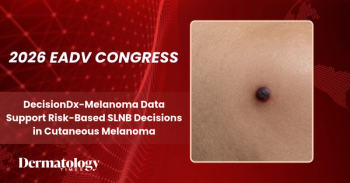
Prospective data suggest DecisionDx-Melanoma may help refine SLNB decisions and identify recurrence risk beyond conventional staging.
The newly published tool, ODD-SPOT, offers a plain-language, photo-supported alternative to the ABCDE criteria, designed to capture the key warning signs of BCC, SCC, and melanoma in accessible terms.
A new patient education tool called
The initiative grew out of a practical frustration. During a board meeting for the Sun Bus, a free mobile skin cancer screening program operating in Colorado, dermatologist Karen Babcock Nern, MD, MBA, FAAD, and biomedical engineer Tamara Terzian, MS, PhD, were discussing the inadequacy of existing educational materials. "The ABCDE standard really is incomplete and misses 95% of skin cancers," said Nern. "And it's also written in language that's really complicated."
The team set out to develop something better. Their methodology was systematic: a literature review spanning 5 major dermatology journals — including the Journal of the American Academy of Dermatology and the British Journal of Dermatology — as well as 5 public-facing patient websites and 5 major dermatology textbooks. They identified and clustered descriptive language used across those sources, then validated word choices through 2 live and survey-based patient studies totaling nearly 1,800 participants. The research, including the complete literature review methodology and survey data, has been
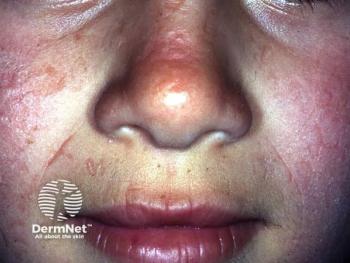
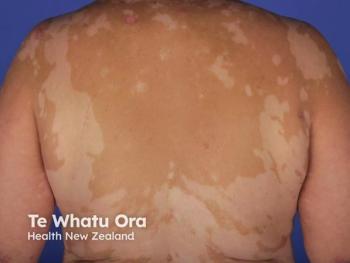
The resulting acronym — Odd looking, Dry and scabby, Discolored, Shiny, Puffy/painful, Open/oozing/bleeding, Transforming — was designed to capture the key clinical presentations of basal cell carcinoma, squamous cell carcinoma, and melanoma, which together account for approximately 99% of skin cancers. ODD-SPOT pairs the written descriptors with clinical photographs licensed from DermNet and is written at a 6th-grade reading level, scoring 100% on the CDC's Clear Communication Index.
From a workflow standpoint, the impact may be measurable. Nern conducted an informal time study in her practice, comparing the traditional ABCDE counseling approach to a brief ODD-SPOT explanation paired with a take-home card. The difference was approximately 1 minute per patient — which, across 20 skin cancer screenings per day, translates to roughly 20 minutes saved daily.
Clinician reception has been broadly positive. Providers on the Sun Bus noted that having a single, image-supported handout covering BCC, SCC, and the ugly duckling sign simplified difficult conversations and reduced the burden of explaining multiple frameworks separately. Medical and PA students working with the program also engaged readily with the material.
With a Spanish-language adaptation completed and a dedicated educational website, ODD-SPOT is positioned to extend well beyond the clinic walls where it was conceived. For clinicians looking to streamline patient counseling without sacrificing clarity, it may prove to be one of the more practical tools to emerge from the skin cancer education space in recent years.