Two-year oral IL-23 data, GLP-1 biomarker findings, and a nonsurgical option for superficial basal cell carcinoma headline the sessions covered in Las Vegas.
With 80% of trial participants being children, this analysis provides some of the most robust early-response data available for a non-steroidal topical in pediatric AD.
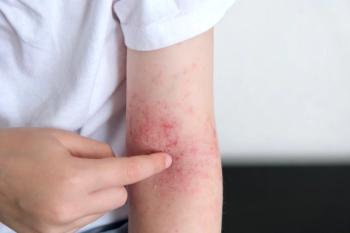
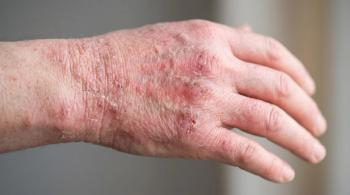
A post-hoc sub-analysis of pooled data from the ADORING 1 and ADORING 2 pivotal trials is putting a finer point on something clinicians have wanted to quantify: just how quickly tapinarof cream 1% (VTAMA, Organon) begins to work — and in whom. Presented at the 2026 American Academy of Dermatology Annual Meeting in Denver, the findings show statistically significant improvements across multiple efficacy endpoints as early as week 1, in a population that skewed heavily pediatric.1
The analysis pooled results from 813 adults and children aged 2 years and older with moderate to severe atopic dermatitis who were randomized to tapinarof cream or vehicle once daily for 8 weeks across the 2 pivotal trials. Roughly 80% of participants were children — a demographic that often complicates both trial design and treatment selection.2
“In treating atopic dermatitis, our goal as health care providers is to find therapies that deliver fast and clinically meaningful skin clearance and itch reduction, and a favorable safety profile,” said Linda Stein Gold, MD, FAAD, director of clinical research and division head of dermatology, Henry Ford Health System, and an author of the analysis being presented at AAD. “The new findings from this analysis demonstrate significant improvements across key clinical endpoints, including reductions in disease severity and itch, as early as week one. Seeing these positive outcomes in many patients across the study, especially since 80% of the trial participants were children, highlights the potential of VTAMA cream to address common symptoms, such as itch, early in the treatment course and provides health care providers with an evidence-based option to help manage the disease.”
The week 1 data will likely draw the most clinical attention. By that timepoint, the Validated Investigator Global Assessment for Atopic Dermatitis (vIGA-AD) response rate, defined as clear or almost clear skin with at least a 2-grade improvement from baseline, was already 5.8% in the tapinarof group versus 1.6% in the vehicle group (P=0.0315). While those absolute numbers are modest, the separation from vehicle at such an early timepoint is notable, particularly in a topical non-steroidal monotherapy.
The EASI75 signal at week 1 was similarly encouraging: 9.0% of tapinarof-treated patients achieved at least a 75% improvement in the Eczema Area and Severity Index compared to 3.3% in the vehicle arm (P=0.0164). By week 8, that gap widened considerably — 57.4% versus 22.1% (P<0.0001).
Perhaps most clinically resonant for patients and caregivers is the itch data. Significant itch relief, defined as a ≥4-point reduction on the Peak Pruritus-Numeric Rating Scale among patients with a baseline score ≥4, was achieved by 18.8% of tapinarof-treated patients at week 1, compared to 11.3% in the vehicle group (P=0.0128). That advantage held and expanded through week 8, where 59.3% of the active treatment group reported meaningful itch relief versus 33.5% on vehicle (P<0.0001).
One of the more striking findings from the analysis is that nearly all tapinarof-treated patients — 96.9% — showed some degree of EASI improvement from baseline by week 8. That breadth of response across a heterogeneous, largely pediatric cohort adds a layer of clinical confidence beyond what the response-rate thresholds alone convey.
The tolerability profile mirrored what has been reported in the prescribing information. Treatment-emergent adverse events occurring in at least 3% of any group included folliculitis, headache, upper respiratory tract infection, and nasopharyngitis, a pattern consistent with the drug's previously established safety profile across both its approved indications.
Tapinarof functions as an aryl hydrocarbon receptor agonist, a mechanism distinct from topical corticosteroids, calcineurin inhibitors, and PDE4 inhibitors — and its steroid-free profile has been a point of interest for long-term and sensitive-area use. The FDA approved the cream for atopic dermatitis in adults and pediatric patients aged 2 and older in December 2024, following its earlier 2022 approval for plaque psoriasis in adults.3
What this new pooled analysis adds is temporal granularity: a clearer picture of when patients begin responding and how consistently that response builds. For a condition where patient and caregiver frustration with slow-acting therapies is a documented barrier to adherence, the week 1 onset data may carry practical weight in shared decision-making conversations.
References