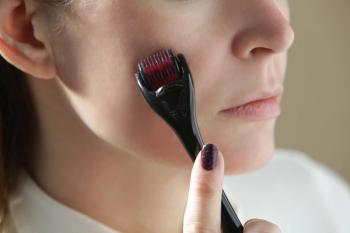
Can at-home dermarollers give the same results as in-office microneedling or is that just a myth? Read more about the latest social media trend and learn how to counsel your patients in the clinic.
Even without deep penetration, peptide moisturizers can improve the skin’s appearance through hydration and smoothing effects.
Many of my aesthetic dermatology patients are asking about early cancer detection. What is early cancer detection, and how does it work?
Several blood-based cancer detection technologies have been commercialized. The most popular is the prescription Galleri test, which lists melanoma and Merkel cell carcinoma as 2 detectable skin cancers. It cannot detect squamous cell or basal cell carcinoma. The test requires identifying cell-free DNA (cfDNA) in the bloodstream, and basal cell and squamous cell carcinomas do not shed enough DNA for detection. Galleri detects methylated DNA patterns that are associated with active cancer. It has a 70% to 85% advertised accuracy rate for organ-based cancer, such as pancreatic or lung cancer. Compare this with its 46.2% accuracy for melanoma. Currently, a thorough body examination is more effective than commercialized early-detection techniques for skin cancer.
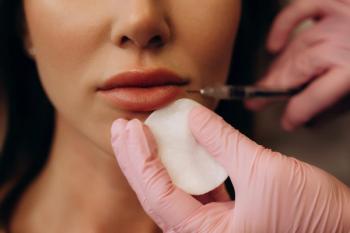
I have seen moisturizers advertised that claim to improve the results of botulinum toxin injections. Do they work, and if so, how?
The popularity of neurotoxin injections has captured the attention of the skin care industry, as people who have the financial resources for expensive botulinum toxin injections are a prime target for expensive facial moisturizers. All moisturizers that claim to improve the appearance of neurotoxin injections work to varying degrees. Because toxin injections reduce the ability of the muscles to contract, thus decreasing lines and wrinkles, they do not affect the smoothness and softness of the skin. A moisturizer improves texture more effectively than a toxin injection; thus, combining moisturizers with injections will yield a superior result.
Many newer moisturizer formulations use peptides to enhance the muscle-boosting effect induced by neurotoxins. The most popular peptide is commercially known as Argireline, the name listed on the ingredient disclosure. Argireline is known generically as acetyl hexapeptide-8, and it consists of 6 amino acids. It destabilizes the SNARE complex, thereby reducing neurotransmitter release and decreasing muscle movement.
Recently, the trend has been to use Argireline in combination with other muscle-relaxing peptides, such as acetyl octapeptide-3 (Snap-8), pentapeptide-18 (Leuphasyl), and dipeptide diaminobutyroyl benzylamide diacetate (Syn-Ake). Acetyl octapeptide-3 also works at the neuromuscular junction like acetyl hexapeptide-8, but targets a different part of the SNARE complex, making the peptides complementary. Pentapeptide-18 is said to mimic a natural peptide known as leu-enkephalin that reduces acetylcholine release, thus enhancing the effect of acetyl hexapeptide-8. Finally, dipeptide diaminobutyroyl benzylamide diacetate, composed of 3 amino acids, mimics a component of temple pit viper venom and is thus sometimes labeled as “snake venom peptide.” It imitates a peptide in the venom that resembles Waglerin-1, a 22–amino acid peptide that competitively blocks muscle nicotinic acetylcholine receptors, causing muscle movement failure.
The cocktail of peptides that inhibits facial muscle activity is believed to be more effective than using a single peptide. The challenge is to achieve peptide penetration into the neuromuscular junction and to allow the peptides to remain at the active site long enough for biological modulation of muscle movement to occur. This can be challenging as the stratum corneum is specifically designed to inhibit the penetration of peptides, because proteins are the primary source of allergens. Nevertheless, the effect of the moisturizing vehicle containing the peptides can certainly improve skin appearance by providing textural enhancement that is not achieved with injectable toxins alone.
I see hyaluronic acid being used in many of the newer skin moisturizers. Does topical hyaluronic acid have the same effect as injectable hyaluronic acid?
Hyaluronic acid provides the same benefit whether applied topically or injected. Hyaluronic acid acts as a humectant, attracting and retaining water. It is the basis for the ability of the dermis to hold water naturally, which can be augmented by the exogenous injection of hyaluronic acid. The injectable hyaluronic acid is cross-linked to extend its duration in the dermis for several months. Injectable non–cross-linked hyaluronic acid would only last days due to degradation by naturally present hyaluronidase in the skin. Topical hyaluronic acid is not cross-linked, as it is intended to penetrate the skin to varying depths based on molecular size. Larger molecular weight hyaluronic acid is designed to sit on top of the skin, whereas smaller molecular weight hyaluronic acid is designed to penetrate into the stratum corneum and epidermis. Topical and injectable hyaluronic acids are the same substance with different skin targets.
Zoe Diana Draelos, MD, is a clinical faculty member in the Department of Dermatology at Duke University School of Medicine in Durham, North Carolina; president of Dermatology Consulting Services in High Point, North Carolina; and Dermatology Times’ editor in chief emeritus.
7 months ago
Dermatology Times February 2026 Print Recap