


Opinion|Videos|June 1, 2026
Diagnostic Workflow in cSCC
Author(s)Gaurav Singh, MD MPH, Shadi Khalil, MD PhD
This episode examines the diagnostic workflow for cutaneous squamous cell carcinoma (cSCC), emphasizing how clinical, pathological, and patient-specific factors inform risk assessment, prognostication, and individualized management strategies.
Advertisement
Episodes in this series
In this episode, “Diagnostic Workflow in cSCC,” the expert faculty explore the complexity and variability of cutaneous squamous cell carcinoma (cSCC) and discuss how clinical presentation, patient history, and pathology findings influence diagnostic evaluation and prognostication. The panel highlights how cSCC encompasses a broad spectrum of disease behaviors, with risk influenced by factors such as chronic ultraviolet exposure, immunosuppression, chronic inflammation, HPV exposure, and prior radiation exposure.
The expert faculty discuss how anatomical location, lesion size, growth pattern, and clinical morphology contribute to treatment planning in daily practice. Particular attention is given to how tumors in high-risk areas, including the head and neck, may behave differently than lesions arising on other body sites. The panel also reviews the role of pathology in identifying aggressive disease features, including poor differentiation, perineural invasion, and extensive mitotic activity, as well as the challenges associated with diagnosing poorly differentiated tumors. Additionally, the discussion emphasizes the importance of integrating clinical examination and evolving diagnostic tools to support more individualized management approaches for patients with cSCC.
The next episode in this series, “Staging Systems and Risk Stratification in cSCC,” features the panelists discussing the evolving role of gene expression profiling and other molecular tools in refining prognostication, improving treatment selection, and identifying patients who may benefit from adjuvant therapies and multidisciplinary management in cSCC.
Advertisement
Related to this article

A retrospective claims analysis of 2897 matched pairs found hazard ratios of 0.48 to 0.67 for new atopic disease with dupilumab vs systemic corticosteroids in children.
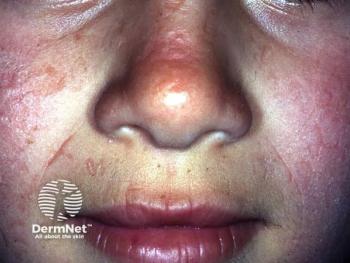
Disc Medicine reports the phase 3 APOLLO trial met all primary and secondary end points, with whole-blood PPIX reduced 41.4% vs placebo and an NDA resubmission planned by end of 2026.

Castor oil has become a popular social media remedy for thicker, longer hair, but evidence supporting its ability to stimulate hair growth remains limited.
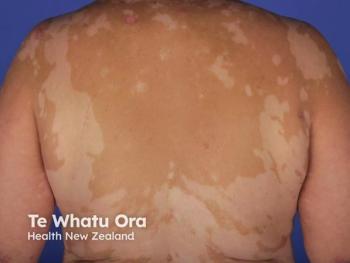
The FDA clearance allows Edesa to expand an ongoing placebo-controlled study of the CXCL10 antibody EB06 to US sites, with topline data expected in the fourth quarter of 2027.

The novel oral helicase-primase inhibitor demonstrated significantly higher rates of complete lesion healing compared with investigator’s choice treatment in the phase 3 PRIOH-1 trial.
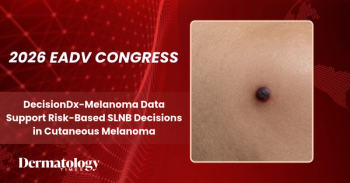
Prospective data suggest DecisionDx-Melanoma may help refine SLNB decisions and identify recurrence risk beyond conventional staging.

Falk G. Bechara, MD, discusses long-term tunnel control, structural damage, and the evolving role of biologics and surgery in HS care.

Galderma has agreed to acquire ZO Skin Health for $1.5 billion, adding the physician-dispensed skincare brand to a portfolio that already includes Cetaphil and Alastin.
Advertisement
Advertisement
Trending on Dermatology Times
1
Social Media Mythbusters: Can Castor Oil Really Grow Hair?
2
Bitopertin Meets All End Points in Phase 3 APOLLO Trial for EPP
3
EADV 2026 Atopic Dermatitis Highlights: Tilrekimig, RAC2 Inhibition, and Level Up Data
4
FDA Approves Pritelivir for Refractory Mucocutaneous HSV in Immunocompromised Adults
5