


Opinion|Videos|September 30, 2025
Diagnostic Features and Differentiational Diagnosis of Melasma
Panelists discuss how melasma diagnosis requires identifying specific location patterns, absence of scale, avoidance of eyelid areas, and using Wood lamp examination to differentiate between superficial and deep melasma while distinguishing it from other pigmentary conditions such as postinflammatory hyperpigmentation and solar lentigines.
Advertisement
Episodes in this series
Diagnostic Features and Differential Diagnosis of Melasma
Accurate diagnosis of melasma requires careful evaluation of characteristic clinical features, as facial hyperpigmentation encompasses various conditions with different therapeutic implications. Key diagnostic criteria include the specific anatomical distribution pattern of patchy brown pigmentation, absence of scaling, and notably, the tendency to spare the periorbital area including upper and lower eyelids. Wood lamp examination can provide additional diagnostic information by helping differentiate between superficial and deep melasma, though this distinction may not always be definitive.
The differential diagnosis of facial hyperpigmentation is broad and requires systematic evaluation to distinguish melasma from other pigmentary disorders. Postinflammatory hyperpigmentation secondary to acne, drug-induced hyperpigmentation, and photodamage including solar lentigines and seborrheic keratoses must be considered. Additionally, dermatosis papulosa nigra and hyperpigmentation associated with metabolic conditions should be evaluated. Each condition may require different therapeutic approaches, making accurate diagnosis essential for treatment success.
Melasma can present as epidermal, dermal, or mixed variants, with dermal involvement being more challenging to treat due to deeper pigment deposition. While Wood lamp examination can assist in determining the depth of pigmentation, mixed presentations are common and may require treatment approaches that address multiple levels. Dermoscopy is gaining recognition as a valuable diagnostic tool, particularly for appreciating subtle erythematous changes and vascularity that may not be apparent on routine clinical examination, though additional training may be needed for optimal utilization in pigmentary disorders.
Advertisement
Related to this article
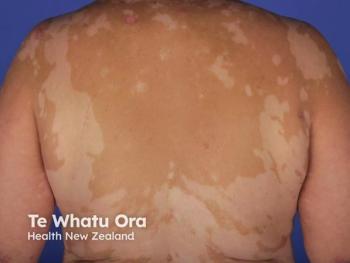
The FDA clearance allows Edesa to expand an ongoing placebo-controlled study of the CXCL10 antibody EB06 to US sites, with topline data expected in the fourth quarter of 2027.

The novel oral helicase-primase inhibitor demonstrated significantly higher rates of complete lesion healing compared with investigator’s choice treatment in the phase 3 PRIOH-1 trial.
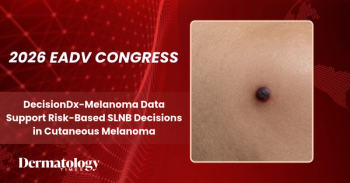
Prospective data suggest DecisionDx-Melanoma may help refine SLNB decisions and identify recurrence risk beyond conventional staging.

Falk G. Bechara, MD, discusses long-term tunnel control, structural damage, and the evolving role of biologics and surgery in HS care.
Galderma has agreed to acquire ZO Skin Health for $1.5 billion, adding the physician-dispensed skincare brand to a portfolio that already includes Cetaphil and Alastin.

New dermatology research explores hidden steroids in OTC products, infant eczema, melanoma prevention, cutaneous lymphoma, and pediatric AD.

SYX-5219 improved disease severity and itch in a Phase 1b trial of adults with moderate to severe atopic dermatitis.

In a survey of 301 employed adults, overall work impairment attributable to CHE was 31.8%, and quality of life worsened in step with self-reported disease severity.
Advertisement
Advertisement
Trending on Dermatology Times
1
FDA Approves Pritelivir for Refractory Mucocutaneous HSV in Immunocompromised Adults
2
GLP-1 Agonists Address Metabolic Risk in Psoriatic Disease
3
EB06 Phase 2 Vitiligo Study Receives FDA IND Clearance
4
EADV 2026 Atopic Dermatitis Highlights: Tilrekimig, RAC2 Inhibition, and Level Up Data
5