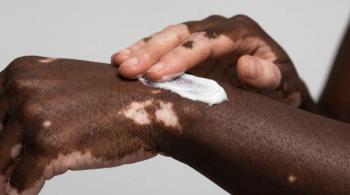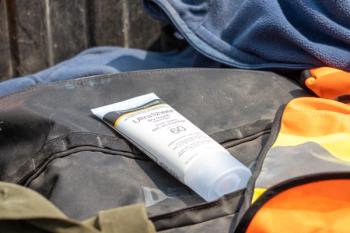
Two new Neutrogena facial sunscreens incorporate bemotrizinol, the first new sunscreen active ingredient added to the US OTC monograph in decades.
Dermatologists play a crucial role in breast cancer care, enhancing patient outcomes through early detection and innovative research on keratin-targeting therapies.
In January 2019, serendipity struck. I became a breast cancer researcher. Yes, sometimes fate leads you in clinical or scientific directions you didn’t know were possible. It opens your mind and heart to new possibilities. The goal of the October 2025 issue of Dermatology Times is to elevate awareness of the critical ways in which dermatologists care for patients with breast cancer. The impetus for this theme is a genuine passion to perform cross-disciplinary science that impacts the clinical care of the patient. When I started studying keratins in 2011—the largest class of intermediate filaments—I never would have believed it would lead to advances in understanding triple-negative breast cancer (TNBC).
Louis Pasteur is credited with saying in 1854, “Chance favors the prepared mind.”1 In this instance, the preparation started in my postdoctoral dermatology research and early faculty career at Yale University, studying keratin structure and function under the mentorship of the late Nobel Laureate Thomas Steitz. My goal was to crystallize and determine the atomic resolution structure of the heterocomplex between keratins 1 (K1) and 10 (K10), the predominantly expressed keratins in the spinous layer of the epidermis. Several K1/K10 crystal structures later,2-4 the biochemical foundation was established to enable keratin-specific drug targeting.
Six years ago, Kamaljit Kaur, PhD, of Chapman University in Orange, California, contacted me expressing her interest in collaborating on a project involving drug discovery targeting K1. Kaur identified that K1 is upregulated on the cell surface of TNBC cells, and she discovered peptides that targeted cell-surface K1 (CSK1).5 Together, we would combine cell and cancer biology with structural biology and determine the molecular mechanism of how the CSK1-targeting peptides worked. This research would enable the development of next-generation CSK1-targeting peptide-drug conjugates for treating TNBC, the most refractory and difficult-to-treat type of breast cancer, with a 5-year mortality rate of approximately 19% among patients.6
Recently, we demonstrated that K1 is overexpressed in a grade-dependent manner in human TNBC tissues, and that TNBC-selective peptides can be targeted to TNBC cells via CSK1 receptor-mediated endocytosis.7 Most clinical dermatologists relate keratins to the skin, hair, and nails; however, dermatopathologists and pathologists will likely note that keratins are commonly upregulated in human cancers, and cytokeratin staining has long been employed in cancer diagnostics.8 The key science emerging is the role of cell-surface intermediate filaments in human health and disease. Another example, beyond CSK1, is that cell-surface vimentin functions as a coreceptor for SARS-CoV-2 cellular entry.9
Clinically, dermatologists play a vital role in diagnosing and managing patients with breast cancer. Excluding nonmelanoma skin cancer, breast cancer is projected to be the most common cancer affecting the United States population in 2025. This reflects approximately 317,000 new breast cancer cases in women and approximately 2800 new breast cancer cases in men.10 This compares to approximately 105,000 new melanoma cases between men and women. Dermatologists are key partners with breast oncologists because we are at the front line of evaluating skin changes such as rashes, discoloration, lumps, growths, retractions, and more that may be clues to evolving or underlying breast cancer. When I perform a total-body skin exam, I always ask my female patients about family or personal history of breast cancer when I examine the chest. For those with a personal history of breast cancer, I advise that breast cancer recurrence may sometimes appear as a common rash, and to always call the office for a persistent rash on the chest. This approach has helped at least 2 women in my clinic with breast cancer relapse receive more prompt care.
I encourage dermatology providers to embrace their role as a critical part of the breast cancer care team. As noted, we play a frontline role in the clinical detection of changes on the skin of the breast and in underlying tissues. We also play a role in other ways, including educating patients on the genetic link between melanoma and breast cancer; managing skin toxicities of patients with breast cancer who are undergoing radiation, chemotherapy, or immunotherapy; and navigating the challenges of the overlap between rheumatology, dermatology, and oncology.
In closing, I acknowledge that we all probably know a family member, friend, or colleague who has faced breast cancer, outside of our patient care. My hope during this Breast Cancer Awareness Month is that the importance of dermatologists in breast cancer is recognized, that we all improve our ability to deliver care to patients with breast cancer, and that dermatology works toward enhanced cross-specialty collaborations to fully embrace the team approach in breast cancer care. Together, we remember the women and men we have lost to breast cancer, and we honor them by working together to improve patient experiences and outcomes.
References
1. Vallery-Radot R. The Life of Pasteur. Doubleday, Page & Company; 1915.
2. Bunick CG, Milstone LM. The x-ray crystal structure of the keratin 1-keratin 10 helix 2B heterodimer reveals molecular surface properties and biochemical insights into human skin disease. J Invest Dermatol. 2017;137(1):142-150. doi:10.1016/j.jid.2016.08.018
3. Eldirany SA, Ho M, Hinbest AJ, Lomakin IB, Bunick CG. Human keratin 1/10-1B tetramer structures reveal a knob-pocket mechanism in intermediate filament assembly. EMBO J. 2019;38(11):e100741. doi:10.15252/embj.2018100741
4. Lomakin IB, Hinbest AJ, Ho M, Eldirany SA, Bunick CG. Crystal structure of keratin 1/10(C401A) 2B heterodimer demonstrates a proclivity for the C-terminus of helix 2B to form higher order molecular contacts. Yale J Biol Med. 2020;27;93(1):3-17
5. Ogunnigbagbe O, Bunick CG, Kaur K. Keratin 1 as a cell-surface receptor in cancer. Biochim Biophys Acta Rev Cancer. 2022;1877(1):188664. doi:10.1016/j.bbcan.2021.188664
6. Nelson DR, Brown J, Morikawa A, Method M. Breast cancer-specific mortality in early breast cancer as defined by high-risk clinical and pathologic characteristics. PLoS One. 2022;17(2):e0264637. doi:10.1371/journal.pone.0264637
7. Yao SJ, Amirrad F, Ziaei E, et al. Surface keratin 1, a tumor-selective peptide target in human triple-negative breast cancer. Sci Rep. 2025;15(1):21644. doi:10.1038/s41598-025-05351-z
8. Karantza V. Keratins in health and cancer: more than mere epithelial cell markers. Oncogene. 2011;30(2):127-138. doi:10.1038/onc.2010.456
9. Amraei R, Xia C, Olejnik J, et al. Extracellular vimentin is an attachment factor that facilitates SARS-CoV-2 entry into human endothelial cells. Proc Natl Acad Sci U S A. 2022;119(6):e2113874119. doi:10.1073/pnas.2113874119
10. Cancer stat facts: common cancer sites. National Cancer Institute. Accessed September 11, 2025. https://seer.cancer.gov/statfacts/html/common.html
11 months ago
Cosmetic Trends of Dermatologic Interest in 202511 months ago
Identifying Breast Issues Beyond the Skin