

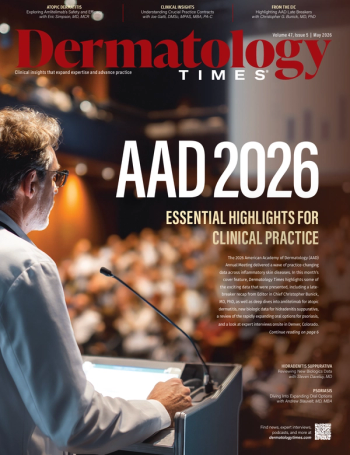
Learn more about the in-depth topics covered in the May 2026 print issue of Dermatology Times.
Learn more about the in-depth topics covered in the May 2026 print issue of Dermatology Times.
Hadar Lev-Tov, MD, said one of the most rewarding aspects of treating HS is hearing patients say, “Doctor, you saved my life.”

Employment contracts can have enormous financial and career consequences, yet many clinicians review them too casually before signing.

Dermatologists are increasingly integrating AI into clinical workflows, though many still use it primarily as a search tool rather than a true care-support system.
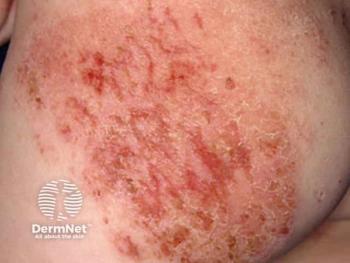
Phase 3 data presented at AAD 2026 showed that amlitelimab significantly improved skin clearance and disease severity in patients aged 12 years and older with moderate to severe atopic dermatitis.
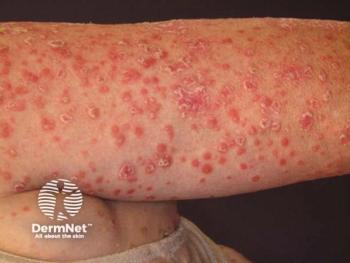
Oral therapies at AAD 2026 are closing the efficacy gap with biologics, with two TYK2 inhibitors and an oral IL-23 peptide each delivering clearance rates once thought possible only with injectables.

The growing success of IL-17–targeted therapies suggests that remission may become a realistic future goal for many patients living with hidradenitis suppurativa.

The proposed rule, first introduced in 2015, aimed to prohibit indoor tanning for individuals under 18 because of the known cancer risks associated with UV radiation.

Phages, or bacteriophages, are viruses that selectively infect bacteria and may offer a new way to treat bacterial skin diseases without antibiotics.

Biologics and oral JAK inhibitors are now strongly recommended for moderate to severe pediatric atopic dermatitis, signaling a shift toward earlier systemic treatment escalation.

Dermatology Times' editor in chief highlights essential late-breaker data from AAD 2026, including upadacitinib, rezpegaldesleukin, icotrokinra, zasocitinib, envudeucitinib, sonelokimab, and more.

David Oberlin, MD, FAAD, said the true value of AAD lies in clinicians returning to practice and applying new knowledge to patient care.

Dermatology Times' editor in chief highlights essential late-breakers from AAD 2026, including rademikibart, KT-621, nemolizumab, and delgocitinib.

New data unveiled at AAD 2026 emphasized the growing role of targeted immune modulation and systemic therapies in dermatologic care.

Susan C. Taylor, MD, moderated a recent Case-Based Roundtable discussion on topical treatment options for vitiligo.

Discover how physician-led dermatology practices build patient-first culture, drive innovation, and sustain long-term care in a changing health care market.