



Psoriasis
Latest News
Advertisement
Latest Videos




Advertisement
More News

Enhanced education can reduce uncertainty among both patients and providers, with pharmacists playing a key role as primary sources of patient information.

This marks the first head-to-head trial of an IL-17A/F inhibitor against an IL-23 inhibitor in psoriatic arthritis treatment.

The company plans to release full 52-week OLE data for ESK-001 in early 2025, building on positive interim results.
Focusing on treatment paradigms in plaque psoriasis, E. James Song, MD, FAAD, provides insights on phosphodiesterase inhibitors 4 (PDE-4) and their role in the therapeutic landscape.
E. James Song, MD, FAAD, presents the case of a 45-year-old woman with plaque psoriasis who lives in a rural area, introducing a discussion on clinical telemedicine practices.

The findings stem from post-hoc analyses of previous trials, which found that 75.1% of patients reached PASI100 after 1 year on bimekizumab.
Through collaboration with Nimbus Therapeutics and Schrodinger, zasocitinib’s AI-driven design maximizes its fit within the targeted enzyme.

Mona Shahriari, MD, FAAD, shared insights into prevalence, clinical presentations, increasing research diversity, and advocating for representation.

Researchers presented interim 3-year results from the European SERENA study.
Christopher Bunick, MD, PhD, shared insights into zasocitinib’s presented data and ongoing clinical trials.

The FDA has set a PDUFA target action date of May 22, 2025.

Zelma Chiesa Fuxench, MD, MSCE, FAAD, and Mona Shahriari, MD, FAAD, discuss the lack of research into psoriasis in skin of color, the absence of diversity in clinical trial populations, and where dermatology as a discipline can go from here.
A dermatologist describes the factors that differentiate plaque psoriasis from other dermatological conditions and how they inform treatment approaches.
E. James Song, MD, FAAD, provides detailed insights on how our understanding of plaque psoriasis has evolved and the ways that has impacted treatment options and decisions.
Dermavant’s sNDA for tapinarof cream 1% for AD is still under review with the FDA.
Hawkes highlights groundbreaking therapies for psoriasis, including new oral medications and IL-23 inhibitors.

At Maui Derm NP+PA Fall 2024, Melodie Young, MSN, ANP-c, reviews new treatment options for pediatric patients with psoriasis and details the difference in disease manifestation between adults and children.

Armstrong shared insights on the recently released NPF psoriasis health indicator report including pearls on national health data and unmet needs in public health campaigns.
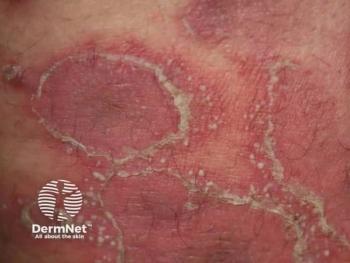
Researchers authored a manuscript detailing considerations for GPP diagnosis, definitions, and management.

The trial showcased the continued efficacy of apremilast, with 2-year data on the forefront.

The study reported that UST leads in dose escalation frequency, but also had lower discontinuation rates when compared to ADA and ETN.

Dermatology Times spoke with Leah Howard, JD, of the NPF, and Trisha, the mother of a young girl with psoriasis, to discuss Otezla's implications in the therapeutic landscape.

The oral TYK2 inhibitor demonstrated biologic-level efficacy.

Throughout the month of August, Dermatology Times covered psoriasis news related to Alumis Inc’s phase 3 trial of ESK-001 for plaque psoriasis, AbbVie’s Science of Skin event, and more.
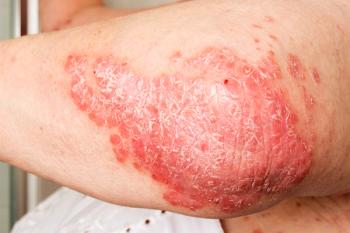
Rates of infection did not correlate with disease severity, however.
Advertisement
Advertisement
Trending on Dermatology Times
1
Icotrokinra Sustains Skin Clearance at High-Impact Psoriasis Sites Through 2 Years
2
EADV 2026 Day 3: Long-Term Psoriasis Data and Emerging Therapeutic Targets Take Focus
3
Ritlecitinib Improves Repigmentation in Nonsegmental Vitiligo
4
EADV 2026 Day 2: Long-Term AD Data, GLP-1 Nail Findings, and Emerging Treatments Take Center Stage
5