

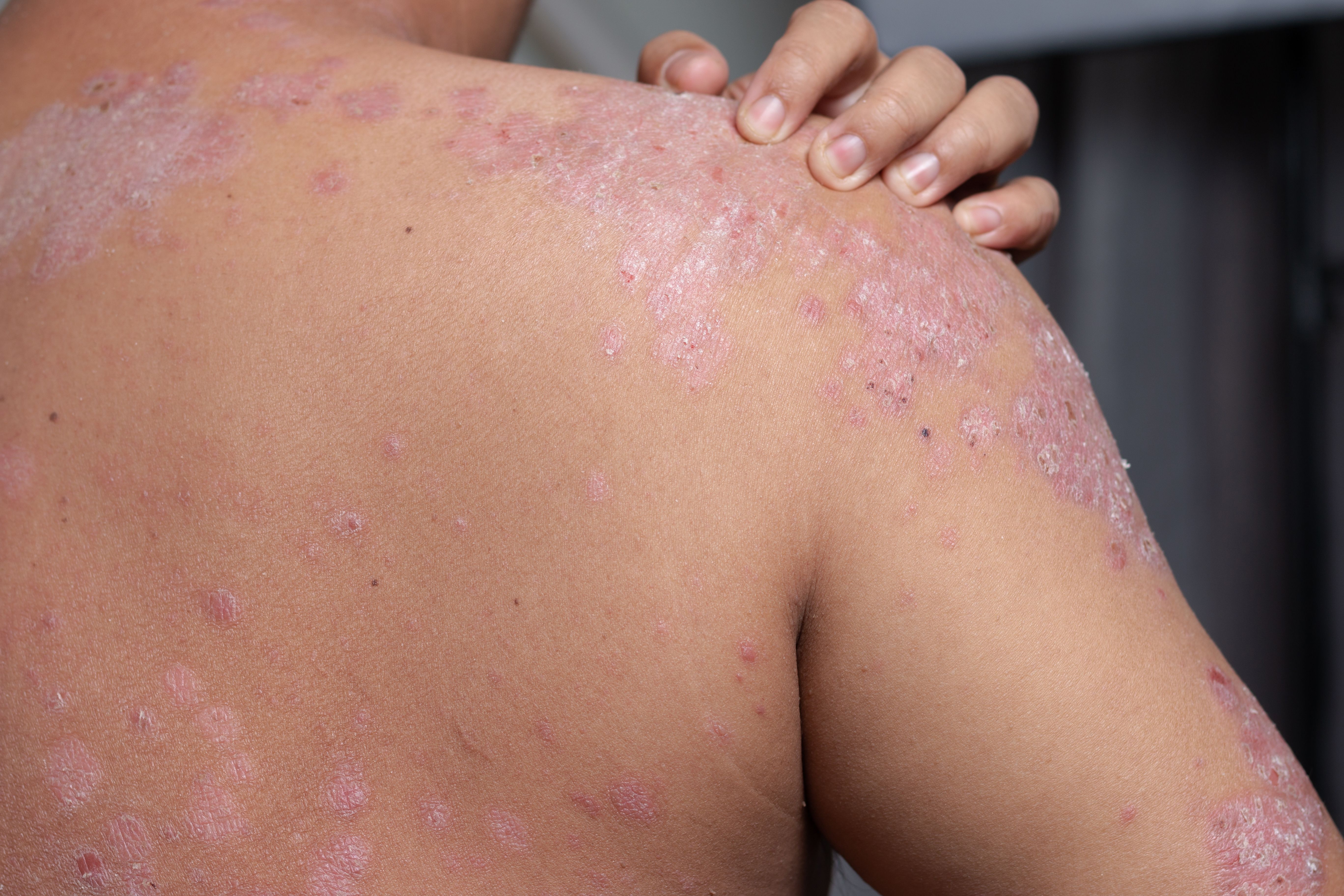




Psoriasis
Latest News
Advertisement
Latest Videos






Advertisement
More News

Mark Lebwohl, MD, and Saakshi Khattri, MD, discuss the evolving landscape of plaque psoriasis treatments over the past year.

Last week, the FDA approved an sBLA for Sandoz’s adalimumab-adaz in various strengths, including 10 mg/0.1 mL, 20 mg/0.2 mL, and 80 mg/0.8 mL.

A poster from the 2024 American Psychiatric Association Annual Meeting delved into the relationship between MDD and various dermatologic conditions.

Adalimumab-adbm is now approved for use in various indications, including psoriasis, psoriatic arthritis, and hidradenitis suppurativa.

López-Ferrer discussed how to achieve well-being for patients with psoriasis and Koscielny discussed the unique topics of the Skin Academy.

Mona Shahriari, MD, and a plaque psoriasis patient provide insights into the mechanism of action and benefits of tapinarof cream 1% as a nonsteroidal topical.

A cross-sectional study revealed an increase and heightened prevalence of Demodex and demodicosis in individuals with psoriasis receiving biologic therapy.

At present, deployed members of the military are not permitted to be receiving therapy with systemic therapies such as immunomodulators and biologics.
Last week, the US Food and Drug Administration approved biosimilar ustekinumab-aekn (Selarsdi; Alvotech and Teva) for psoriasis and PsA.

A recent review and meta-analysis says this statistic may be due in part to nocebo effects.

Data stems from week 28 results of the German G-EPOSS study evaluating the effectiveness of guselkumab in skin health, quality of life, sexuality, and stigmatization.

Risankizumab demonstrated the highest efficacy in PASI90 responses among analyzed IL-23 inhibitors.
Experts in dermatology share closing thoughts on the management of plaque psoriasis.
Drs Mark Lebwohl and Saakshi Khattri review recent advancements and emerging therapies in development for plaque psoriasis treatment.
MoonLake’s sonelokimab is being evaluated for hidradenitis suppurativa, psoriasis, and psoriatic arthritis.
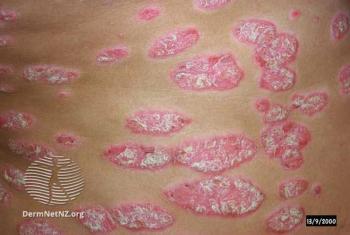
Loretta Fiorillo, MD, FRCPC, reviews key data points from the phase 3 SPROUT study.

Versus placebo, topical melatonin and rosuvastatin reduced psoriatic plaque severity with a favorable safety profile.
Saakshi Khattri, MD, and Mark Lebwohl, MD, provide insight on the significance of steroid-free treatment options for the management of pediatric patients with plaque psoriasis and address unique considerations and challenges treating patients with skin of color.
Expert dermatologists highlight the use of nonsteroidal topical therapies, roflumilast and tapinarof, for the management of plaque psoriasis.

The merger will focus on advancing Oruka’s portfolio of novel biologics for the treatment of chronic skin diseases.

Learn more about the in-depth topics covered in the March 2024 enhancing psoriasis management supplement of Dermatology Times.

Mark Lebwohl, MD, and Saakshi Khattri, MD, examine the use of spesolimab in various diseases, including generalized pustular psoriasis (GPP), and comment on the use and safety of deucravacitinib.
Drs Mark Lebwohl and Saakshi Khattri review the significance of long-term data of bimekizumab for plaque psoriasis management.
Papp shared insights from the recent STRIDE phase 2 trial, which met all its primary and secondary endpoints. Data was presented at the American Academy of Dermatology Annual Meeting.
Experts in dermatology discuss the use of bimekizumab in clinical practice for plaque psoriasis as well as its off-label use.
Advertisement
Advertisement
Trending on Dermatology Times
1
Icotrokinra Sustains Skin Clearance at High-Impact Psoriasis Sites Through 2 Years
2
EADV 2026 Day 3: Long-Term Psoriasis Data and Emerging Therapeutic Targets Take Focus
3
Ritlecitinib Improves Repigmentation in Nonsegmental Vitiligo
4
Delgocitinib Shows Real-World Effectiveness and Improved Quality of Life in Chronic Hand Eczema
5