




Psoriasis
Latest News
Advertisement
Latest Videos







Advertisement
More News

Leah Howard, JD, of the National Psoriasis Foundation, discusses the importance of advocacy in psoriasis, the role of mental health in chronic skin conditions, and the role of support organizations in advocating for awareness and health equity.
Tapinarof Cream 1% Led to Rapid Improvements in Itch for Adults With Mild to Severe Plaque Psoriasis
Once daily application of tapinarof cream 1% rapidly improved itch in adult patients with varying plaque psoriasis diseases severity, according to a poster presented at SDPA’s fall conference.
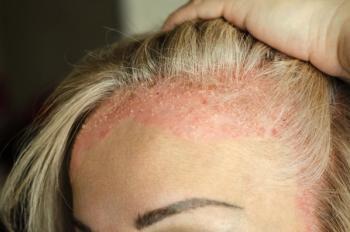
Douglas DiRuggiero, DMSc, PA-C, presented a comprehensive session at the SDPA fall conference on treatment selection for patients with psoriasis.

Black and male patients exhibited a higher prevalence of palmoplantar psoriasis when compared with White patients.

82.8% of adult patients with iPsO achieved an IGA score of 0 or 1 indicative of complete or almost complete lesion clearance.

Topline results from the phase 3b trial revealed significant improvements in patients with skin of color whose psoriasis was treated with guselkumab.

Bimekizumab is now the first and only approved IL-17A and IL-17F inhibitor for this indication.

At week 8, 65.3% of roflumilast-treated patients achieved a clinically significant reduction in itch.
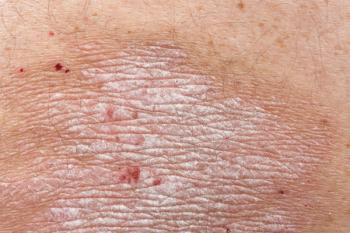
Patients and their families experienced significant improvements to well-being with tildrakizumab use in as little as 16 weeks.

Clinical response was maintained at 73.2% for PASI-75 in POETYK PSO long-term extension trial.

Darren West, MPAS, PA-C; and Jayme M. Heim, MSN, FNP-BC, share their approaches to educating patients on use of steroids for dermatologic conditions, highlighting how they approach pediatric patient populations.
Experts in dermatology discuss the benefits of improved topical steroidal vehicle excipients and their impact on treatment duration and response.
Linda F. Stein Gold, MD; Jayme M. Heim, MSN, FNP-BC; and Darren West, MPAS, PA-C, review the adverse effect profiles of steroidal and nonsteroidal treatments, focusing on hypothalamic pituitary adrenal axis suppression.
Darren West, MPAS, PA-C; and Jayme M. Heim, MSN, FNP-BC, comment on how steroids continue to fit into the topical treatment armamentarium.

Experts discuss the treatment landscape of generalized pustular psoriasis as well as review difficult cases of GPP.

Protagonist Therapeutics has just announced the company's eligibility to receive $60 million of milestone payments for JNJ-2113 to enter into clinical development programs led by Janssen.

The approval provides pediatric patients with a steroid-free topical therapy.

Boni Elewski, MD, shares resources for patients with GPP, highlighting a team-based approach to meet the psychological and physical needs of the patient.

Drs Raj Chovatiya and Boni Elewski comment on the future of combination therapy in GPP, highlighting spesolimab.

In a cohort of patients in the UK, investigators found that SARS-CoV-2 was associated with increased incidence of several immune-mediated inflammatory diseases, with psoriasis among them.
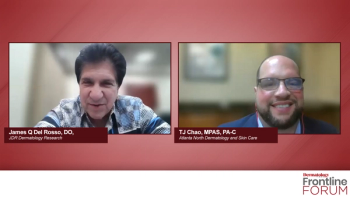
Experts in dermatology share their insights on how to approach corticosteroid hesitancy in their dermatology patient populations.
Experts in dermatology discuss their considerations for atopic dermatitis and plaque psoriasis topical treatment options highlighting the different penetration, access, and safety considerations.
James Q Del Rosso, DO and TJ Chao, MPAS, PA-C comment on the practical aspects of utilizing topical corticosteroids, including potency, formulation, administration, and utility.
James Q Del Rosso, DO and TJ Chao, MPAS, PA-C discuss the role of topical agents in the management of dermatological conditions reviewing their position and role within the treatment landscape for dermatological conditions.

The September 2023 issue of Dermatology Times featured a spotlight on psoriasis research, advances, and treatment options in patients with skin of color. Learn more about the topics covered in each spotlight article.
Advertisement
Advertisement
Trending on Dermatology Times
1
Icotrokinra Sustains Skin Clearance at High-Impact Psoriasis Sites Through 2 Years
2
EADV 2026 Day 3: Long-Term Psoriasis Data and Emerging Therapeutic Targets Take Focus
3
Ritlecitinib Improves Repigmentation in Nonsegmental Vitiligo
4
Delgocitinib Shows Real-World Effectiveness and Improved Quality of Life in Chronic Hand Eczema
5