




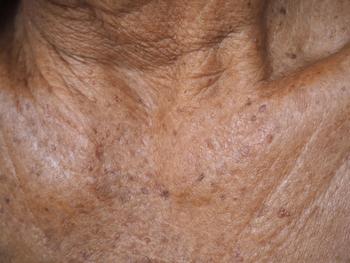
Tirbanibulin (Klisyri, Almirall) has been approved by the U.S. Food and Drug Administration (FDA) for the topical treatment of actinic keratosis on the face or scalp.
Tirbanibulin (Klisyri, Almirall) has been approved by the U.S. Food and Drug Administration (FDA) for the topical treatment of actinic keratosis on the face or scalp.
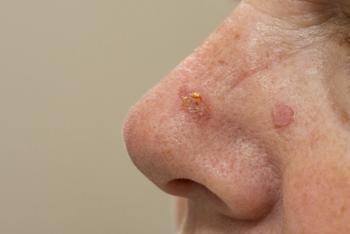
It is estimated that 0.025% to 16% of all actinic keratosis (AK) lesions may progress into invasive SCC per year, and there is still no marker to predict which lesions will progress, according to a recent paper that outlined diagnostic challenges as well as current and pipeline treatment approaches.

Off-label product use is fairly common in aesthetics and plays a key role in advancing treatment practices in the specialty. Dr. Amy Foreman Taub explains the four she uses on a regular basis.
George Martin, M.D., presented diagnostic and treatment tips on actinic keratosis, basal cell carcinoma and squamous cell carcinoma at the Maui Derm NP + PA summer 2019 meeting.
Comparative diagnosis of actinic keratosis (AK) and squamous cell carcinoma (SCC) in situ is needed for accuracy in treatment plan.

Laser-assisted drug delivery used to fractionally ablate the target area prior to topical medical treatment can be useful in patients with widespread actinic damage, says this expert.

Reimbursements for actinic keratosis treatments are down slightly, but the demand for treatment is up by 20 percent.
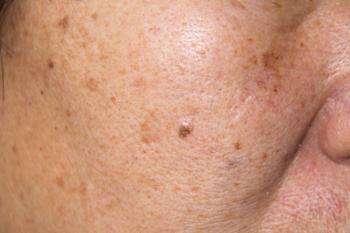
Topical 5‐fluorouracil is FDA-approved to treat actinic keratoses and superficial basal cell carcinoma, but it is commonly used off-label to treat a number of other skin conditions, such as squamous cell carcinoma despite strong evidence.

Literature review shows that laser-assisted photodynamic therapy more efficacious than photodynamic therapy alone for actinic keratosis.