


Actinic Keratosis
Latest News
Advertisement
Latest Videos


Advertisement
More News
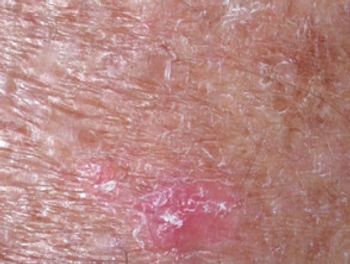
The analyses were published in the Journal of the European Academy of Dermatology and Venereology.

ChatGPT shows promise in dermatology but needs improvement in accuracy and conciseness for reliable clinical use, according to a study evaluating its performance in actinic keratosis management.

The survey conducted by Almirall included participants in the US and Europe.

As few as 90% of study participants without visible actinic keratosis lesions displayed inflammatory reactions indicative of the presence of subclinical AK lesions.

Investigators noted that there was not a marked increase, however, in keratinocyte skin carcinomas.

Five days of treatment with the topical therapy measurably improved symptoms and emotional/functional impact for patients with actinic keratosis at week 8.

A poster presentation from SBS 2023 reviewed the clinician satisfaction of tirbanibulin for the treatment of actinic keratosis.

The human microbiota and its involvement in human health and disease has been emphasized in recent years. Now, researchers have begun to explore whether a patient’s unique microbiota may influence skin cancer risk and response to therapy.

A recent study evaluated reflective confocal microscopy for actinic keratosis treated with 5-aminolevulinic acid photodynamic therapy.
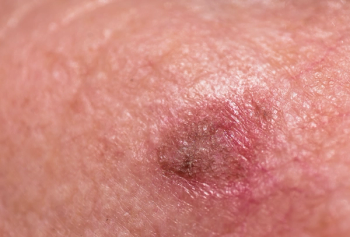
A study investigated pulsed dye laser-mediated photodynamic therapy compared to conventional PDT for actinic keratosis.

A recent study aimed to examine daylight photodynamic therapy vs cryosurgery for the prevention of actinic keratoses in photodamaged facial skin.

In this study, researchers aim to find the long-term improvements on photoaging after ALA-PDT for AK.
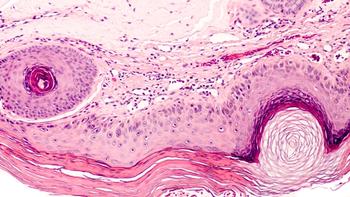
Brian Berman, MD, PhD, maps the root causes, prevention strategies, and latest treatments for this widespread precancer at 2021 Fall Clinical Dermatology Conference for PAs & NPs.

A recent study examines the role of a vegan or omnivore diet on photodynamic therapy for actinic keratosis.

Researchers examine whether daylight PDT is less painful but equally as effective as conventional PDT as treatment for actinic keratosis.
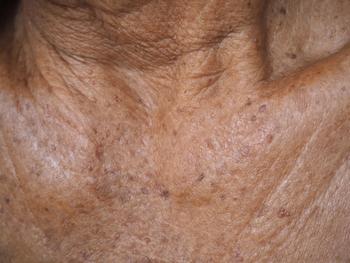
A review of the American Academy of Dermatology guidelines and current treatment improvements for actinic keratosis were discussed during a presentation at Maui Derm NP+PA Fall 2021.

Potential game-changers in the pipeline and newly FDA-approved treatments were highlighted in an overview of new drugs to watch at Maui Derm NP+PA Fall 2021 meeting.
The Journal of the American Academy of Dermatology has published new recommendations for the treatment of actinic keratosis (AK).

Research analyses found an increased risk of cSCC after AK diagnosis during long periods of follow up.
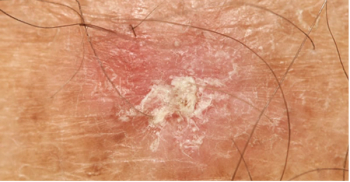
Todd Schlesinger, MD, FAAD, outlines his research on newly FDA-approved topical tirbanibulin (Klisyri, Almirall) for treatment of actinic keratosis (AK), as well as compares it to another topical treatment for AK, 5-fluorouracil.
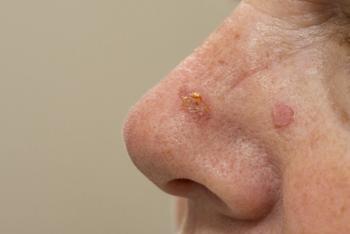
Biofrontera announces it is seeking FDA-approval for its new BF-RhodoLED XL lamp to be used in combination with topical aminolevulinic acid hydrochloride gel 10% for the treatment of actinic keratosis.
Almirall announces the launch of tirbanibulin (Klisyri), a novel microtubule inhibitor for the topical treatment of actinic keratosis on the face or scalp.

Topical microtubule inhibitor, tirbanibulin (Klisyri, Almirall), demonstrates positive results for treating actinic keratosis (AK) of the face and scalp, according recently published data from two phase 3 studies.

A recent study found states' Medicare per-beneficiary spending between actinic keratosis and skin cancer differs widely.
Tirbanibulin (Klisyri, Almirall) has been approved by the U.S. Food and Drug Administration (FDA) for the topical treatment of actinic keratosis on the face or scalp.
Advertisement
Advertisement
Trending on Dermatology Times
1
From Mechanism to Management: Navigating Male Pattern Hair Loss and New Topical Therapies
2
FDA Approves Baricitinib for Adolescents With Severe Alopecia Areata
3
Tremfya Meets Primary, Major Secondary Endpoints in Phase 4 STAR Study of Axial PsA
4
Dr. Charrow Highlights Earlier Biologic Use and Deroofing in Hidradenitis Suppurativa
5