Faculty from the Cutaneous Oncology Workshop answer practical questions spanning skin cancer prevention, diagnosis, treatment, and follow-up.
Discover expert insights on cutaneous oncology from George Martin, MD, focusing on innovative treatments for skin cancers at Maui Derm NP+PA Fall.
George Martin, MD, founder of Maui Derm and program director of the
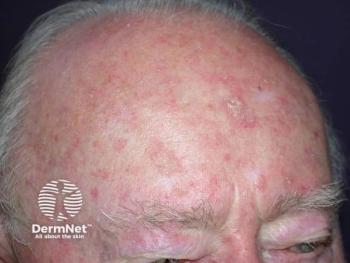
A highlight of the presentation was the use of clinical case studies to illustrate nuanced approaches to diagnosis and treatment. For actinic keratoses (AKs), Martin and the panel discussed optimizing field therapies, including the use of tirbanibulin (Klisyri; Almirall) and 5-fluorouracil (5-FU) enhanced with topical calcipotriene to improve outcomes and shorten treatment duration.
“These are really important cases to take a look at,” Martin noted. “We find that AKs are pretty much a daily treatment occurrence in our practice, so getting it right is important.”
Photodynamic therapy (PDT) was also a central theme—specifically, innovations in pain mitigation and techniques to enhance efficacy. Martin emphasized that AK management is a daily concern in clinical practice, making the optimization of treatments, such as minimizing scarring from liquid nitrogen or selecting the shortest effective field therapy, critically important. They also addressed weekly imiquimod (Aldara) regimens to reduce non-melanoma skin cancer (NMSC) burden over time.
The session also tackled superficial basal cell carcinomas (BCC) and squamous cell carcinomas (SCCs), especially when located on sensitive areas like the face. The presenters discussed non-scarring, cosmetically-conscious therapies, with a special focus on PDT as a viable alternative to surgical options in these scenarios.
“When they're on the trunk or extremities, they're pretty straightforward in the treatment algorithm,” Martin said. “Well, what happens when we take them and put them on the face or another clinically visible area? What are our non-scarring, high efficacious treatment options?”
Of particular note is Martin’s review of recent phase 3 data on 10% aminolevulinic acid gel (Ameluz) for superficial BCC. The results demonstrate strong efficacy, and he anticipates potential FDA approval in 2026, which could offer clinicians a new non-invasive treatment option.
Stay tuned to Dermatology Times all weekend for
References
1. Gautier K, Martin G, Rosen T. Update Cutaneous Oncology 2025. Presented at: Maui Derm NP+PA Fall 2025; September 20-23, 2025; Nashville, Tennessee.