

Opinion|Videos|October 28, 2026
Selecting a Hedgehog Inhibitor for Surgery-Averse Patients with Nasal BCC
Author(s)Gaurav Singh, MD MPH
Divergent response definitions across pivotal trials complicate cross-trial comparison, and resistance mechanisms that may be shared across the class inform sequencing toward PD-1 inhibition after hedgehog inhibitor failure.
Advertisement
Episodes in this series

"Selecting a Hedgehog Inhibitor for Surgery-Averse Patients with Nasal BCC" continues the second case with a closer look at how pivotal trial design shapes clinical interpretation.
Dr. Singh reviews how the pivotal trials assessed response. Both the BOLT and ERIVANCE BCC trials used photography, histology, and MRI, and both required central review for complete and partial responses. However, BOLT required complete disappearance of target lesions on both photography and MRI, plus at least two negative biopsies, while ERIVANCE required one.
The partial response definitions also differed. BOLT required more than a 50% reduction in the bidimensional sum of the horizontal and vertical axes. ERIVANCE required a 30% reduction, and change in only one dimension counted. Dr. Singh concludes that BOLT was considerably more stringent.
When patients are uncertain, he pulls up the data and sketches a circle. He explains that a circle or oval on the skin is a two-dimensional view of a three-dimensional process, and that tumors can shrink in any direction. Patients often make their choice once they understand that BOLT required bidimensional reduction.
He reiterates that populations and designs cannot be compared head-to-head. Still, he notes that applying ERIVANCE-like criteria to sonidegib would yield a complete response rate closer to 21%, higher than the published figure. For these reasons, he does not consider the two agents interchangeable in practice.
For metastatic disease, vismodegib may hold a labeling advantage, but Dr. Singh typically opts for a PD-1 inhibitor such as cemiplimab, which he says has the most data. For locally advanced disease, BOLT's design and the 2025 real-world safety data have made sonidegib his go-to choice.
He does not switch within the class for adverse effects, relying instead on drug holidays of 21 days or fewer and supportive care. If a hedgehog inhibitor fails, he moves to cemiplimab rather than another hedgehog inhibitor, since resistance mechanisms may affect both agents equally. He calls this an area for future study.
The series concludes with "Case 3: Managing a Radiation-Refractory Patient with Recurrent Scalp BCC," in which Dr. Singh urges surgeons and radiation oncologists to bring systemic options forward sooner.
Advertisement
Related to this article
Updated SKYRIZI labeling allows clinicians to use clinical judgment when determining the need for TB evaluation before treatment.

Experts outline how to recognize undertreated psoriasis, assess incomplete response, and make individualized decisions when escalating therapy.

ATI-052 improved disease severity and itch in a phase 1b trial of patients with severe atopic dermatitis, with no grade 3 or 4 adverse events.
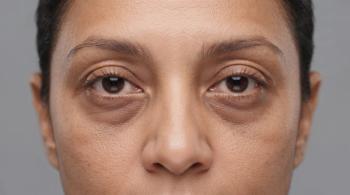
LRM will evaluate injectable rhPDGF-BB as a regenerative approach to infraorbital hollowing in a randomized phase 2b trial.
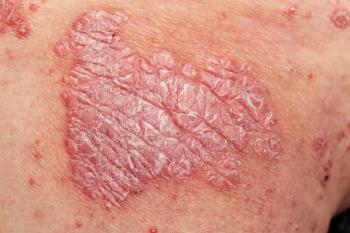
ORKA-001 achieved PASI 100 in 61% of high-dose patients at week 16 in the phase 2b EVERLAST-B trial of moderate-to-severe psoriasis.

Put your dermatology expertise to the test with Dermatology Times’ interactive quiz series.

Stratman discusses individualized eczema care, expanding treatment options, and the potential of precision medicine to guide therapy.

Face taping promises smoother skin and fewer wrinkles without injectables, but evidence suggests any visible benefits are largely temporary.
Advertisement
Advertisement