

Opinion|Videos|October 21, 2026
Case 2: Evaluating a Surgery-Averse Patient With Recurrent Nasal BCC
Author(s)Gaurav Singh, MD MPH
When a patient prioritizes preserving taste and independence, differences in plasma protein binding, tissue distribution, and real-world tolerability become central considerations in selecting among hedgehog pathway inhibitors.
Advertisement
Episodes in this series

Our second case unfolds in "Case 2: Evaluating a Surgery-Averse Patient With Recurrent Nasal BCC," where quality-of-life priorities shape the choice of systemic therapy.
Dr. Singh presents a 76-year-old woman with a 6-year history of recurrent basal cell carcinoma involving the nasal sidewall and medial cheek. Despite two prior Mohs procedures, the lesion has enlarged and now wraps around underlying subcutaneous structures. She lives independently, has excellent ECOG status, and cares for her grandchildren.
Her comorbidities include controlled hypertension, mild chronic kidney disease, and well-controlled osteoarthritis. Examination shows infiltrative ulceration extending into facial soft tissue, without lymphadenopathy. Imaging confirms locally invasive disease without nodal or distant spread, and pathology shows infiltrative tumor in the dermis and subcutis without muscle involvement.
She strongly wishes to avoid extensive surgery. She also worries about taste changes, because cooking for her grandchildren is one of her greatest joys. Dr. Singh flags the infiltrative histology, involvement of multiple cosmetic subunits, and prior surgical failure. He calls patient preference the biggest consideration and says a request to avoid surgery immediately prompts him to explore alternatives.
Both agents are reasonable here, and her kidney disease makes a baseline laboratory assessment essential before going further. Dr. Singh explains that both drugs inhibit smoothened rather than hedgehog itself, yet they differ pharmacologically. Sonidegib binds plasma protein independently of concentration, has a volume of distribution above 9,000 L, and a half-life of about 1 month. Vismodegib binds in a concentration-dependent manner, with a volume of distribution near 30 L and a half-life of 4 to 12 days.
He then cites a 2025 real-world analysis by Dr. Lebwohl and colleagues. Sonidegib-treated patients remained on therapy longer and were less likely to experience pharmacologically relevant clinical conditions than vismodegib-treated patients. GI-related conditions were about 33% less likely, taste and smell alterations about 71% less likely, and muscle spasms more than 50% less likely. He emphasizes that these are not head-to-head trial data.
In the following episode, "Selecting a Hedgehog Inhibitor for Surgery-Averse Patients with Nasal BCC," Dr. Singh unpacks pivotal trial response criteria and explains how he sequences therapy after hedgehog inhibitor failure.
Advertisement
Related to this article
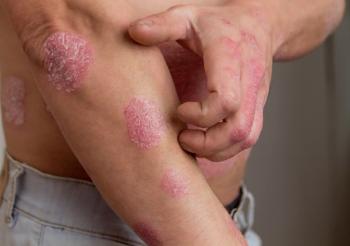
Tina Bhutani-Jacques, MD, explored how disease location, prior treatment response, and patient preference shape topical treatment decisions across 3 plaque psoriasis cases.
Benjamin Ungar, MD, moderated a recent Dermatology Times Case-Based Roundtable event on how to define severity, choose among JAK inhibitors, and monitor patients with alopecia areata.
Clinicians at a Dermatology Times Case-Based Roundtable, moderated by Chesahna Kindred, MD, debated when to escalate to oral JAK inhibitors for alopecia areata and how to counsel patients on timing, monitoring, and safety.
The joint AAD-HSF guideline issues 37 recommendations, including strong support for adalimumab, bimekizumab, infliximab, and secukinumab.

Two-year oral IL-23 data, GLP-1 biomarker findings, and a nonsurgical option for superficial basal cell carcinoma headline the sessions covered in Las Vegas.

Dermatology’s growing focus on skin longevity demands clear definitions, validated outcomes, and rigorous evidence beyond anti-aging claims.

A retrospective claims analysis of 2897 matched pairs found hazard ratios of 0.48 to 0.67 for new atopic disease with dupilumab vs systemic corticosteroids in children.
Disc Medicine reports the phase 3 APOLLO trial met all primary and secondary end points, with whole-blood PPIX reduced 41.4% vs placebo and an NDA resubmission planned by end of 2026.
Advertisement
Advertisement
Trending on Dermatology Times
1
AAD, HS Foundation Issue First Joint Hidradenitis Suppurativa Guidelines
2
Dupilumab Associated With Lower Atopic March Risk in Pediatric Atopic Dermatitis
3
Fall Clinical 2026: The Data and Expert Advice Shaping Dermatology Practice
4
Skin Longevity Needs Evidence, Not Hype
5