

Opinion|Videos|October 21, 2026
Sustaining Long-Term Hedgehog Inhibitor Therapy in Surgery-Refractory BCC Patients
Author(s)Gaurav Singh, MD MPH
Long-term response data, trial response criteria, a structured laboratory schedule, and symptom-specific supportive care together determine whether patients can remain on hedgehog inhibitor therapy long enough to benefit.
Advertisement
Episodes in this series

Continuing the first case, "Sustaining Long-Term Hedgehog Inhibitor Therapy in Surgery-Refractory BCC Patients" examines long-term efficacy data and the practical work of keeping patients on treatment.
Dr. Singh notes that not every patient achieves a complete response, so long-term data matter. He states that sonidegib is the only hedgehog inhibitor with a median duration of response exceeding 2 years, possibly reflecting its high volume of distribution. He cautions that the BOLT and ERIVANCE BCC trials were not head-to-head.
He does point out that the vismodegib trial assessed response in one dimension. Tumors do not grow in one dimension, he argues, and length and width both drive surgical morbidity. At the 42-month final BOLT analysis, only 8% of the 200-mg cohort and 3% of the 800-mg cohort remained on treatment. At 200 mg, objective response rates were 56% in locally advanced and 8% in metastatic disease, with no new safety signals.
Dr. Singh describes himself as a purist about trial data. He permits drug holidays of up to 21 days, as allowed in BOLT, but does not use altered dosing schedules. He acknowledges that many clinicians report good outcomes with nonstandard dosing.
He monitors creatine kinase, renal function, a CBC, and a CMP at baseline, weekly for 2 months, and then every 4 weeks. Abnormalities or worsening symptoms prompt weekly checks until resolution.
He then outlines supportive strategies. For alopecia, oral minoxidil, oral finasteride, and spironolactone may help in appropriate patients. Nausea is addressed with behavioral therapy, relaxation techniques, and pharmacologic options such as scopolamine. Muscle spasms, more frequent after age 70, are managed with hydration, stretching, heat, and vitamin B complex, with cardiology input on amlodipine or diltiazem.
For taste changes, he encourages patients to try new foods, and naturopathic colleagues may add zinc. Fatigue prompts anemia screening, physical activity, and management of pain, insomnia, or depression, with methylphenidate considered by psychiatry when necessary.
Next, "Case 2: Evaluating a Surgery-Averse Patient With Recurrent Nasal BCC" introduces a second patient whose love of cooking shapes the choice between the two agents.
Advertisement
Related to this article
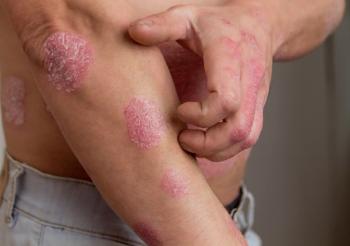
Tina Bhutani-Jacques, MD, explored how disease location, prior treatment response, and patient preference shape topical treatment decisions across 3 plaque psoriasis cases.
Benjamin Ungar, MD, moderated a recent Dermatology Times Case-Based Roundtable event on how to define severity, choose among JAK inhibitors, and monitor patients with alopecia areata.
Clinicians at a Dermatology Times Case-Based Roundtable, moderated by Chesahna Kindred, MD, debated when to escalate to oral JAK inhibitors for alopecia areata and how to counsel patients on timing, monitoring, and safety.
The joint AAD-HSF guideline issues 37 recommendations, including strong support for adalimumab, bimekizumab, infliximab, and secukinumab.

Two-year oral IL-23 data, GLP-1 biomarker findings, and a nonsurgical option for superficial basal cell carcinoma headline the sessions covered in Las Vegas.

Dermatology’s growing focus on skin longevity demands clear definitions, validated outcomes, and rigorous evidence beyond anti-aging claims.

A retrospective claims analysis of 2897 matched pairs found hazard ratios of 0.48 to 0.67 for new atopic disease with dupilumab vs systemic corticosteroids in children.
Disc Medicine reports the phase 3 APOLLO trial met all primary and secondary end points, with whole-blood PPIX reduced 41.4% vs placebo and an NDA resubmission planned by end of 2026.
Advertisement
Advertisement
Trending on Dermatology Times
1
AAD, HS Foundation Issue First Joint Hidradenitis Suppurativa Guidelines
2
Dupilumab Associated With Lower Atopic March Risk in Pediatric Atopic Dermatitis
3
Fall Clinical 2026: The Data and Expert Advice Shaping Dermatology Practice
4
Skin Longevity Needs Evidence, Not Hype
5