


News|Articles|November 11, 2025
- Dermatology Times, November 2025 (Vol. 46. No. 11)
- Volume 46
- Issue 11
Long-Term Strategies and New Horizons for Managing Facial Hyperpigmentation
Author(s)Marie Bosslett, Assistant Editor
Listen
0:00 / 0:00
Key Takeaways
- Melasma and PIH are chronic conditions requiring long-term, multifaceted management, emphasizing the importance of patient education and adherence.
- Hormonal triggers, sun exposure, and heat are key modulators of melasma, necessitating rigorous photoprotection for effective management.
Experts discuss effective strategies for managing facial hyperpigmentation, emphasizing personalized treatment plans and the importance of sun protection.
Advertisement
Nada Elbuluk, MD, MSc, FAAD, professor of clinical dermatology and founding director of the Skin of Color and Pigmentary Disorders Program at the USC Keck School of Medicine, was joined by Corey Hartman, MD, FAAD, founder and medical director of Skin Wellness Dermatology in Birmingham, Alabama, assistant clinical professor at the University of Alabama at Birmingham Heersink School of Medicine, and Dermatology Times Editorial Advisory Board member, in this Dermatology Times DermView custom video series titled “Optimizing Facial Hyperpigmentation Care.” The pair presented an overview of melasma and postinflammatory hyperpigmentation (PIH), emphasizing the chronic, relapsing nature of these conditions and the necessity of long‑term, multifaceted management.
The conversation opens with a discussion of risk factors for melasma. Hormonal triggers (eg, pregnancy, contraceptives), sun and visible light exposure, and heat are promoted as prime modulators of disease activity. Because these factors constantly interact, melasma must be framed to patients as a chronic condition: Therapeutic discontinuation often leads to relapse, sometimes swiftly after minimal sun reexposure.
“This is important for patients to understand, because when you’re crafting a treatment strategy for them, they need to understand that they’re going to always have to do something for it,” Hartman said.
Prevention and photoprotection was underscored as foundational. If patients are unwilling to engage in rigorous sun protection, topical therapies will underperform, according to Elbuluk and Hartman. Behavioral photoprotection, including sun avoidance during peak hours, hats, and shade, along with adjunctive internal photoprotection such as Polypodium leucotomos supplementation, should be used in conjunction with topical sunscreen.
On diagnosis, they caution that not all facial hyperpigmentation is melanotic. Diagnostic attention should focus on lesion morphology, characteristic distribution, and distinguishing concurrent pigmentary disorders. Wood’s lamp may help determine epidermal vs dermal involvement, albeit with limitations. Dermoscopy is a newer, useful adjunct in visualizing vascular features that are not always apparent to the naked eye, although both believe that more training is needed for clinicians to feel more comfortable.
In guiding therapy, both Elbuluk and Hartman emphasize individualized regimens. Retinoids are championed early as a “universal” backbone, given their multitarget benefits. They also discussed hydroquinone’s continued role, while acknowledging risks such as irritant dermatitis and the rare but feared ochronosis, which is most relevant with inappropriate, prolonged use. The triple-combination therapy (hydroquinone + retinoid + steroid) retains value, particularly for rapid initial response, but both clinicians urge judicious, time‑limited use and prompt de-escalation.
To support long-term maintenance and reduce reliance on hydroquinone, they highlighted nonhydroquinone tyrosinase inhibitors and pigment modulators, including azelaic acid, kojic acid, cysteamine, tranexamic acid, and botanical agents such as lotus extract. Among these, cysteamine and thiamidol are cited as favorable for tolerability and sustained full-face application, mitigating halo hypopigmentation or uneven spread.
“When I was first introduced to thiamidol, I was so excited.... I had so many patients in mind that I wanted to try it for because I really thought it could be a nice bridge product for them to use,” Hartman said.
He highlighted using thiamidol in a challenging PIH case involving a woman with stippled hyperpigmentation secondary to skin picking. Due to the impracticality of hydroquinone, thiamidol, used up to 4 times daily, provided a well-tolerated, effective alternative. The patient also received adjunctive retinoid therapy, consistent sunscreen use, and a series of superficial chemical peels.
Elbuluk discussed layering strategies for hyperpigmentation products, with retinoids applied after serum-based pigment modulators to optimize delivery. Thiamidol, cysteamine, and other newer cosmeceuticals are noted for their tolerability and versatility, even during systemic treatments like isotretinoin. She shared her use of thiamidol in patients with melasma—typically applied twice daily alongside antioxidants, retinoids, and occasional hydroquinone for more aggressive treatment phases.
“Combination therapy is key,” Elbuluk said. “We love these newer agents. And it’s really figuring out how to combine them with a lot of our older agents to really give the best efficacy to our patients.”
Elbuluk and Hartman also touched on PIH from acne, particularly dual-pathway treatment that controls the primary inflammatory driver while targeting secondary pigmentation. Retinoids are a first-line treatment due to their dual benefit. Topical acids, antioxidants, and pigment modulators are layered thoughtfully to balance efficacy and barrier integrity.
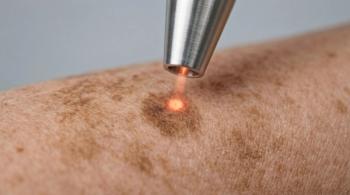
For recalcitrant pigment, the clinicians often turn to procedures including superficial to medium-depth chemical peels, pigment‑targeting lasers, and microneedling. These may be used in combination to enhance penetration and address dermal pigment, always layered on a robust topical regimen and under careful heat control to avoid rebound worsening. Chemical peels, particularly salicylic acid and superficial trichloroacetic acid, are cited as valuable adjuncts in pigment management. While these treatments are effective across skin tones, both clinicians caution against deeper peels in patients with higher Fitzpatrick types due to increased risk of pigmentary complications.
Patient adherence was emphasized as a central consideration in therapeutic planning, as product frequency, tolerability, cost, and sensorial experience can all be influences. Elbuluk and Hartman advocate starting with simple regimens and escalating as tolerance and motivation build.
“The likelihood of one product working for everybody’s melasma is probably not the case, so it’s always about building that particular recipe for that patient,” they concluded.
Articles in this issue
10 months ago
Dermatology Times November 2025 Print Recap10 months ago
Exploring a Rapidly Evolving Therapeutic Landscape10 months ago
Skin Aging and Cellular Senescence10 months ago
Clinicians Debate True Sensitive Skin Care10 months ago
ORKA-001 Advances Toward Yearly Dosing10 months ago
Treating the Pain of Atopic DermatitisAdvertisement
Related Content
Advertisement



Latest CME


Advertisement
Advertisement
Trending on Dermatology Times
1
FDA Grants Priority Review to Zasocitinib for Moderate-to-Severe Plaque Psoriasis
2
FDA Approves Ameluz Red Light PDT for Superficial Basal Cell Carcinoma
3
How Emerging Androgenetic Alopecia Therapies Target DHT at the Scalp Level
4
Merz Expands BELOTERO Portfolio With Two New FDA-Approved Hyaluronic Acid Fillers
5