


Opinion|Videos|March 12, 2026
Interpreting Baseline Profiles in HS
Author(s)Martina Porter, MD, Hadar Lev-Tov, MD, MAS
In this episode, the panelists explore the baseline characteristics of the STOP HS trials and why they matter for interpreting the results and applying them to practice. They first emphasize the achievement of running a >1,200‑patient, global phase 3 HS program, urging clinicians everywhere to refer patients to clinical trials to keep building robust data.
Advertisement
Episodes in this series
Dr. Martina Porter explains that the enrolled population closely mirrors real-world U.S. HS patients: median age in the mid‑30s, roughly two‑thirds female, and an average disease duration of ~10 years. Disease burden is substantial, with abscess–nodule counts around 11–13 and draining tunnels ~2.5–3 on average—likely even more severe than some prior HS phase 3 cohorts. Importantly, over one‑third of participants had prior biologic exposure, indicating a treatment‑experienced, often refractory group.
She also highlights the trial’s racial diversity, with >20% Black/African American participants—far higher than in many earlier HS trials. This representation is critical, they note, because Black patients are disproportionately affected by HS and frequently ask, “How does this work in people like me?”
The discussion then turns to subtle but potentially meaningful differences between STOP HS 1 and STOP HS 2. STOP HS 1 appears slightly more severe (slightly higher AN counts, somewhat higher proportion of women), while STOP HS 2 has more men. The panel explains that randomization was stratified by total lesion counts and prior biologic use, but not by sex; regional enrollment patterns (e.g., more male patients from certain regions) can influence the male–female mix and possibly modulate efficacy and safety signals. Overall, they conclude that both trials still reflect a clearly moderate‑to‑severe, clinic‑relevant HS population.
The next episode in this series features the panelists advancing their conversation on HS and focusing on evaluating the primary endpoint of the STOP-HS trials.
Advertisement
Related to this article

A retrospective claims analysis of 2897 matched pairs found hazard ratios of 0.48 to 0.67 for new atopic disease with dupilumab vs systemic corticosteroids in children.
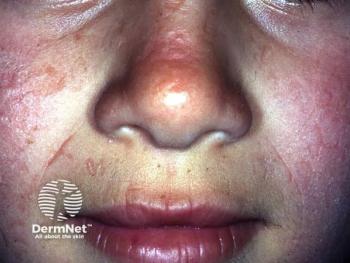
Disc Medicine reports the phase 3 APOLLO trial met all primary and secondary end points, with whole-blood PPIX reduced 41.4% vs placebo and an NDA resubmission planned by end of 2026.

Castor oil has become a popular social media remedy for thicker, longer hair, but evidence supporting its ability to stimulate hair growth remains limited.
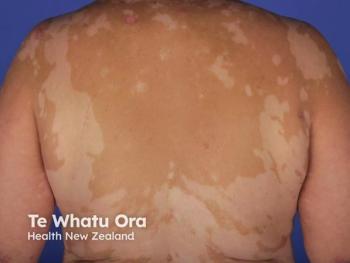
The FDA clearance allows Edesa to expand an ongoing placebo-controlled study of the CXCL10 antibody EB06 to US sites, with topline data expected in the fourth quarter of 2027.

The novel oral helicase-primase inhibitor demonstrated significantly higher rates of complete lesion healing compared with investigator’s choice treatment in the phase 3 PRIOH-1 trial.
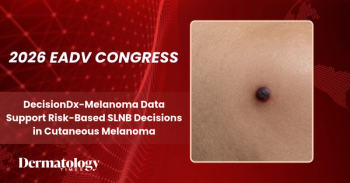
Prospective data suggest DecisionDx-Melanoma may help refine SLNB decisions and identify recurrence risk beyond conventional staging.

Falk G. Bechara, MD, discusses long-term tunnel control, structural damage, and the evolving role of biologics and surgery in HS care.
Galderma has agreed to acquire ZO Skin Health for $1.5 billion, adding the physician-dispensed skincare brand to a portfolio that already includes Cetaphil and Alastin.
Advertisement
Advertisement
Trending on Dermatology Times
1
Bitopertin Meets All End Points in Phase 3 APOLLO Trial for EPP
2
Social Media Mythbusters: Can Castor Oil Really Grow Hair?
3
EADV 2026 Atopic Dermatitis Highlights: Tilrekimig, RAC2 Inhibition, and Level Up Data
4
Dupilumab Associated With Lower Atopic March Risk in Pediatric Atopic Dermatitis
5