


Opinion|Videos|March 19, 2026
Clinical Implications for High-Level Treatment Responses in HS
Author(s)Martina Porter, MD, Hadar Lev-Tov, MD, MAS
This episode features panelists moving beyond HiSCR50 to examine the “depth of response” endpoints—HiSCR75, HiSCR90, and HiSCR100—and what they mean clinically.
Advertisement
Episodes in this series
Dr. Martina Porter explains that dose–response is harder to detect at the 50% improvement level but becomes more apparent when looking at higher bars of clearance. For HiSCR75 in STOP HS 1, placebo achieved about 15%, versus 20% with 45 mg povorcitinib and ~25% with 75 mg; this numerical dose trend, however, was not statistically significant. In STOP HS 2, where the placebo rate was lower (13%), the separation became statistically significant, with 25.5% reaching HiSCR75 on 45 mg and 28.4% on 75 mg, again suggesting a modest but real dose effect when responses are deeper.
They note that baseline differences between STOP HS 1 and 2 (e.g., slightly greater severity in STOP HS 1) likely influence these results and will be better understood in future subgroup and post‑hoc analyses. The discussion then reframes HiSCR90 and HiSCR100: while only about 8–15% and ~10% of patients, respectively, reach these levels at 12 weeks, placebo rates are well under 10%, meaning these are true treatment effects. Achieving HiSCR100—no inflammatory lesions—is transformational for patients, allowing many to live as if they don’t have HS. Finally, Dr. Hadar Lev‑Tov points out that the 75 mg dose roughly doubles the proportion reaching HiSCR90/100 versus placebo in 12 weeks, which supports the clinical rationale for having multiple oral doses available, even though dose optimization and “mix and match” strategies would be off‑label and must stay within safety limits.
In the next episode, panelists will continue their discussion on HS and highlight its quality of life impact.
Advertisement
Related to this article

A retrospective claims analysis of 2897 matched pairs found hazard ratios of 0.48 to 0.67 for new atopic disease with dupilumab vs systemic corticosteroids in children.
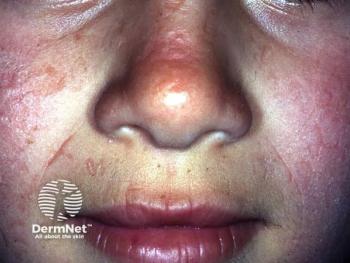
Disc Medicine reports the phase 3 APOLLO trial met all primary and secondary end points, with whole-blood PPIX reduced 41.4% vs placebo and an NDA resubmission planned by end of 2026.

Castor oil has become a popular social media remedy for thicker, longer hair, but evidence supporting its ability to stimulate hair growth remains limited.
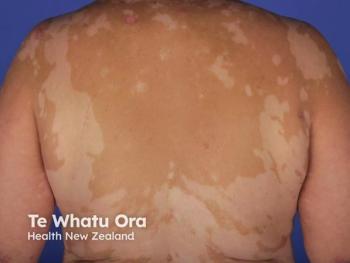
The FDA clearance allows Edesa to expand an ongoing placebo-controlled study of the CXCL10 antibody EB06 to US sites, with topline data expected in the fourth quarter of 2027.

The novel oral helicase-primase inhibitor demonstrated significantly higher rates of complete lesion healing compared with investigator’s choice treatment in the phase 3 PRIOH-1 trial.
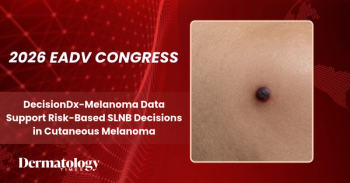
Prospective data suggest DecisionDx-Melanoma may help refine SLNB decisions and identify recurrence risk beyond conventional staging.

Falk G. Bechara, MD, discusses long-term tunnel control, structural damage, and the evolving role of biologics and surgery in HS care.
Galderma has agreed to acquire ZO Skin Health for $1.5 billion, adding the physician-dispensed skincare brand to a portfolio that already includes Cetaphil and Alastin.
Advertisement
Advertisement
Trending on Dermatology Times
1
Bitopertin Meets All End Points in Phase 3 APOLLO Trial for EPP
2
Social Media Mythbusters: Can Castor Oil Really Grow Hair?
3
EADV 2026 Atopic Dermatitis Highlights: Tilrekimig, RAC2 Inhibition, and Level Up Data
4
Dupilumab Associated With Lower Atopic March Risk in Pediatric Atopic Dermatitis
5