

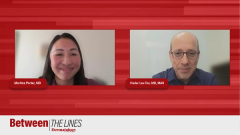
Opinion|Videos|March 12, 2026
Evaluating HiSCR50 Outcomes in HS
Author(s)Martina Porter, MD, Hadar Lev-Tov, MD, MAS
In this episode, our experts delve into the primary efficacy results of the STOP HS trials, focusing on HiSCR50 at weeks 12 and 24 and how to interpret those numbers.
Advertisement
Episodes in this series
Dr. Martina Porter explains that in STOP HS 1, about 40% of patients on either 45 mg or 75 mg povorcitinib achieved HiSCR50 at week 12 versus just under 30% on placebo; in STOP HS 2, HiSCR50 rates were ~42% on both active doses versus 28.6% on placebo. She notes that placebo rates vary widely across HS trials, which complicates cross‑trial comparisons and the debate over whether the “delta” vs the absolute response matters. Even though both placebo and active arms are slightly lower than in some biologic studies, she views these results as being in the same overall range, with roughly half of patients achieving ≥50% improvement by 12 weeks.
By week 24, after all patients are on active drug in the open‑label phase, HiSCR50 rates rise further: just over 50% for those continuously on drug in STOP HS 1, and ~57–58% in STOP HS 2, with >60% among those who switched from placebo. The panel stresses that longer time on treatment generally yields better outcomes in HS. They also address the apparent lack of dose separation between 45 mg and 75 mg at week 12, suggesting that when a very heterogeneous population (from relatively mild Hurley II to very severe Hurley III disease) is pooled, dose–response differences get diluted, and may only become clear in subgroup and post‑hoc analyses. Finally, they remind clinicians that dropout over time changes the denominator, so rising percentages at later time points must be interpreted alongside forthcoming longer‑term data on patient disposition and durability of response.
Our next episode further explores HS, highlighting the clinical implications for high-level treatment responses, such as HiSCR75, HiSCR90, and HiSCR100.
Advertisement
Related to this article
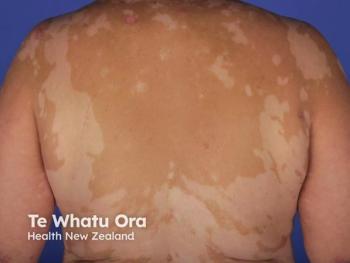
The FDA clearance allows Edesa to expand an ongoing placebo-controlled study of the CXCL10 antibody EB06 to US sites, with topline data expected in the fourth quarter of 2027.

The novel oral helicase-primase inhibitor demonstrated significantly higher rates of complete lesion healing compared with investigator’s choice treatment in the phase 3 PRIOH-1 trial.
Prospective data suggest DecisionDx-Melanoma may help refine SLNB decisions and identify recurrence risk beyond conventional staging.
Falk G. Bechara, MD, discusses long-term tunnel control, structural damage, and the evolving role of biologics and surgery in HS care.
Galderma has agreed to acquire ZO Skin Health for $1.5 billion, adding the physician-dispensed skincare brand to a portfolio that already includes Cetaphil and Alastin.

New dermatology research explores hidden steroids in OTC products, infant eczema, melanoma prevention, cutaneous lymphoma, and pediatric AD.

SYX-5219 improved disease severity and itch in a Phase 1b trial of adults with moderate to severe atopic dermatitis.

In a survey of 301 employed adults, overall work impairment attributable to CHE was 31.8%, and quality of life worsened in step with self-reported disease severity.
Advertisement
Advertisement
Trending on Dermatology Times
1
FDA Approves Pritelivir for Refractory Mucocutaneous HSV in Immunocompromised Adults
2
GLP-1 Agonists Address Metabolic Risk in Psoriatic Disease
3
EB06 Phase 2 Vitiligo Study Receives FDA IND Clearance
4
EADV 2026 Atopic Dermatitis Highlights: Tilrekimig, RAC2 Inhibition, and Level Up Data
5