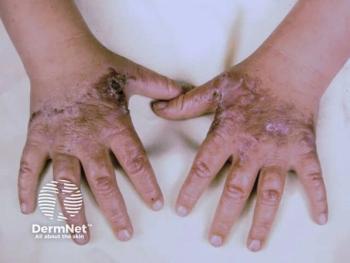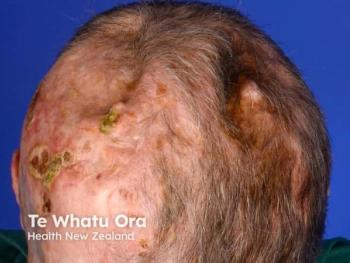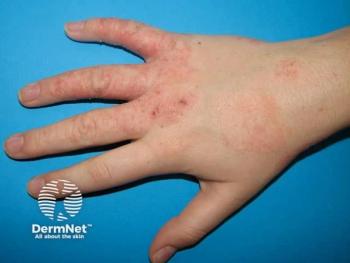
Dermatitis-related adverse events vary widely across atopic dermatitis systemic trials, driven by disease fluctuation and reporting differences, informing patient counseling and flare definitions.
Radiation dermatitis significantly affects breast cancer patients, impacting quality of life and treatment. Discover effective prevention and management strategies.
Radiation dermatitis (RD) is one of the most common adverse effects in those receiving radiation therapy (RT). Approximately half of all patients with cancer undergo RT, and almost all of these patients (95%) will develop RD.1 Clinically, acute RD ranges from mild erythema to desquamation, ulceration, and necrosis. Chronic RD is characterized by fibrosis, dyspigmentation, atrophy, and telangiectasia.2,3 RD can significantly impact a patient’s quality of life and even interrupt cancer treatment when severe.4 Thus, addressing RD is essential, and dermatologists play an important role in recognizing, preventing, and managing this condition. This is particularly relevant in breast cancer, where radiation is a cornerstone of treatment, and Breast Cancer Awareness Month serves as a reminder that comprehensive cancer care must also encompass skin health.
Acute RD may begin with transient erythema within hours of exposure, but the more characteristic sustained reaction develops after 1 to 2 weeks. This clinical presentation is often defined by grading systems like the Common Terminology Criteria for Adverse Events or RT Oncology Group (RTOG). Milder reactions, corresponding to grade 1, present with faint erythema and dry desquamation.
Grades 2 and 3 present with a transition to moist desquamation, starting in skin folds and then developing beyond these areas in grade 3. Life-threatening necrosis and ulceration can occur in grade 4. Chronic RD occurs after 90 days of RT and can present with hypo- or hyperpigmentation, atrophy of the epidermis and dermis, telangiectasia, and fibrosis.2,3
Several factors influence the severity of RD in patients with breast cancer. Treatment-related variables include total dose, fractionation, energy, and the use of a bolus. Patient-related factors such as ethnicity, larger breast size, higher body mass index, smoking, and comorbidities like diabetes or cardiovascular disease also affect risk.5,6
The pathogenesis of RD involves direct tissue injury and secondary inflammatory responses driven by oxidative stress. Ionizing radiation results in DNA damage and the generation of free radicals, which trigger an inflammatory cascade characterized by increased production of cytokines such as IL-1, IL-6, and TNF-α. Damage to basal keratinocytes leads to impaired epidermal renewal and skin barrier function. Chronic changes may result in part from TGF-β–mediated fibroblast activation and the synthesis of extracellular matrix components.1-4
Acute RD has been shown to have significant quality-of-life (QOL) impacts. In one study, the Skindex-16, an instrument validated for assessing dermatologic-related QOL, rose, on average, from 0 to 34 after RT, demonstrating a significant negative impact on QOL.7 Patients with acute RD experience sleep disturbances, burning, pruritus, and body image distortions. They also incur the costs of lifestyle changes to manage symptoms, such as purchasing comfortable undergarments or soothing skin care products.4,5 These effects, along with the risk of chronic sequelae such as scarring, highlight the importance of counseling and supporting patients throughout the treatment process.
Given the high prevalence and clinical impact of RD, several expert working groups, such as the Multinational Association of Supportive Care in Cancer,8 United States Cutaneous Oncodermatology Management (USCOM),6 and a pan-Canadian group5 have published guidelines and algorithms to standardize prevention and management.
Although recommendations differ across these studies, a few interventions are consistently endorsed. All 3 studies recommend continuing basic skin care, such as washing treated sites with soap and water. For prevention of acute RD, they all recommend topical corticosteroid creams or ointments, such as mometasone furoate 0.1%, betamethasone valerate 0.1%, and triamcinolone acetonide 0.1%.5,6,8 Although recommendations varied, other preventive strategies included moisturizing,5-6 barrier films such as Mepitel,5,8 photobiomodulation (low-level laser therapy), and olive oil.8 For the management of acute RD, there was a consensus between studies on foam dressings such as Mepilex Lite.5,6,8 Other recommendations included topical corticosteroids, saline soaks,5,6 and bacterial culture and treatment (with mupirocin or silver sulfadiazine) for more severe cases.6 The USCOM guidelines suggest continuing topical corticosteroids until 2 weeks after RT is completed to continue control of cutaneous inflammation during recovery.6 Despite these strategies, if RD progresses to severe grade 3 or grade 4, it is recommended that RT be held until adequate healing occurs.6 Though these recommendations differ slightly between studies, the development of these guidelines is crucial, as they provide physicians with effective strategies to support consistent prevention and management of RD in clinical practice.
In addition to these recommendations, studies investigating the efficacy of novel prevention and management strategies are numerous and ongoing. For example, a phase 2/3 randomized clinical trial found that bacterial decolonization with intranasal mupirocin and chlorhexidine body cleanser was effective in RD prophylaxis.9 Another randomized control trial found that topical fullerene cream, which has free radical–scavenging properties and thus reduces oxidative stress, decreased the RTOG score in patients, allowed for a higher cumulative dose of radiation before the first occurrence of acute RD, reduced pain scores, and improved quality of life.10 A phase 2 clinical trial studying the efficacy of topical noninvasive physical plasma found that post-hoc comparison with control patients yielded lower-grade RD and decreased symptoms such as pain, burning, and itching.11 Other studies have explored the efficacy of natural or plant-derived therapies. Separate trials investigating topical epigallocatechin-3-gallate, a bioactive constituent in green tea, and a novel emollient containing Calendula and olive oil both demonstrated reduced severity of radiation dermatitis.12,13 Similarly, systematic reviews studying the efficacy of aloe vera and curcumin in randomized controlled trials have also demonstrated reduced RD severity.14,15 Collectively, these ongoing investigations reflect the continuous effort to improve patient outcomes, reduce treatment-related morbidity, and provide supportive strategies to patients undergoing RT.
Though chronic RD is less clinically severe than many cases of acute RD, patients can still experience skin fibrosis and breakdown that can cause discomfort or functional deficits. This can be hard to manage, and multidisciplinary approaches often include wound care, physical therapy, and treatment with pentoxifylline, laser therapy, or hyperbaric oxygen, though the evidence on the efficacy of these therapies is limited.1-2 Further research is needed to better define effective strategies for the long-term management of chronic RD.
RD is a common toxicity that significantly impacts the quality of life and cosmetic outcomes in patients receiving RT for breast cancer. Advances in prevention and management therapies, as well as the development of expert guidelines, highlight the growing commitment to improving patient care. Dermatologists play an important role in recognizing and treating this condition in patients while providing support during survivorship care. During Breast Cancer Awareness Month, it is especially important to remember that comprehensive cancer care includes attention to skin health, highlighting the unique value of dermatology in oncology.
Tara Foroohar is a rising fourth-year medical student at Keck Medicine of USC in Los Angeles, California, and a dermatology research fellow at Yale School of Medicine.
William Damsky, MD, PhD, is an associate professor of dermatology and dermatopathology at Yale School of Medicine in New Haven, Connecticut.
Jonathan Leventhal, MD, is the director of the Onco-Dermatology Program at Smilow Cancer Hospital at Yale New Haven and associate professor of dermatology at Yale School of Medicine.
11 months ago
Cosmetic Trends of Dermatologic Interest in 202511 months ago
Identifying Breast Issues Beyond the Skin