


Virginia Sybert, MD, emphasized the importance of using genetic testing judiciously in dermatologic care.
Virginia Sybert, MD, emphasized the importance of using genetic testing judiciously in dermatologic care.

Dendy Engelman, MD, FACMS, FAAD, explores the benefits of EVERESSE monopolar RF technology, emphasizing safety, comfort, and effective skin rejuvenation.

Dendy Engelman, MD, FACMS, FAAD, explores the latest advancements in laser and energy-based dermatological treatments, including skin resurfacing and body contouring.
Whitney Hovenic, MD's new SPOOGE sunscreen hopes to engage Gen Z in sun protection, merging skincare with fun and effective sun care strategies.

An expert discusses how barzolvolimab demonstrated statistically significant and clinically meaningful reductions in UAS7 scores, with over 50% of patients achieving complete response and sustained disease control lasting 28 weeks after the final dose.
An expert discusses how the barzolvolimab phase 2 trial was a 76-week randomized, double-blind, placebo-controlled study testing different doses in patients with moderate to severe CSU, including those previously treated with omalizumab.

In a discussion on pediatric AD management, Shanna Miranti, MPAS, PA-C, emphasized the enduring role of topical treatments for residual itch and flares, and highlighted the importance of rapid-acting agents such as ruxolitinib cream.

Renata Block, DMSc, MMS, PA-C, interviews Adam Friedman, MD, FAAD, about his research into cannabidiol’s photoprotective potential, clinical trial design, and future directions.

Whitney Hovenic, MD, highlights alarming trends in Gen Z's sun protection habits and introduces SPOOGE, a new sunscreen brand promoting skin health.

Panelists discuss how recent innovations like topical tapinarof and roflumilast are transforming plaque psoriasis treatment by offering nonsteroidal, effective, and well-tolerated options that modulate immune pathways for long-term management while noting the ongoing need for scalp-friendly formulations to improve usability and adherence in patients with scalp involvement.

Explore career transitions in healthcare as PAs Renata Block, DMS-c, MMS, PA-C, and Jessica Dell'Aquila, MS, PA-C, share insights on professional growth and evolving roles in dermatology.

Lauren Madigan, MD, shares vital insights on complex dermatology, emphasizing accurate diagnoses and the importance of diversity in dermatologic imagery.

At Elevate-Derm Summer, Buchi Neita, MCMSc, PA-C, discussed enhancing dermatologic care for patients with skin of color by recognizing characteristics in common conditions and offered strategies to build rapport with patients.
An expert discusses how to approach treatment selection in a 68-year-old Latino patient with multiple comorbidities, including chronic kidney disease, emphasizing the importance of considering injection frequency preferences, treatment burden, and the excellent safety profile of targeted biologics in older patients with complex medical histories.
An expert discusses how to manage a 32-year-old man with both prurigo nodularis and atopic dermatitis who also has asthma, explaining why dupilumab would be the preferred treatment choice over nemolizumab due to safety concerns regarding asthma exacerbation with the latter medication.
An expert discusses how to approach a 58-year-old African American woman with severe prurigo nodularis experiencing extreme itch (9/10 rating) and extensive lesions, emphasizing the need for rapid systemic intervention with nemolizumab due to its faster onset of itch relief compared with other biologics.
Shanna Miranti, MPAS, PA-C, describes her clinical approach for managing moderate to severe pediatric atopic dermatitis and how she selects between the 3 available non-steroidal topicals.
Amy Spizuoco, DO, FAOCD, shares groundbreaking insights on alopecia treatments and emerging STIs at this year's Elevate-Derm Summer Conference, enhancing patient care.

Tina Bhutani, MD, shares vital insights on psoriasis management, sleep's role in dermatology, and new alopecia areata treatments at Elevate-Derm Summer 2025.
At Elevate-Derm Summer, Shanna Miranti, MPAS, PA-C, highlighted practical strategies for isotretinoin prescribing, addressed the impact of iPLEDGE hurdles, and introduced the SkinSync podcast.

Anisha Patel, MD, highlights dermatology's vital role in cancer care, discussing skin indicators and innovative immunotherapy at her Elevate-Derm Summer sessions.

Eichenfield discussed the ever-evolving armamentarium, and how to navigate changes in the field.
Discover key insights on melanonychia and the transformative potential of artificial intelligence from Ata Moshiri, MD, MPH, FAAD, at Elevate-Derm Summer 2025.

Traditional mouse models for EBS are limited, prompting Simpson's lab to create more accurate human-based tissue models.

Ata Moshiri, MD, MPH, FAAD, spoke about pathology interpretation and patient communication at Elevate-Derm Summer 2025, enhancing skin cancer diagnosis.

Swanson discussed new and upcoming therapeutics, and how she approaches treatment options with caregivers.

Discover Walter Liszewski, MD's insights on emerging therapies and consumer safety at Elevate-Derm Summer 2025, focusing on allergy research and treatment advancements.

Schachner was the 2025 recipient of the AAP Alvin H. Jacobs award at the 50th annual SPD meeting.
An expert discusses how the evolving CSU treatment landscape includes H1 antihistamines as first-line therapy, omalizumab as second-line, and emerging treatments like dupilumab, remibrutinib, and barzolvolimab that target different mechanisms including mast cell depletion.
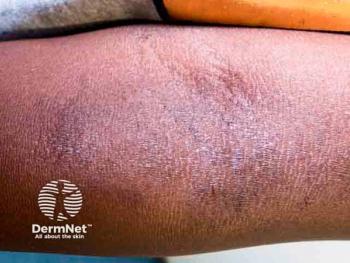
Joe Gorelick, MSN, FNP-C, discusses data on systemic treatments for atopic dermatitis presented at the Derm 2025 conference.