


Chronic itching can reflect systemic disease, highlighting the importance of comprehensive assessment.


Chronic itching can reflect systemic disease, highlighting the importance of comprehensive assessment.
Panelists discuss how comprehensive caregiver education forms the foundation of successful treatment, involving dispelling internet misinformation, demonstrating proper application techniques like fingertip units, addressing steroid fears, and establishing realistic expectations about long-term management rather than seeking quick cures.
Panelists discuss how they determine when to escalate to systemic therapies by focusing on patient-reported outcomes rather than clinical appearance alone, asking about flare frequency and typical vs bad days, while emphasizing the importance of continuing topicals alongside systemics with potential for future de-escalation.
At Elevate-Derm Fall, Victoria Garcia-Albea, NP, details the expanding educational landscape in hair disease management, the rise of dedicated hair health meetings, and practical pathways for clinicians looking to advance professionally through writing.
Victoria Garcia-Albea, NP, outlined evolving therapeutic strategies at Elevate-Derm Fall, highlighting low-dose oral minoxidil, off-label JAK inhibition for frontal fibrosing alopecia, Thiamidol in hyperpigmentation, and delgocitinib for chronic hand eczema.
Kim explores the significance of inflammation in dermatology, revealing its connections to various diseases and the importance of focused research.
Hilary Baldwin, MD, introduces the series and reviews acne pathogenesis, mechanisms of topical therapies, and key barriers to adherence in everyday practice.
Marc Serota, MD, discussed upcoming systemic JAK inhibitors, the value of ruxolitinib cream and phototherapy, and a personalized multimodal approach to improve repigmentation outcomes.

A panelist discusses how mechanistic insights and head-to-head data are reshaping systemic therapy development, trial design, and personalized treatment strategies.
Marc Serota, MD, outlines how ruxolitinib cream supports gradual, sustained repigmentation, highlights the significance of “islands” of early pigment return, and discusses when to escalate or combine modalities to optimize outcomes.

Shannon Trotter, DO, and Renata Block, DMSc, MMS, PA-C, discuss social media's impact on dermatology, highlighting trends, misinformation, and the need for clinician engagement.

Joseph Gatti, DMSc, MPAS, MBA, PA-C, discusses the impact of social media and AI on dermatology, urging professionals to adapt and educate in a rapidly evolving landscape.
Heather Goff, MD, MPH, discusses her role as SDPA Medical Director and the vital collaboration between dermatology PAs and physicians at the 2025 fall conference.

Discover how the SDPA Diplomate Fellowship has evolved with innovative learning tools, enhancing education for dermatology PAs at the Fall 2025 conference.

Heather Goff, MD, MPH, shares vital insights on lifestyle, ethics, and cutaneous lymphomas at SDPA Fall 2025, highlighting the future of dermatology.

Joseph Gatti, DMSc, MPAS, MBA, highlights the importance of collaboration between PAs and dermatologists, emphasizing mutual respect and the role of PAs in enhancing patient care.

Andrew Baker, MBA, MPAS, PA-C, discusses leadership and inclusivity in dermatology at the SDPA Fall Conference, emphasizing collaboration and member engagement for future growth.
Harrison Nguyen, MD, shares groundbreaking insights on CSU, vasculitis, and bullous diseases at the SDPA Fall 2025 conference, enhancing dermatologic education.
Shannon Trotter, DO, explores social media's impact on dermatology, lichenoid disorders, and granuloma annulare at SDPA Fall 2025.

Explore how a groundbreaking initiative by Hayden Middleton, PA-C, bridges dermatology and nutrition, enhancing patient care and clinician fulfillment.

Kassandra Holzem, MD, shares vital insights on dermatology red flags and GVHD management, enhancing oncology care at SDPA Fall 2025.
Kristine Kucera, PA-C, MPAS, DHS, reflects on her impactful 30-year career and celebrates the evolution of dermatology PAs at the SDPA Fall 2025 conference.
Explore the latest insights on psoriatic arthritis and psoriasis management from Shikha Singla, MD, emphasizing multidisciplinary care and early screening strategies.
SDPA Emerging Scholars share insights on mentorship and professional growth, highlighting the importance of collaboration in dermatology.
Panelists discuss how twice-daily dosing represents the biggest adherence challenge and how simplifying regimens from multiple location-specific medications to single versatile treatments significantly improves adherence, with once-daily formulations being much more manageable for busy families.
Panelists discuss how roflumilast demonstrated 25% Investigator’s Global Assessment (IGA) success at 4 weeks in the Integument PED trial with impressive long-term results showing 73% Eczema Area and Severity Index (EASI-75) achievement at 56 weeks, while highlighting its excellent tolerability profile with no black box warning, no folliculitis, and minimal stinging compared with previous phosphodiesterase-4 inhibitors.
Yasmine Kirkorian, MD, shares insights on pediatric dermatology advancements and genetic skin disorders at SDPA Fall 2025, emphasizing early diagnosis and innovative therapies.
Marc Serota, MD, discusses using ruxolitinib cream to safely maintain repigmentation, minimize steroid-related adverse effects, and enhance outcomes when combined with phototherapy.

Explore insights from SDPA leaders Renata Block, DMSc, MMS, PA-C, and Sarah Vicari, MMS, PA-C, on mentorship, volunteerism, and fostering growth for PAs.
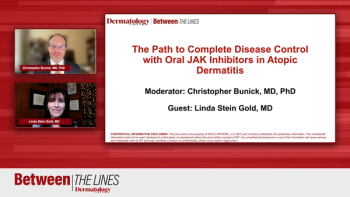
Panelists discuss how the AHEAD recommendations establish structured, patient-centered treatment targets that help clinicians achieve measurable and lasting success in atopic dermatitis management.