


Opinion|Videos|December 31, 2024
Patient Education and Key Considerations for Initiating Topical JAK Inhibitors
Author(s)Douglas DiRuggiero, DMSc, MHS, PA-C
A panelist discusses how initiating topical JAK inhibitors requires thorough patient education about proper application techniques, safety monitoring, and setting realistic expectations for treatment response timelines.
Advertisement
Episodes in this series





Advertisement
Related to this article

SYX-5219 improved disease severity and itch in a Phase 1b trial of adults with moderate to severe atopic dermatitis.

Christophe Piketty discusses 3-year ARCADIA data demonstrating sustained efficacy and long-term safety of nemolizumab in atopic dermatitis.

No skin lesion flares were observed through 16 weeks after switching from dupilumab to upadacitinib; itch flares occurred in 3.6% to 4.8% of patients with baseline WP-NRS scores of 6 or lower.

Three-year ARCADIA LTE data show sustained skin clearance and itch control with nemolizumab in moderate-to-severe atopic dermatitis.

Upadacitinib showed broader inflammatory effects and earlier skin barrier restoration than dupilumab in atopic dermatitis.

According to data presented at EADV, at week 16 of the phase 2 study, 47.8% to 62.5% of adults receiving tilrekimig achieved EASI 75 across doses, compared with 9.1% to 19.9% with placebo.
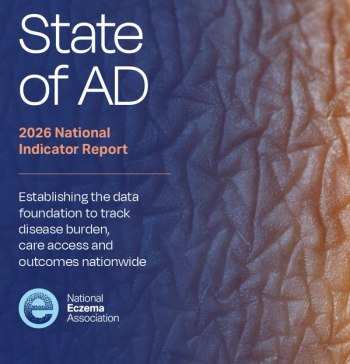
A new report from the National Eczema Association (NEA) found systemic corticosteroids were filled more often than dupilumab, and 13% of Americans live in counties without a dermatology or allergy/immunology practitioner.
Advertisement
Advertisement
Trending on Dermatology Times
1
First-in-Class Oral PKM2 Modulator Shows Early Efficacy in Atopic Dermatitis
2
Hidradenitis Suppurativa Claims Data: Sex Parity and Rural Care Gaps
3
JAK Inhibitor Safety in Atopic Dermatitis: Long-Term Epidemiology Data
4
No Observed Skin Lesion Flares After Switching to Upadacitinib in Atopic Dermatitis
5