







Principal investigator Jason Luke, MD, discusses what the new data means for melanoma treatment moving forward.
Principal investigator Jason Luke, MD, discusses what the new data means for melanoma treatment moving forward.

In part 4 of this Frontline Forum series, John M. Strasswimmer, MD, PhD; Andrew H. Weinstein, MD; Neal Bhatia, MD; Laura Ferris, MD; and Aaron S. Farberg, MD, discuss solutions for managing and treating patients with basal cell carcinoma.

Researchers conducted a systematic review of pediatric melanoma.

Learn from a panel of sun protection experts on how to effectively prepare your patients for the summer sun.

Coastal regions require environmentally-protective sun protection measures and best practices.

Click here to answer this week's poll.

While receiving checkpoint inhibitor therapy, patients with advanced melanoma benefitted from a telehealth exercise program.
In part 3 of this Frontline Forum series, John M. Strasswimmer, MD, PhD; Andrew H. Weinstein, MD; Neal Bhatia, MD; Laura Ferris, MD; and Aaron S. Farberg, MD, discuss solutions for managing and treating patients with basal cell carcinoma.

The first-of-a-kind product uses a topically applied small peptide fluorescent dye and handheld imager to non-invasively detect a biomarker of early tissue changes.

Renata Block, MMS, PA-C, spearheaded a skin cancer screening event for veterans in her hometown.
In part 2 of this Frontline Forum series, John M. Strasswimmer, MD, PhD; Andrew H. Weinstein, MD; Neal Bhatia, MD; Laura Ferris, MD; and Aaron S. Farberg, MD, discuss solutions for managing and treating patients with basal cell carcinoma.

Christopher Bunick, MD, PhD, shares pearls from his research in benzene contamination in sunscreens and what advice he shares with patients.

Leading clinicians discuss sun protection best practices based on weather, climate, and travel needs.

Leading clinicians discuss sun protection and special issues in photosensitivity.

Leading clinicians debunk 5 of the most common sunscreen myths.

Leading clinicians discuss sun protection best practices and recommendations for the upcoming summer months.

Patient adherence to self-management strategies can be difficult.

Catch up on the innovative pearls shared at the 2023 American College of Mohs Surgery including strategies to enhace the patient experience, the role artificial intelligence plays in dermatologic care, and more.
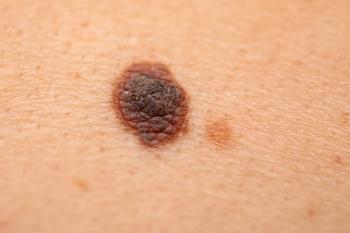
In a large cohort of transgender patients, gender-affirming hormone therapy did not have an effect on the incidence of skin cancers.
In part 1 of this Frontline Forum series, John M. Strasswimmer, MD, PhD; Andrew H. Weinstein, MD; Neal Bhatia, MD; Laura Ferris, MD; and Aaron S. Farberg, MD, discuss solutions for managing and treating patients with basal cell carcinoma.

Brandon Beal, MD shared his experience, which technology solutions work best, and resources available to dermatology practices.

The rapid pearl session explored a case that challenged surgeons to preserve the function of the tarsal plate and musculature attachments.

Nicole Vélez, MD, provided marketing pearls to streamline mundane tasks and promote your practice in the digital world.

His keynote speech at ACMS focused on artificial intelligence for precision medicine and cancer diagnosis.

Jerry Brewer, MD, MS, shared pearls on reasons to avoid or discontinue Mohs surgery and keeping calm with stressed, vulnerable patients.