




Atopic Dermatitis
Latest News

Advertisement
Latest Videos




Advertisement
More News

In a session at ACAAI’s Annual Scientific Meeting, David R. Weldon, MD, FACAAI, FAAAI, demonstrates punch biopsies for allergists and discusses the importance of knowing when to collaborate with dermatologists.

Patch testing can prove very useful in patients with suspected sensitization to a variety of allergens contained in personal care products and orthopedic implants.

Helen Brough, MA, MSc, PhD, MBBS, FAAAAI, FRCPCH, discusses the role of AD skin in infants and emollient application for preventing food allergy.
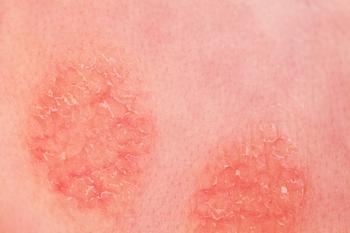
In this video interview, Mark Serota, MD, highlights the key talking points from his session at the 2021 ACAAI annual scientific meeting.

Involving patients with atopic dermatitis in decisions about developing their treatment plan can lead to improved treatment outcomes and higher satisfaction, the American College of Allergy, Asthma & Immunology (ACAAI) medical director said in a luncheon presentation at the college’s 2021 Annual Scientific Symposium.

In this video interview, Jeff Yu, MD, highlights key talking points from his session on regional dermatitis and rash from the American College of Allergy, Asthma & Immunology annual scientific meeting.

A study presented at the 2021 ACAAI annual scientific meeting shows data demonstrating severe atopic dermatitis in pediatric patients is better controlled through multidisciplinary clinics.

There are several fine nuances and differences in the presentation of atopic dermatitis in patients with skin of color that differ from the presentation seen in patients with lighter skin types. As such, clinicians should be aware of these differences to improve the treatment and management of AD in patients with skin of color.
In this episode, we dive into the background of the “The Full Spectrum of Dermatology: A Diverse and Inclusive Atlas.” Adam Friedman, MD, and Misty Eleryan MD, MS, describe their process to creating this new dermatologic resource.
In this week’s Pointers with Dr Portela, the 208SkinDoc honors the end of Eczema Awareness Month with a video explaining the skin condition.

In this video, Ama Alexis, MD, tells us what we have to look forward to at the ACAAI conference this week.

Jonathan M. Spergel, MD, PhD, FACAAI discusses what there is to look forward to at the ACAAI conference and what he's highlighting at the event.

In this episode of DermView, Adelaide Hebert, MD, highlights both emollients and moisturizers. She also talks about bathing and how often a child should bathe if they have eczema.

Investigators noted the treatment method was well tolerated in patients who could not safely use oral cyclosporine.

Investigators suggested the prevention of exposure during pregnancy could help control atopic dermatitis and other potential allergies in pediatric populations.

Patients treated with the monoclonal antibody had increased incidences of conjunctivitis, though many of these incidences were considered mild and were resolved by the end of the study.

Investigators recommended a treatment course of at least 1-2 months with medium strength to potent topical corticosteroids should be considered before dupilumab discontinuation in affected children and adolescents.

In this episode of DermView, Adelaide Hebert, MD, explains the clinical manifestations of eczema, how the chronic the condition is, and the benefits of using ceramide cream for management.
FDA approval of ruxolitinib (Opzelura, Incyte) adds the first new topical anti-inflammatory to the atopic dermatitis (AD) armamentarium in 50 years, but boxed warnings raise questions.

People are born with sterile skin and then gain microbiota throughout their life. Lawrence J. Green, MD, FAAD, explains how this affects the skin barrier and ultimately plays a role in atopic dermatitis at the 2021 Fall Clinical Dermatology Conference.
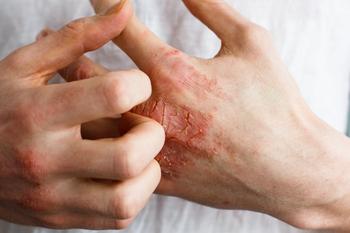
LEO Pharma releases the 16-week data regarding tralokinumab (Adtralza; LEO Pharma) as a treatment for adolescent patients aged 12 to 17 years.

Neal Bhatia, MD, explores steroid alternatives in his presentation at the Fall Clinical Dermatology Conference.
In this week’s Pointers with Dr Portela, the 208SkinDoc explains what keratosis pilaris is and whether or not it can be cured.

In this episode of DermView, Adelaide Hebert, MD, explains how eczema can lead to growth issues in pediatric patients, how environmental factors may play a role in flare ups, and more.

In this exclusive video interview with Dermatology Times®, Andrew Blauvelt, MD, MBA, discusses the newest phase 3 clinical data on investigational tralokinumab as a potential treatment option in atopic dermatitis.
Advertisement
Advertisement
Trending on Dermatology Times
1
FDA Approves Baricitinib for Adolescents With Severe Alopecia Areata
2
Dr. Charrow Highlights Earlier Biologic Use and Deroofing in Hidradenitis Suppurativa
3
From Mechanism to Management: Navigating Male Pattern Hair Loss and New Topical Therapies
4
Tremfya Meets Primary, Major Secondary Endpoints in Phase 4 STAR Study of Axial PsA
5