


Atopic Dermatitis
Latest News
Advertisement
Latest Videos


Advertisement
More News
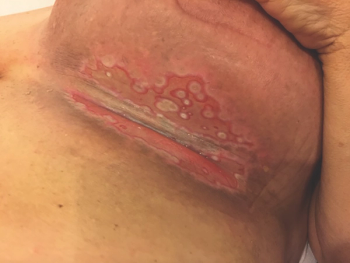
Dermatologists investigate better ways to treat radiodermatitis as it becomes increasingly common in breast cancer patients.

Niki Vora reflects on how her struggles with untreated atopic dermatitis, folliculitis and cystic acne led her to writing her scholarship-winning essay.

Psoriasis and atopic dermatitis patients want more nonsteroidal topical options. This expert breaks down newly available treatments and those to come.

A third of the most viewed eczema videos on YouTube give misleading and potentially harmful information, says a recent study.
In this Medical News Minute, Dr. Lazzara discusses the findings of a recent study that examined the dosage of an experimental drug for the treatment of itchy skin in people with atopic dermatitis.

Dermatologists should not depend on a rescue approach for atopic dermatitis flares, says a recent paper. Instead, they should talk with patients about newer treatment options that could offer long-term disease with minimal adverse events.
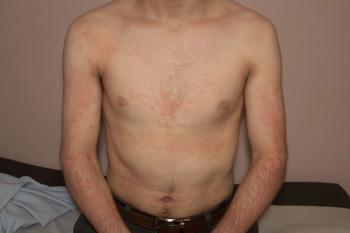
The realization of the critical importance of the IL-17 and 23 pathways have led to the development of numerous therapies that target parts of the immune system.

Insights offer greater understanding around patient perspectives and desires that could prove useful to dermatologists in managing atopic dermatitis and psoriasis.

LEO Pharma has submitted an Investigational New Drug Application (IND) to the U.S. Food and Drug Administration (FDA) for the study of an oral atopic dermatitis treatment, JW1601/LP0190, according to a company announcement.
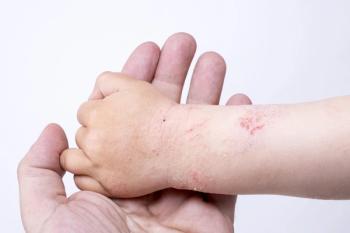
Research suggests that early-, mid-, and late-onset pediatric AD may be clinically distinct disease subtypes and that age of onset could be used to risk stratify patients.
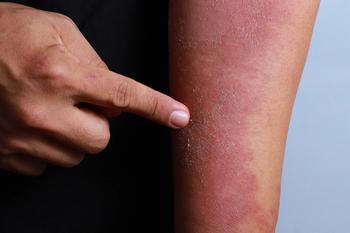
Wet wraps can improve moderate-to-severe atopic dermatitis, but little research has explored the impact of different topical corticosteroid vehicles on efficacy and patient tolerability. Here's what researchers discovered when they compared creams and ointments as vehicles for corticosteroid wet wraps in atopic dermatitis patients.

In this video, Dr. Lazzara discusses a study that examined operational definitions of atopic dermatitis in the literature, and their potential effect on prevalence and associated risk factors.
Twenty-five percent of adults with atopic dermatitis report the disease started in adulthood. Yet, diagnosing adult-onset atopic dermatitis can challenge even expert clinicians. Here's what you need to know.

The narrative about food, diet and atopic dermatitis recently changed significantly after publication of the Learning Early About Peanut study, says Peter Lio, M.D. Diet matters, and he discusses in what ways.
Researchers treated 22 patients with facial dermatitis and noted significant decreases in disease severity in four scores assessed. According to researchers, this study offers first proof of efficacy for black tea dressing treatment.
Researchers assessed levels of inflammatory and cardiovascular risk proteins in the blood of 30 children under five who had been diagnosed with moderate-to-severe atopic dermatitis and found that systemic immune activation is present within months of atopic onset.
Rajani Katta, M.D., shared some of the new triggers for contact dermatitis at this weekend's Society for Pediatric Dermatology Annual Meeting in Austin, Texas. With a practice nearly exclusively dedicated to treating this condition, she's seen a rising number of cases related to essential oils and flavorings.

While topical therapies may suffice for mild-to-moderate atopic dermatitis, systemic agents may become necessary for more severe disease. Peter Lio, M.D., discusses his approach to treatment utilizing available therapies.
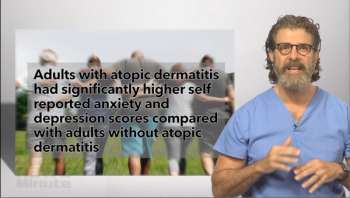


Crisaborole ointment, 2%, (Eucrisa, Pfizer) appears to be safe and effective in children aged three months to less than 24 months who have mild-to-moderate atopic dermatitis, according to results of a phase 4 trial released yesterday.
Researchers tested whether diluted bleach solution at the concentrations recommended for bleach baths is an effective antibacterial agent.

In this Medical News Minute, Dr. Bobby Lazzara discusses the specifics regarding injection site reactions.
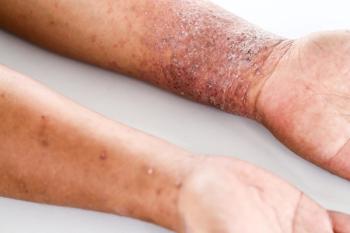
Are you training your patients on how to use their self-injectable medications safely and effectively? If not, you may want to start, according to researchers of a recent study, which examined patient behavior surrounding self-injection devices.
Clothing is a secondary skin and can influence the severity of skin conditions such as atopic dermatitis. But the antibacterial effectiveness of specialized clothing used to reduce disease symptoms varies considerably. Researchers recently decided to put these fabrics to the test - here's what they found.
Advertisement
Advertisement
Trending on Dermatology Times
1
FDA Approves Baricitinib for Adolescents With Severe Alopecia Areata
2
Dr. Charrow Highlights Earlier Biologic Use and Deroofing in Hidradenitis Suppurativa
3
From Mechanism to Management: Navigating Male Pattern Hair Loss and New Topical Therapies
4
Tremfya Meets Primary, Major Secondary Endpoints in Phase 4 STAR Study of Axial PsA
5