


Fewer than 20% of eligible patients currently receive injectable therapies, highlighting the need for oral alternatives.
Maddi Hebebrand is an associate editor of Dermatology Times and joined the MJH Life Sciences team in May 2024. She attended Baldwin Wallace University, studying Media Production and Film, and received her Masters in Digital Media from Ohio University. When she's not writing, Maddi loves to read, attend concerts and spend time with her family.
Fewer than 20% of eligible patients currently receive injectable therapies, highlighting the need for oral alternatives.

Test your knowledge of key words and terms associated with dermatology news from the last month.

Both treatments were well tolerated, with only mild, self-limiting adverse effects reported.

Dermatology Times is recapping our exclusive expert interviews from the month of September.

Many HS patients still require more aggressive or advanced treatments due to incomplete response to current options.

Explore the top headlines of the month, including insights on regulatory updates, expert pearls, and more.

Explore the top headlines of the week, including insights on the latest clinical trials, therapeutic updates, and more.
This week, we feature top articles from our sister publications on regulatory updates, clinical trial insights, and more.

Bambusa Therapeutics reveals promising phase I trial results for BBT001, targeting atopic dermatitis with dual-action bispecific antibodies.

Virginia Sybert, MD, emphasizes the importance of judicious genetic testing in pediatric dermatology, advocating for collaboration to enhance patient care.

This episode explores the controversy and lack of clear diagnostic criteria for TSW.

Bristol Myers Squibb expands direct-to-patient pricing for deucravacitinib and apixaban, enhancing access and affordability for patients in need.

By targeting IL-13, APG777 may allow for less frequent dosing compared to existing biologics.
Explore groundbreaking research and insights from the EADV Congress 2025, highlighting advancements in dermatology treatments and patient care.

Rebecca Smith, MD, recently led a Dermatology Times Case-Based Roundtable event on complex cases in atopic dermatitis.
Evidence presented at EADV supports upadacitinib’s long-term use in atopic dermatitis and other inflammatory conditions.

Patients switched from placebo to remibrutinib at week 24 showed similar reductions in autoantibodies by week 52.

At week 16, up to 61% mean EASI reduction was observed in high-dose patients versus 31% in placebo.

Treatment with APG777 led to a significant 71.0% reduction in EASI scores from baseline to week 16, compared to a 33.8% reduction with placebo, according to data presented at EADV 2025.

Galvokamig, a biologic targeting IL-13 and IL-17A/F, demonstrated significant benefits in moderate to severe atopic dermatitis.

Together with earlier trials presented at EADV, these findings support OX40 receptor inhibition as a promising therapeutic approach for AD.

The oral degrader produced biomarker reductions consistent with or superior to dupilumab, according to data presented at EADV 2025.

At EADV 2025, she showcased how OX40 and JAK inhibition offer complementary approaches to long-term disease control.

Ruxolitinib cream has become the first topical JAK inhibitor available for pediatric atopic dermatitis (AD) in the US.

Major unmet needs in pediatric AD include rapid itch relief, access, affordability, and better options for sensitive skin.

Presented at EADV Congress 2025, galvokimig showed promising early results in treating moderate to severe atopic dermatitis, targeting multiple inflammatory pathways for effective relief.

Data presented at EADV 2025 on the ROCKET-SHUTTLE trial demonstrate that rocatinlimab, a T-cell rebalancing therapy, significantly improves the signs and symptoms of moderate to severe AD in adults when used with topical therapies.

Balinatunfib was generally well tolerated, with common adverse events such as nausea and arthralgia also observed in placebo groups, according to data from EADV 2025.

Almirall's POSITIVE study, presented at EADV 2025, prioritizes patient well-being, showcasing the holistic impact of advanced treatments.
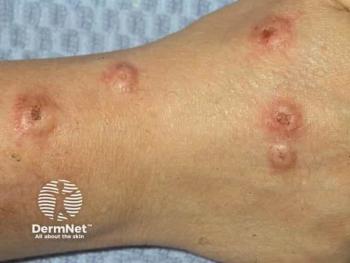
A meaningful difference in WI-NRS scores was observed as early as day 3 of treatment with ruxolitinib cream.