


The CHMP opinion follows recent US FDA approval, positioning Libtayo as the first immunotherapy approved for adjuvant treatment in high-risk CSCC.
Maddi Hebebrand is an associate editor of Dermatology Times and joined the MJH Life Sciences team in May 2024. She attended Baldwin Wallace University, studying Media Production and Film, and received her Masters in Digital Media from Ohio University. When she's not writing, Maddi loves to read, attend concerts and spend time with her family.
The CHMP opinion follows recent US FDA approval, positioning Libtayo as the first immunotherapy approved for adjuvant treatment in high-risk CSCC.

The episode underscores the clinical value of listening to patient advocates who bring firsthand understanding of disease impact.

Through 3 complex cases, participants explored practical ways to integrate agents like clascoterone and tazarotene into daily practice.

The trial evaluates ritlecitinib's efficacy for severe alopecia areata, utilizing innovative external placebo controls for enhanced patient outcomes.

Researchers found that while 96% of respondents use social media daily, most dermatologic information encountered online remains inaccurate or non-evidence-based.

Mark Kaufmann, MD, discusses how patient realities shape psoriasis treatment choices.
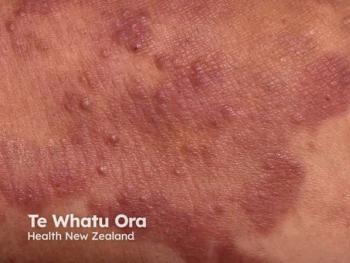
A recent case reinforced excimer laser therapy as a precise, efficient, and well-tolerated approach in managing cutaneous T-cell lymphoma variants.
If passed, the Safe Step Act could reduce treatment delays by prohibiting step therapy for FDA-labeled, guideline-supported agents.

Researchers found new patients incurred 40% higher consultation costs due to longer clinician interaction times.

Palvella surpassed enrollment goals in its Phase 3 SELVA trial, enrolling 51 patients at leading US vascular anomaly centers.

Explore the top headlines of the week, including insights on the latest clinical trials, therapeutic updates, and more.

This week, we feature top articles from our sister publications on regulatory updates, clinical trial insights, and more.

Discover how mesotherapy with hyaluronic and succinic acids significantly improves rosacea symptoms, offering a cost-effective adjunct therapy option.

Brownstone’s PDPA session explores how class labeling and insufficient data can mislead clinicians and alarm patients unnecessarily.
A late-breaking EADV presentation revealed that ritlecitinib significantly improved outcomes in patients with multiple forms of scarring alopecia.
The FDA has approved roflumilast 0.05% cream for atopic dermatitis in children aged 2 years and older, extending its use to a critical pediatric population.

Findings suggest that physical activity alone may not meet the psychosocial needs of vitiligo patients, emphasizing the need for targeted mental health care.

The biologic’s less frequent injections could ease logistical and emotional strain for patients with atopic dermatitis and their families.

Discover the latest IPC consensus on psoriasis severity reclassification, enhancing treatment strategies for better patient outcomes and quality of life.

Delgocitinib showed consistent efficacy in atopic, irritant, allergic, and hyperkeratotic forms of chronic hand eczema in pooled trial data.
The investigational extended-release tablet maintained therapeutic plasma levels while avoiding peaks linked to cardiovascular risk.

The approval represents the sixth FDA authorization for roflumilast since 2022.
Explore the top headlines of the week, including insights on the latest clinical trials, therapeutic updates, and more.
This week, we feature top articles from our sister publications on regulatory updates, clinical trial insights, and more.

Quality of life improvements paralleled clinical efficacy in the CUPID studies of dupilumab.

Trial data show up to 30% of patients achieved complete response and 70% demonstrated some benefit from treatment.
Disc Medicine filed an NDA for bitopertin to treat erythropoietic protoporphyria (EPP) and X-linked protoporphyria (XLP) in patients ≥12 years.

The vaccine is designed to stimulate T cell responses against IDO1- and PD-L1–positive cells within the tumor microenvironment.

ORKA-001 builds on the proven success of existing IL-23 inhibitors used in psoriasis treatment.

While VELA-1 achieved statistical significance under all analyses, VELA-2 narrowly missed its composite primary endpoint due to higher-than-expected placebo outcomes.