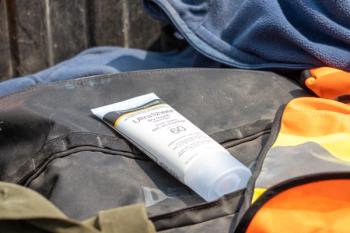
Two new Neutrogena facial sunscreens incorporate bemotrizinol, the first new sunscreen active ingredient added to the US OTC monograph in decades.
Translational Takeaways distills the most clinically relevant findings from emerging dermatology research into clear, practice-focused insights that inform real-world decision-making.
Translational takeaways cuts through weekly dermatology data releases to isolate what meaningfully changes clinical decision-making—focusing on signals of durability, differentiation, and real-world impact you can bring back to the clinic on Monday.
This week’s dermatology data cycle was less about incremental efficacy gains and more about identifying where therapies may meaningfully differentiate themselves in practice—through durability, mechanism expansion, or procedural simplification.
The final 24-week TRuE-AD4 data for topical ruxolitinib (Opzelura; Incyte) reinforce a point increasingly relevant in moderate AD management: durability of disease control matters as much as induction response.1
Patients entering the study had already failed, not tolerated, or were unable to use topical corticosteroids and calcineurin inhibitors—a population that often cycles through therapies without sustained control. Among week 8 responders who continued treatment as needed through week 24, response rates remained notably stable:
Mean affected body surface area remained low at 2.5%, while itch improvement (NRS4) remained high through week 24.
Translationally:
These data suggest topical ruxolitinib may help sustain disease control over 24 weeks in moderate AD patients with limited topical treatment options. The practical discussion may increasingly center on how long patients can maintain control before escalation to systemic therapy becomes necessary.
Avalo’s phase 2 LOTUS trial may represent one of the more notable mechanistic signals in HS this year. Abdakibart met its primary endpoint at both dosing regimens, with HiSCR75 response rates exceeding placebo by approximately 42%.2
Additional findings included:
Translationally:
HS development has become increasingly competitive, with differentiation now extending beyond HiSCR50 achievement alone. These data strengthen the rationale for IL-1β inhibition as a therapeutic strategy in HS, while also supporting continued investigation into dosing convenience and depth of response.
Longer-term durability and comparative performance in more treatment-experienced populations remain important unanswered questions.
Diakonos Oncology’s Fast Track designation for DOC1021 does not yet change melanoma management, but it reinforces continued FDA interest in individualized dendritic cell immunotherapy approaches.3
DOC1021 utilizes patient-derived dendritic cells loaded with tumor lysate and amplified tumor-derived mRNA in an effort to broaden tumor antigen presentation without genetic engineering or preconditioning chemotherapy.
Translationally:
Although still early in development, the outpatient administration model and avoidance of lymphodepletion or high-dose IL-2 may become important differentiators if meaningful efficacy signals emerge in later studies.
For now, this remains an early-stage platform to monitor rather than a near-term practice-changing development.
Medicus Pharma’s phase 2 D-MNA data explore a concept of longstanding interest in dermatologic oncology: localized treatment of BCC without traditional excision.4
The highest observed activity occurred in the 200μg cohort at day 57:
The data also suggested increasing clearance rates between day 29 and day 57, consistent with ongoing biological activity over time.
Translationally:
While preliminary and not registrational, these findings support continued exploration of minimally invasive localized treatment strategies for select nodular BCCs.
Whether histologic clearance rates ultimately become competitive enough for broader adoption remains the central question.
POLL:
Which development from this week is most likely to meaningfully influence dermatology practice over the next 5 years?
References