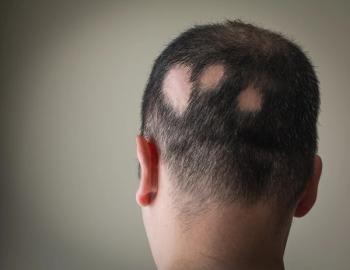
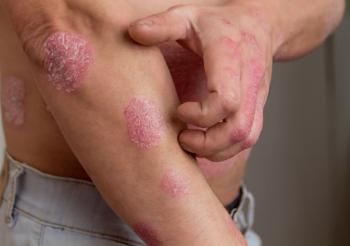
Houston dermatology clinicians compared severity scoring, JAK inhibitor safety data, and psychosocial counseling strategies across 3 alopecia areata patient cases.
Brad Glick, DO, MPH, and attendees discuss innovative treatments for atopic dermatitis, emphasizing the importance of patient comfort and modern nonsteroidal options.
“When I was a resident…my neighbor with a hand rash said, ‘I want to get better quicker.’ That was a big learning experience at that point in my training. Patients don’t want to wait. We have drugs that can get them better,” an attendee said at a recent live
Moderated by Brad Glick, DO, MPH, this event brought together community dermatologists, nurse practitioners/physician assistants, and residents to discuss practical management of atopic dermatitis (AD) in real-world settings. Glick focused on 3 illustrative cases—adult, adolescent, and pediatric—used to frame a broader discussion on treatment selection, topical nonsteroidals, and when to escalate to systemic therapy.
A 44-year-old patient with a 36‑year history of AD and approximately 10% body surface area (BSA) involvement presented with significant itch, sleep disturbance, and impaired work performance. Clinical images showed erythema, scale, lichenification, and excoriations. Glick and the group emphasized that 10% BSA is clinically meaningful and often functionally “severe,” especially when itch and quality of life (QOL) impact are taken into account. “Is 10% a lot of disease? To me, it is,” Glick said.
The participants stressed that severity is not BSA alone. Itch (Numerical Rating Scale [NRS] 0-10), sleep loss, work/school impairment, and cosmetic impact are critical. Many advocated routine documentation of BSA and itch NRS in the electronic medical record to support both clinical decision-making and prior authorizations. “Even just more than the BSA, it’s the patient’s comfort level,” one attendee noted.
Midpotency triamcinolone had provided intermittent control but with increasing flare frequency. Advantages such as rapid efficacy, low cost, and familiarity were acknowledged, but limitations like sawtooth “on/off” patterns, steroid atrophy, acneiform eruptions, and growing concern over topical steroid withdrawal were heavily discussed. Several noted that UK and Canadian labels now explicitly warn about withdrawal.
Regarding nonsteroidal topicals, the group compared ruxolitinib cream (topical Janus kinase [JAK] 1/2 inhibitor), tapinarof (AhR agonist), and roflumilast (PDE4 inhibitor):
If disease control was not achieved, more than 50% chose systemic therapy (eg, biologics, JAK inhibitors) rather than simply cycling topical agents. Many favored a combination approach: short steroid burst or potent topical nonsteroidal plus early initiation of a biologic/JAK, then transitioning to nonsteroidal topical for maintenance of residual lesions.
A 14‑year‑old with 12 years of AD had prominent disease on the face, neck, and hands; a darker skin type; and flares exacerbated by football and sweating. The patient and parents were concerned about visible disease and pigmentary change. They declined injectables and were started on tapinarof once daily.
Glick highlighted less obvious erythema, more lichenification, papular/follicular patterns, and pronounced dyschromia (both hyper- and hypopigmentation) in patients with skin of color. In some cases, pigment alteration was more distressing to patients than active inflammation. Several clinicians explicitly try to limit topical steroid exposure and rely earlier on nonsteroidals to reduce steroid-related pigmentary change.
Safety in sensitive areas, itch relief speed, and impact on hyperpigmentation were also main drivers for therapy selection. Nonsteroidals (ruxolitinib, tapinarof, roflumilast) were generally considered appropriate first‑ or early‑line options on the face and neck, particularly when patients are reluctant to escalate to injectables. Across all cases, insurance barriers and high list prices were described as major obstacles. Sample availability strongly influenced which nonsteroidal was chosen in practice.
The final case involved a 6‑year‑old with classic flexural AD (antecubital and popliteal fossae), marked lichenification and excoriations, and constant scratching. Multiple topical steroids and topical calcineurin inhibitors (TCIs) had been tried with only partial, transient relief. As general pediatric challenges, adherence and caregiver education were cited as the top barriers. Long‑term safety (growth concerns with extensive steroid use), sleep disruption, behavior issues, and possible links between AD, systemic inflammation, and neuropsychiatric comorbidity (eg, attention-deficit/hyperactivity disorder) were also raised.
“I think what I’m hearing is that we use TCIs, but for the most part…because we have to, because it’s part of the steps that we need to do,” Glick said.
Parents often prefer “topical over systemic” even when biologics may offer superior disease control and potential long‑term benefits. Glick endorsed a shared decision framework: clearly present options (steroids, nonsteroidals, biologics, JAKs); discuss risks, benefits, and logistics; and then align the regimen with family preferences and practical access.
Furthermore, new data for ruxolitinib 1.5% cream in children aged 2 to 12 years showed IGA and EASI responses similar to those in adults, along with rapid and durable itch reduction. The same strength is used across age groups, with low systemic exposure in maximum-use studies. This has led some clinicians to reconsider ruxolitinib as a potential first-line topical nonsteroidal in mild to moderate pediatric AD, especially to avoid chronic steroid cycling. Others still prefer a short steroid “rescue” followed by transition to nonsteroidal maintenance.
Overall, this Case-Based Roundtable underscored that modern AD care is multidimensional: Severity is defined as much by itch, sleep, and QOL as by BSA; topical nonsteroidals now play central roles across age groups and skin types; and access hurdles frequently dictate what is truly feasible in day‑to‑day practice.