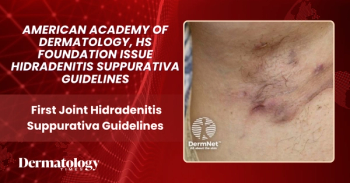
Lutikizumab significantly improved HiSCR75 response, pain, and disease flares in adults and adolescents with moderate to severe HS.
Steven Daveluy, MD, discusses how this approval helps close a critical gap in care for adolescents living with HS.
Following the FDA approval of secukinumab for adolescents aged 12 and older with moderate to severe hidradenitis suppurativa (HS), we spoke with Dr. Steven Daveluy, MD, an associate professor and program director at Wayne State University in Detroit, Michigan, to understand how this milestone could reshape clinical practice, treatment timing, and patient outcomes.
Daveluy: It's amazing to have 2 approved options for adolescents with HS. Previously, if an adolescent patient didn't have a great response to adalimumab, it could be really challenging to get off-label approval for another biologic. Now, we have 2 first-line options for our patients.
Daveluy: We don't yet have data specific to preventing scarring, tissue damage, and tunnel formation in adolescents, but our data from adults confirms that gaining control of the disease prevents progression and tunnel formation. It stands to reason that this would also apply to adolescent patients, since we know the disease behaves the same in adults and adolescents. This is the ultimate goal in HS, and we're still falling short. Early intervention with a highly effective treatment, like secukinumab or adalimumab, is essential to preventing tunnel formation, progression, and scarring. Ideally, patients should be started on a biologic and gain control of the inflammation prior to the formation of the first tunnel. We have evidence that delays in treatment result in progression that makes HS less responsive to therapy, so it's vitally important that we're not missing the window of opportunity to prevent scarring, tunnels, and future surgery. Biologics are approved for moderate to severe HS. One tunnel automatically means a patient has at least moderate disease, but we want to intervene before tunnel formation. Using a tool called the IHS4, the presence of 3 inflammatory lesions (absceses/nodules) at the same time defines moderate disease prior to tunnel formation. If a patient has had 3 inflammatory lesions at one time, it's time to talk biologics.
Daveluy: HS therapy is tricky since the response to any treatment can be unpredictable. We know that IL-17 is an important cytokine in HS, with elevated levels in lesional and perilesional skin, including tunnels. For some patients, IL-17 is really important, and their inflammation subsides on therapy. For other patients, a TNFa inhibitor may be a better fit, which is why it's so important that we have options. One key point for all patients with HS is that monotherapy is rarely effective. If we treat early enough, a biologic may be enough. But many patients are presenting with advanced disease or even early disease that requires combination therapy. As long as any therapy provides a meaningful response, even if partial, we keep it in the regimen and continue adding therapies until we achieve control. We often add spironolactone, finasteride, metformin, oral contraceptives, and courses of antibiotics to our biologic therapies to get the inflammation under control. This is a very different paradigm compared to psoriasis, where IL-17 or IL-23 blockade alone often provides complete or near-complete control.
Daveluy: Fortunately, the weight-based dosing is fairly simple. For our pediatric patients weighing 90kg or more, it's the adult dosing: 300mg weekly x 5, then every 4 weeks (with the option to increase to every 2 weeks). For patients weighing 30-89kg, the schedule is the same, but the dose is half (150mg). One piece of advice I have is to remember that adolescents grow right before our eyes. At each visit, check the patients weight, since they will need to transition to the adult dose at 90kg.
Daveluy: HS is such a difficult disease and has a huge impact on quality of life. The teenage years are already hard enough, adding a chronic illness with visible skin findings only makes it tougher. The fact that secukinumab is now approved helps alleviate some of the concerns that teens and parents may have about off-label treatment, which can be scary. Having 2 options provides a sense of security that if one doesn't get the control we need, we have another treatment. In the grander scheme, it helps highlight the facts that teens are affected by HS, and it can be very severe. Raising awareness is critical, since many patients still face years of missed and mis-diagnosis, which allows disease to progress. Bringing more attention to the disease and treatment options, especially for teens, will hopefully make the journey from HS presentation to disease control shorter and less painful, emotionally and physically.