


Opinion|Videos|September 22, 2025
Incorporating Patient Preference Into Treatment in a 34-Year-Old Patient With Dandruff
Author(s)Raj Chovatiya, MD, PhD, MSCI
A panelist discusses a case of moderate seborrheic dermatitis in a 34-year-old African American woman, emphasizing the need for individualized, culturally sensitive treatment plans that accommodate hair type and styling preferences, illustrating how an intermittent ketoconazole shampoo regimen aligned with her routine led to symptom improvement.
Advertisement
Episodes in this series
This case involves a 34-year-old African American woman with moderate seborrheic dermatitis, presenting primarily as persistent scalp flaking along the hairline and crown with mild to moderate itch. Her naturally tightly coiled textured hair and hair care practices—washing only once every 1 to 2 weeks due to styling preferences and scalp sensitivity—pose unique treatment challenges. She also expressed concern about topical therapies that require frequent application or leave residue, which could interfere with her styling.
This scenario highlights the importance of individualized treatment plans that respect patients’ hair types, cultural practices, and lifestyle preferences. Traditional recommendations to wash frequently or apply topical therapies daily may not be feasible or acceptable for all patients, especially those with textured hair prone to dryness and irritation from many shampoo bases or leave-on products.
Seborrheic dermatitis and dandruff exist on a spectrum, with dandruff often representing flaking without significant inflammation. This patient’s symptoms were closer to dandruff with mild inflammation, which can often be managed with intermittent antifungal shampoos rather than daily or continuous anti-inflammatory treatments.
In this patient’s case, an intermittent treatment strategy—using a 1% ketoconazole shampoo weekly in line with her washing routine—was chosen. This approach resulted in clinical improvement, with her investigator global assessment score dropping to mild and her worst itch score reducing to 1/10.
The key takeaway is that treatment success relies heavily on patient-centered discussions. Some patients prioritize efficacy and are willing to commit to more frequent applications, while others may prefer intermittent therapy integrated into their existing hair care routines to avoid dryness or disruption to styling. Understanding hair type, washing frequency, and patient preferences is crucial. Newer therapies and formulations designed for diverse hair types are emerging, but selecting the right treatment should always involve shared decision-making tailored to the individual’s lifestyle.
Advertisement
Related to this article

A retrospective claims analysis of 2897 matched pairs found hazard ratios of 0.48 to 0.67 for new atopic disease with dupilumab vs systemic corticosteroids in children.
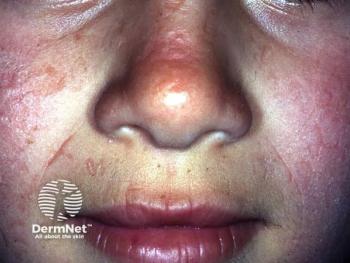
Disc Medicine reports the phase 3 APOLLO trial met all primary and secondary end points, with whole-blood PPIX reduced 41.4% vs placebo and an NDA resubmission planned by end of 2026.

Castor oil has become a popular social media remedy for thicker, longer hair, but evidence supporting its ability to stimulate hair growth remains limited.
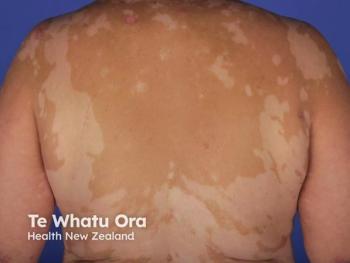
The FDA clearance allows Edesa to expand an ongoing placebo-controlled study of the CXCL10 antibody EB06 to US sites, with topline data expected in the fourth quarter of 2027.

The novel oral helicase-primase inhibitor demonstrated significantly higher rates of complete lesion healing compared with investigator’s choice treatment in the phase 3 PRIOH-1 trial.
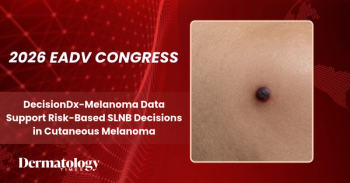
Prospective data suggest DecisionDx-Melanoma may help refine SLNB decisions and identify recurrence risk beyond conventional staging.

Falk G. Bechara, MD, discusses long-term tunnel control, structural damage, and the evolving role of biologics and surgery in HS care.
Galderma has agreed to acquire ZO Skin Health for $1.5 billion, adding the physician-dispensed skincare brand to a portfolio that already includes Cetaphil and Alastin.
Advertisement
Advertisement
Trending on Dermatology Times
1
Bitopertin Meets All End Points in Phase 3 APOLLO Trial for EPP
2
Social Media Mythbusters: Can Castor Oil Really Grow Hair?
3
EADV 2026 Atopic Dermatitis Highlights: Tilrekimig, RAC2 Inhibition, and Level Up Data
4
Dupilumab Associated With Lower Atopic March Risk in Pediatric Atopic Dermatitis
5