


Opinion|Videos|September 15, 2025
Differentiating Seborrheic Dermatitis From Other Conditions in Practice in a 22-Year-Old Patient With Multiple Treatment Failures
Author(s)Raj Chovatiya, MD, PhD, MSCI
A panelist presents a case of severe, chronic facial seborrheic dermatitis in a young man, highlighting diagnostic challenges and emotional impact, and illustrating how daily use of a phosphodiesterase-4 (PDE4) inhibitor foam led to near-clearance and symptom relief by 8 weeks, underscoring the therapy’s effectiveness, safety, and adaptability to patient preferences.
Advertisement
Episodes in this series
This case centers on a young man with severe, chronic facial seborrheic dermatitis marked by redness, burning, and persistent flaking. Despite trying numerous over-the-counter treatments, including antifungals, corticosteroids, and anecdotal remedies such as tea tree oil and apple cider vinegar, his symptoms remained uncontrolled. The physical symptoms were compounded by emotional distress, particularly around his appearance and its impact on personal relationships. Like many patients, he was initially misdiagnosed, highlighting the diagnostic challenges seborrheic dermatitis presents, especially when symptoms overlap with eczema, psoriasis, or contact dermatitis.
Recognizing hallmark features—such as involvement of the nose, eyebrows, and parietal scalp—can help distinguish seborrheic dermatitis from other inflammatory dermatoses. In cases such as this, where itch, burning, and emotional distress are prominent and treatment history is extensive, a more targeted and consistent therapy is needed. After beginning treatment with a PDE4 inhibitor foam applied daily, the patient achieved near-clearance by week 8. His itch was nearly resolved, and his skin significantly improved, validating clinical trial findings in a real-world setting. When treatment is successful, patients often ask about long-term plans. Some prefer continued daily use, while others explore intermittent use. While on-label treatment supports continuous use, regimens can be tailored to patient preferences and lifestyle.
Safety monitoring for this therapy is minimal, and long-term use tends to be well-tolerated without lab requirements. During follow-up, clinicians focus on symptoms such as itch, stinging, or recurrence rather than lab metrics or extensive exams. Importantly, while itch is a common and measurable symptom, patients may report variations such as burning, tingling, or discomfort. These nuances should not alter the treatment pathway but rather reinforce the need for therapies that address the full spectrum of symptom burden. Ultimately, this case illustrates how newer targeted treatments offer effective and manageable options for patients whose disease impacts both skin and quality of life.
Advertisement
Related to this article
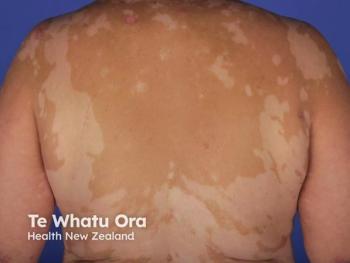
The FDA clearance allows Edesa to expand an ongoing placebo-controlled study of the CXCL10 antibody EB06 to US sites, with topline data expected in the fourth quarter of 2027.

The novel oral helicase-primase inhibitor demonstrated significantly higher rates of complete lesion healing compared with investigator’s choice treatment in the phase 3 PRIOH-1 trial.
Prospective data suggest DecisionDx-Melanoma may help refine SLNB decisions and identify recurrence risk beyond conventional staging.

Falk G. Bechara, MD, discusses long-term tunnel control, structural damage, and the evolving role of biologics and surgery in HS care.

Galderma has agreed to acquire ZO Skin Health for $1.5 billion, adding the physician-dispensed skincare brand to a portfolio that already includes Cetaphil and Alastin.

New dermatology research explores hidden steroids in OTC products, infant eczema, melanoma prevention, cutaneous lymphoma, and pediatric AD.

SYX-5219 improved disease severity and itch in a Phase 1b trial of adults with moderate to severe atopic dermatitis.

In a survey of 301 employed adults, overall work impairment attributable to CHE was 31.8%, and quality of life worsened in step with self-reported disease severity.
Advertisement
Advertisement
Trending on Dermatology Times
1
FDA Approves Pritelivir for Refractory Mucocutaneous HSV in Immunocompromised Adults
2
GLP-1 Agonists Address Metabolic Risk in Psoriatic Disease
3
EB06 Phase 2 Vitiligo Study Receives FDA IND Clearance
4
EADV 2026 Atopic Dermatitis Highlights: Tilrekimig, RAC2 Inhibition, and Level Up Data
5