


Opinion|Videos|September 8, 2025
Addressing Itch and Quality of Life Across Diverse Patient Populations in a 22-Year-Old Man With Seborrheic Dermatitis
Author(s)Raj Chovatiya, MD, PhD, MSCI
A panelist presents a case of severe seborrheic dermatitis in a young man with facial and scalp involvement, demonstrating how a once-daily, foam-based phosphodiesterase-4 (PDE4) inhibitor provided rapid, complete clearance and itch relief, highlighting the importance of efficacy, cosmetic acceptability, and quality-of-life considerations in treatment selection.
Advertisement
Episodes in this series
This case involves a young man experiencing widespread seborrheic dermatitis, including facial and scalp involvement, with symptoms such as itching, redness, and flaking. The discomfort, especially during warmer weather, significantly disrupts his ability to focus on daily activities, particularly academic performance. Despite prior treatments with antifungal shampoo and topical corticosteroids, his disease remains uncontrolled. Notably, his condition was classified as severe, highlighting the importance of careful evaluation, particularly in patients with darker skin tones, where erythema may be underrecognized. The presence of persistent itch and quality-of-life interference underscores the need for a more effective and patient-friendly treatment.
For patients with both facial and scalp involvement, especially in visible or hair-bearing areas, treatment must consider not only efficacy but also cosmetic acceptability and ease of use. In this case, a foam-based, nonsteroidal option was selected to simplify the regimen and reduce the burden of polypharmacy. After initiating a once-daily regimen with a PDE4 inhibitor in foam form, the patient experienced complete clearance and significant itch reduction within 8 weeks. This outcome reflects findings from phase 3 trials, where the majority of patients achieved clear or almost clear skin, with more than half achieving full clearance and many reporting substantial itch relief.
In real-world settings, patients often notice symptom improvement within the first few weeks, with full benefit typically evident by the 2-month mark. Follow-ups are scheduled around this time frame to assess efficacy and adjust care if needed. The safety profile of this treatment is also reassuring, with a low incidence of adverse events and minimal treatment-related effects. Overall, the use of a targeted foam-based therapy offers a highly effective, cosmetically acceptable, and well-tolerated option for patients with chronic, visible seborrheic dermatitis impacting their quality of life.
Advertisement
Related to this article

A retrospective claims analysis of 2897 matched pairs found hazard ratios of 0.48 to 0.67 for new atopic disease with dupilumab vs systemic corticosteroids in children.
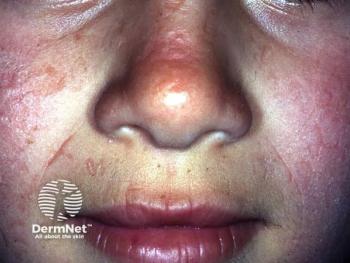
Disc Medicine reports the phase 3 APOLLO trial met all primary and secondary end points, with whole-blood PPIX reduced 41.4% vs placebo and an NDA resubmission planned by end of 2026.

Castor oil has become a popular social media remedy for thicker, longer hair, but evidence supporting its ability to stimulate hair growth remains limited.
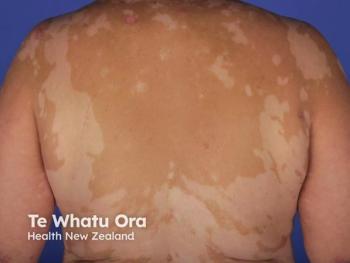
The FDA clearance allows Edesa to expand an ongoing placebo-controlled study of the CXCL10 antibody EB06 to US sites, with topline data expected in the fourth quarter of 2027.

The novel oral helicase-primase inhibitor demonstrated significantly higher rates of complete lesion healing compared with investigator’s choice treatment in the phase 3 PRIOH-1 trial.
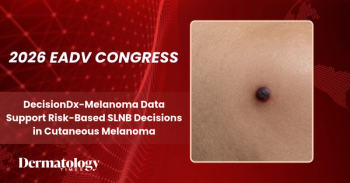
Prospective data suggest DecisionDx-Melanoma may help refine SLNB decisions and identify recurrence risk beyond conventional staging.

Falk G. Bechara, MD, discusses long-term tunnel control, structural damage, and the evolving role of biologics and surgery in HS care.
Galderma has agreed to acquire ZO Skin Health for $1.5 billion, adding the physician-dispensed skincare brand to a portfolio that already includes Cetaphil and Alastin.
Advertisement
Advertisement
Trending on Dermatology Times
1
Bitopertin Meets All End Points in Phase 3 APOLLO Trial for EPP
2
Social Media Mythbusters: Can Castor Oil Really Grow Hair?
3
EADV 2026 Atopic Dermatitis Highlights: Tilrekimig, RAC2 Inhibition, and Level Up Data
4
Dupilumab Associated With Lower Atopic March Risk in Pediatric Atopic Dermatitis
5