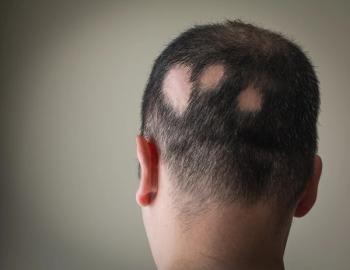
Houston dermatology clinicians compared severity scoring, JAK inhibitor safety data, and psychosocial counseling strategies across 3 alopecia areata patient cases.
The investigational extended-release tablet maintained therapeutic plasma levels while avoiding peaks linked to cardiovascular risk.
Androgenetic alopecia (AGA) continues to be one of the most prevalent dermatologic concerns, with far-reaching psychosocial consequences for patients. While minoxidil remains a mainstay of therapy, its limitations have long been acknowledged. Topical formulations are often hindered by adherence issues, scalp irritation, and cosmetic drawbacks, while oral minoxidil, increasingly prescribed off-label, has yielded inconsistent outcomes.1 At the
Current Challenges with Minoxidil Therapy
The surge in off-label oral minoxidil prescribing since 2022 underscores both its promise and its shortcomings. Fewer than one in ten patients report being satisfied with their current regimen, while nearly half are actively searching for new therapeutic options. For many, dissatisfaction stems from slow or minimal clinical response, adverse effects, or the inconvenience of existing formulations. Presenters stated clinicians, too, have recognized the need for an optimized therapy that can bridge efficacy and tolerability.
The pharmacokinetics of immediate-release oral minoxidil pose a particular challenge. A standard 2.5 to 5 mg dose produces rapid plasma peaks, often exceeding cardiac safety thresholds, while failing to sustain therapeutic concentrations for hair growth. Most drug exposure occurs within 2 hours, creating a mismatch between efficacy and safety. This profile, never intended for hair restoration, has left clinicians using a tool designed for refractory hypertension in an entirely different therapeutic context.
The Extended-Release Approach
VDPHL01 was engineered to address these limitations by delivering plasma levels consistently above the threshold necessary for follicular stimulation while remaining below the concentration associated with cardiac activity. By smoothing the pharmacokinetic curve, the extended-release formulation aims to maximize efficacy while minimizing cardiovascular risk. The mechanistic rationale is compelling: there is a tenfold difference between the concentration required to trigger hair growth and the level associated with adverse cardiac effects. Extending exposure within this therapeutic window could theoretically enhance both the magnitude and visibility of hair regrowth.
Study Design and Findings
The presentation at EADV detailed a blinded retrospective assessment of photographic data comparing VDPHL01 with immediate-release oral minoxidil and topical 5% minoxidil solution. Investigators drew VDPHL01 data from a phase 2 trial, while comparator data were obtained from a randomized clinical trial published in JAMA Dermatology. Board-certified dermatologists, blinded to treatment allocation, evaluated baseline and follow-up scalp images using the Investigator Global Assessment (IGA).
The results were striking. Patients receiving VDPHL01 achieved an average rating corresponding to “moderate improvement,” whereas those on oral immediate-release or topical minoxidil did not reach even “slight improvement” on average. The visual changes were not only measurable but also obvious, with baseline identification accuracy exceeding 96% for VDPHL01 images, compared to 50–73% for comparators. Importantly, the proportion of patients achieving at least moderate improvement was fourfold higher with VDPHL01 -- 82% compared with roughly 20% in the comparator arms. Perhaps most notable was the time course: these benefits were realized in just 4 months of therapy, while comparators required 6 months yet produced far less dramatic responses.
Implications and Limitations
For clinicians accustomed to the modest gains and patient frustrations associated with traditional minoxidil therapy, these findings may feel like a paradigm shift. The potential for a formulation that produces visible, clinically meaningful improvement in the majority of patients within a shorter time frame is particularly compelling in a condition where delayed gratification often undermines adherence. The pharmacologic elegance of sustained-release delivery adds weight to the clinical observations.
Yet, caution is warranted. The study relied on retrospective, blinded assessments rather than prospective, controlled head-to-head comparisons. Cross-trial methodology introduces inherent limitations, as patient populations and study conditions may not have been entirely equivalent. Moreover, while efficacy signals are strong, longer-term data on cardiovascular safety and durability of response remain essential before this formulation can be fully integrated into practice.
Conclusion
The EADV 2025 presentation of VDPHL01 offers a glimpse into what may become a new era for minoxidil therapy. By aligning pharmacokinetics with the biological demands of hair growth while respecting cardiovascular safety, extended-release oral minoxidil demonstrates a level of efficacy and clinical visibility that existing formulations have not achieved. If confirmed in prospective trials, VDPHL01 could represent the most significant advance in AGA management since the introduction of minoxidil itself—transforming a treatment associated with slow, uncertain results into one capable of producing rapid, convincing, and meaningful improvement for patients.
References