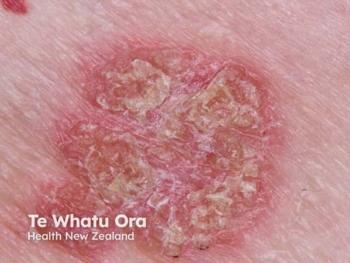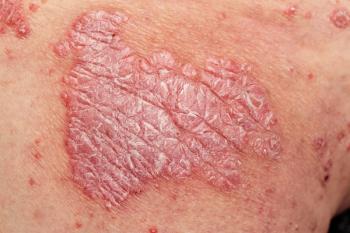
In a retrospective study of 393 patients, 51.9% had at least 1 abnormal LFT during follow-up, but only 1.1% had elevations above 3 times the upper limit of normal.
Late-breaking data shared at AAD 2026 supports oral TYK2 envudeucitinib's efficacy and safety in moderate-to-severe plaque psoriasis.
Alumis Inc. has announced positive phase 3 results for envudeucitinib, an oral, highly selective tyrosine kinase 2 (TYK2) inhibitor, demonstrating significant improvements in skin clearance, symptom burden, and quality of life in patients with moderate-to-severe plaque psoriasis. The findings, presented in a late-breaking session at the 2026
“[Envudeucitinib] has been specifically designed to be an allosteric inhibitor that's specific for TYK2 to avoid blockade of JAK1, JAK2, and JAK3. So we know that's important, because we don't want to have side effects associated with classic JAK blockade,” said Andrew Blauvelt, MD, MBA, dermatologist, investigator of the trials, and owner of Blauvelt Consulting, LLC, during the late-breaking presentation at AAD.2
These results come from the global phase 3
Envudeucitinib demonstrated robust and rapidly progressive efficacy across both trials. High levels of skin clearance were observed as early as week 4 and continued to improve through week 24. PASI 90 responses were achieved by 59.9% and 53.1% of treated patients at week 16, compared with fewer than 5% in placebo arms, increasing further to 68.0% and 62.1% at week 24. Complete skin clearance (PASI 100) followed a similar trajectory, with approximately 30% of patients achieving this endpoint at week 16 and rising to 41.0% and 39.5% by week 24.
“I like to highlight that the PASI 100 at week 24 gets up to the 40% range,” Blauvelt said.2
Notably, the clinical benefits of envudeucitinib extended beyond skin clearance to include early and meaningful improvements in patient-reported outcomes. Reductions in pruritus were observed as early as week 2, with patients achieving an average improvement of more than 4 points on the Worst Pruritus Numeric Rating Scale by week 16. Quality-of-life gains also emerged early, with approximately half of patients achieving Dermatology Life Quality Index (DLQI) scores of 0 or 1 by week 12. As the press release notes, these improvements in itch and quality of life preceded PASI 90 responses.
“The DLQI actually significantly starts to improve at week 2, prior to any real significant changes in skin. So the DLQI seems to be paralleling the itch response in that first month of treatment,” Blauvelt said.2
“What stands out with envudeucitinib in these trials is how quickly patients begin to feel relief from symptoms, and how deeply those improvements continue to build,” Blauvelt commented. “For people living with the daily burden of plaque psoriasis, this degree of skin clearance and symptom improvement from an oral investigational drug is impressive, especially when high‑impact sites are involved.”1
The therapy also demonstrated notable efficacy in high-impact and difficult-to-treat areas. Scalp psoriasis responses were rapid and substantial, with more than 30% of patients achieving clear or almost clear scalp (ss-PGA 0/1) as early as week 4, increasing to approximately 75% by the end of the trial among those with moderate-to-severe baseline involvement.
Safety and tolerability findings were consistent with prior clinical research. Envudeucitinib was generally well tolerated through 24 weeks, with most treatment-emergent adverse events classified as mild to moderate, transient, or responsive to standard management. The most commonly reported adverse events included headache, nasopharyngitis, upper respiratory tract infection, and acne. No new safety signals were identified, and no clinically significant laboratory abnormalities or cases of tuberculosis reactivation were observed.
Envudeucitinib is a next-generation, allosteric TYK2 inhibitor engineered to provide sustained, near-complete 24-hour target inhibition. By selectively modulating TYK2 signaling, the therapy impacts key inflammatory pathways, including IL-23, IL-17, and type I interferon signaling, which are central to psoriasis pathogenesis. Its high selectivity is designed to minimize off-target effects associated with broader Janus kinase inhibition, while maintaining robust anti-inflammatory efficacy.
The ONWARD clinical program includes an ongoing long-term extension study (ONWARD3) to assess the durability of response and long-term safety. Alumis has indicated plans to submit a New Drug Application to the US Food and Drug Administration in the second half of 2026.
“Envudeucitinib delivered the level of skin clearance, symptom relief, and safety in Phase 3 that the TYK2 mechanism has long promised but that has not been fully realized—until now—with sustained, maximal 24-hour inhibition of the IL-23 / IL-17 pathways,” said Jörn Drappa, MD, PhD, Chief Medical Officer of Alumis. “The depth of clinical response, together with the favorable safety profile observed, underscores a differentiated clinical profile among marketed and investigational oral options and supports envudeucitinib’s potential to play a leading role in the treatment of patients with moderate‑to‑severe plaque psoriasis.”1
References
1. Alumis’ Envudeucitinib Delivers Early and Robust Improvements in Skin Clearance, Quality of Life, and Psoriasis Symptoms in Two Phase 3 Trials, Underscoring Its Potential as a Leading Oral Therapy for Plaque Psoriasis. News release. Alumis. March 28, 2026. Accessed March 28, 2026.
2. Blauvelt A. Envudeucitinib (ESK-001) in moderate-to-severe plaque psoriasis: 24-week results from the randomized, double-blind, active comparator- and placebo-controlled, Phase 3 ONWARD 1 and 2 studies. Presented at: 2026 American Academy of Dermatology Annual Meeting; March 27-30, 2026; Denver, CO.