


Learn more about the in-depth topics covered in the June 2026 print issue of Dermatology Times.
Learn more about the in-depth topics covered in the June 2026 print issue of Dermatology Times.

Lim considers mentoring and helping develop the next generation of dermatologists one of his most meaningful contributions to the specialty.

Andrew Krakowski, MD, encourages involving both caregivers and children in treatment decisions, giving young patients a sense of ownership that can significantly improve adherence.

New data show that nearly two-thirds of Sun Bus participants had never visited a dermatologist, highlighting persistent gaps in access to skin cancer care.

Career decisions in dermatology are too often driven by emotion rather than data, according to a new practice management column examining common pitfalls in contract evaluation and compensation negotiations.

Innovations in packaging, formulation design, and alternative preservation strategies may reduce preservative concentrations, but they are unlikely to eliminate the need for preservatives entirely.
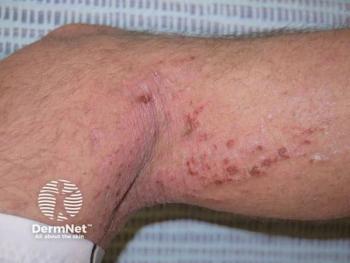
Data from the BroADen trial suggest that targeting STAT6 through protein degradation may offer a novel oral approach to controlling type 2 inflammation in atopic dermatitis.

Because BCC and cSCC have high tumor mutational burdens driven by UV-induced DNA damage, they are particularly well suited to immune checkpoint inhibition.

In clinical practice, digital twins could predict how individual patients respond to treatments based on factors such as genetics, skin barrier function, and lifestyle patterns.
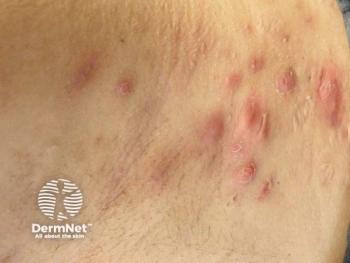
A phase 2 clinical trial found that topical ruxolitinib cream showed promising efficacy and safety in patients with mild to moderate hidradenitis suppurativa.

The June issue of Dermatology Times highlights the latest advances in skin cancer, psoriasis, atopic dermatitis, hidradenitis suppurativa, and emerging dermatology technologies.

Rapid GLP-1 weight loss can age the face—a new paper reviews multimodal nonsurgical fixes with fillers, Botox, devices, and skin care for natural balance.

Resource-poor environments exist not only globally but also in everyday settings like nursing homes, prisons, foster care, and low-income households.