

Patients are being victimized by the high cost of drug therapy. "We can help them by prescribing less expensive drugs and by guiding them to the least expensive places to purchase them," says Dr. Norman Levine.
Patients are being victimized by the high cost of drug therapy. "We can help them by prescribing less expensive drugs and by guiding them to the least expensive places to purchase them," says Dr. Norman Levine.

In this quiz, Kaivon Sobhani, B.S., and, Eve Lowenstein, M.D., Ph.D., FAAD, address dermatofibrosarcoma protuberans (DFSP), keloids, hypertrophic scars and dermatofibromas.

In this review article, Kaivon Sobhani, B.S., and, Eve Lowenstein, M.D., Ph.D., examine fibrotic skin lesions, including the cutaneous tumor dermatofibrosarcoma protuberan (DFSP).

The July issue of Dermatology Times highlights some newly approved treatments in dermatology including a new wrinkle filler and new treatment for seborrheic keratosis.
Only 20% of mobile dermatology apps designed for patients may be worthwhile, shows an analysis published in February in the online journal Cutis. Learn more in this slideshow.

Physicians writing in the Journal of the American Academy of Dermatology say that physicians should counter the proliferation of fake news on climate change.

A novel picosecond/nanosecond 670 nm wavelength is safe and effective for the treatment of benign pigmented lesions.

Dr. Jam is a successful medical and cosmetic dermatologist who posted a video online intended as a promotional video. His patients are suing claiming negligence. Learn more here.

Superficial chemical peels have a relatively low complication rate in patients with darker skin types when performed appropriately, a study finds.

There is increasing patient injury and legal action from cutaneous laser surgery, particularly when performed by non-physicians.
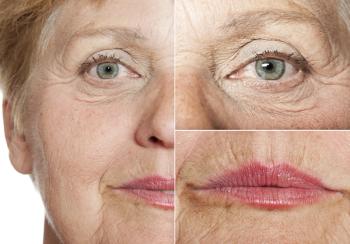
Despite the popularity of fractional ablative resurfacing, full-field erbium resurfacing still has an important role in skin rejuvenation.

Study shows how primary care and dermatology practices can collaborate to serve underserved populations.

Eosinophilic fasciitis is a rare condition for which there are no established diagnostic criteria or clinical guidelines for its management.

Years ago antibiotics were used to treat acne because it was thought that the condition was an infectious disease, says Dr. Hilary Baldwin of the Rutgers Robert Wood Johnson Medical School.

Review highlights the need to accurately diagnose this common bacterial infection.

The cost of skin cancer treatments continue to increase in the United States where a large proportion of expenditures stem from the cost of systemic agents for melanoma.

The skin care industry promotes products designed for sensitive skin, yet dermatologists are concerned about the use of skin care products for skin disease.

Some melanoma patients prefer fewer follow-up visits, but only if self-skin examinations were utilized at home or teledermatology implemented for a quick assessment.

The AMA’s chief information officer talks digital health technology with Dermatology Times.
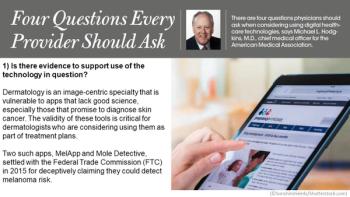
There are four questions physicians should ask when considering using digital healthcare technologies, says Michael L. Hodgkins, M.D., chief medical officer for the American Medical Association. View the slideshow for more information.
Changing the schedule of targeted therapies has been shown to improve the response rate in a mouse model of melanoma.
The combination of encorafenib plus binimetinib significantly improved overall survival versus vemurafenib in patients with BRAF-mutant melanoma, updated results of the randomized, phase three COLUMBUS trial show.
Pembrolizumab has antitumor activity that is durable long after treatment is stopped in patients with advanced melanoma, researchers reported at the 2018 annual meeting of the American Society of Clinical Oncology (ASCO) on June 4.
Eczema, food allergy, and asthma independently and cumulatively increase the risk for eosinophilic esophagitis (EoE), according to findings presented at the 2018 American Academy of Allergy, Asthma & Immunology and World Allergy Organization Joint Congress in Orlando.
Staging system is derived from a new dataset of patients from 10 cancer centers around the world. Dermatologists should consider AJCC tumor characteristics as well as other factors in risk assessment, counseling, and follow-up plans for patients. Update takes effect in January 2018.