









Catch up on dermatology news, highlights, and insights from the past 24 hours.
Catch up on dermatology news, highlights, and insights from the past 24 hours.

Eve Arnera and Thandiwe Munaiwa, MD, spoke about the groundbreaking collaboration between SkinCeuticals and ReSurge International, “Pioneering Women in Reconstructive Surgery.”

Catch up on dermatology news, highlights, and insights from the past 24 hours.

The review also found that female patients with non melanoma skin cancer demonstrated a greater risk of completed suicide compared to members of a control group.
Catch up on dermatology news, highlights, and insights from the past 24 hours.
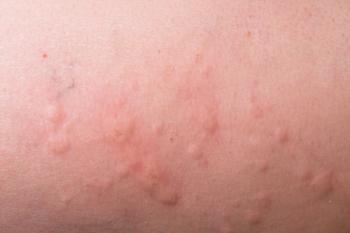
Tezepelumab reduced CSU activity post-treatment through week 32, suggesting a delayed, sustained TSLP blockade effect.

According to a survey, both patients and clinicians are unsatisfied with the current therapeutic landscape and are looking for options that better fulfill patient needs.

This review of the latest dermatologic studies includes insights into supporting laser tattoo removal for adults impacted by the justice-system, a case of blastic plasmacytoid dendritic cell neoplasm, and more.

Catch up on dermatology news, highlights, and insights from the past 24 hours.

A pilot study revealed that mitochondrial complex I-blocking drugs, like metformin and berberine, improved TSW symptoms in most participants.

Join Dermatology Times in celebrating the women who make this field shine through their patient interactions, clinical insights, and research.

Catch up on dermatology news, highlights, and insights from the past 24 hours.

Experts stressed the importance of dermatologists engaging in climate advocacy and adopting sustainable practices, as their actions may inspire others to follow suit.

Tomassian noted unrealistic beauty standards fueled by social media filters and edited images have led to distorted expectations.
Explore the top headlines of the week including insights on L'Oréal’s voluntary recall of benzoyl peroxide products, the impact of GLP-1 medications on skin health, and more 2025 conferences.

Test your knowledge of key words and terms associated with dermatology news from the previous week.

In case you missed it, this week we had news about the FDA voluntary benzoyl peroxide recalls, the National Eczema Association's strategic efforts, recaps of this week’s AAD Annual Meeting, and more.
This week, we feature top articles from our sister publications on FDA updates, Medicaid pricing, and more.

Catch up on dermatology news, highlights, and insights from the past 24 hours.

Karl Yen of Sanofi discussed the role of amlitelimab in AD following sustained results and a promising safety profile presented in data at AAD.
Novartis highlighted key findings at AAD and AAAAI, showcasing Cosentyx's flexible dosing for hidradenitis suppurativa and remibrutinib’s efficacy for chronic spontaneous urticaria.

By staying authentic and leveraging real patient experiences, Tomassian ensures his content remains valuable and trustworthy.

Catch up on dermatology news, highlights, and insights from the past 24 hours.

EltaMD’s Derm Difference campaign honors dermatologists’ expertise in skin health, cancer prevention, and confidence-boosting care.

Catch up on dermatology news, highlights, and insights from the past 24 hours.