




Lead investigator Leon Kircik, MD, emphasized the need for collaboration between clinicians, technologists, and policymakers to maximize VR/AR’s potential.
Lead investigator Leon Kircik, MD, emphasized the need for collaboration between clinicians, technologists, and policymakers to maximize VR/AR’s potential.

This review of the latest dermatologic studies includes insights into comorbidities, innovative therapies, and ultrasound for HS.

Catch up on dermatology news, highlights, and insights from the past 24 hours.

This collective initiative gives Mindy Haws, MD, and her team the ability to reach more women in a way that gives back and helps them succeed.

Researchers reported that propranolol initiation for infantile hemangiomas in pediatric patients is safe, with no significant complications, suggesting reduced need for intensive monitoring.

Catch up on dermatology news, highlights, and insights from the past 24 hours.

Mindy Haws, MD, spoke to Dermatology Times about the new videos, podcasts, and other resources LIMITLESS offers for women at all stages of their careers.
Explore the top headlines of the week including the expanding role of NPs and PAs, a clinician’s guide to chemical peels, and recently announced therapeutic updates.

Test your knowledge of key words and terms associated with dermatology news from the previous week.

In case you missed it, this week we had news about Arcutis’ new seborrheic dermatitis initiative with Odell Beckham Jr., Zabalafin’s IND for atopic dermatitis, dupilumab as a potential BP treatment, and more.

This week, we feature top articles from our sister publications on women in health care, the relationship between the public and insurance companies, and more.

Catch up on dermatology news, highlights, and insights from the past 24 hours.

Geological particles can cause skin irritation, allergies, and long-term dermatological conditions.

A study found that 65.8% of US adults distrust their health care system’s use of AI, highlighting a need for better communication on AI tools.

A study found that vitiligo patients had a higher incidence of COVID-19 than those with psoriasis or atopic dermatitis.

Catch up on dermatology news, highlights, and insights from the past 24 hours.
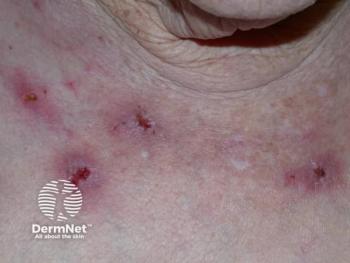
In this CME article, learn more about the interdisciplinary field of psychodermatology and the collaborative health care team necessary for care.

Catch up on dermatology news, highlights, and insights from the past 24 hours.
This review of the latest dermatologic studies includes insights into scuba diving's dermatological impacts, the impact of COVID-19 and vaccination on dermatological immune-mediated inflammatory diseases, and more.

Catch up on dermatology news, highlights, and insights from the past 24 hours.

Catch up on dermatology news, highlights, and insights from the past 24 hours.
Explore the top headlines of the week including the expanding role of NPs and PAs, a clinician’s guide to chemical peels, and recently announced therapeutic updates.
In case you missed it, this week we had news about rezpegaldesleukin’s fast track designation for AD, bimekizumab’s long-term efficacy for HS, conference recaps of SBS and MOPD, and more.

Catch up on dermatology news, highlights, and insights from the past 24 hours.

A global review found that skin condition advocacy groups offer diverse mental health resources, but accessibility gaps persist worldwide.