





Atopic Dermatitis
Latest News
Advertisement
Latest Videos








Advertisement
More News
As 2024 comes to a close, Dermatology Times is taking a look back at the studies, therapies, and advances in atopic dermatitis this year.

James Song, MD, FAAD, discusses how improving patient adherence to atopic dermatitis treatments requires addressing barriers such as cost, treatment complexity, and patient education, while highlighting how emerging therapies and simplified regimens may help overcome these challenges in the future.
A panelist discusses how the current treatment options for atopic dermatitis range from topical corticosteroids and calcineurin inhibitors for mild cases to systemic medications such as dupilumab and Janus kinase inhibitors for moderate-to-severe disease, with selection based on factors such as disease severity, patient age, and safety considerations.
James Song, MD, FAAD, discusses how recent advancements in atopic dermatitis treatment include targeted biologics and Janus kinase inhibitors that offer promising alternatives to traditional therapies for patients with moderate-to-severe disease.

A panelist discusses how the choice between systemic and topical treatments for pediatric atopic dermatitis (AD) depends on factors such as disease severity, impact on quality of life, affected body surface area, and response to previous therapies.
A panelist discusses how atopic dermatitis presents and is managed differently in adults vs children, with adults typically experiencing more localized lesions and chronic lichenification while children tend to have more widespread involvement and acute inflammation.

In a meta-analysis of over 61 million participants, it was found that AD patients have a 37% risk of developing IBD and similar conditions.

Karan Lal, DO, MS, FAAD, discusses how building a collaborative care network between parents, caregivers, and school staff is crucial for successful management of pediatric atopic dermatitis through consistent treatment application, trigger avoidance, and emergency response planning.
A panelist discusses how treating pediatric atopic dermatitis requires special attention to age-appropriate therapies, family education, adherence challenges, and the impact on children’s quality of life, including sleep and social development.
Karan Lal, DO, MS, FAAD, discusses how physicians can distinguish pediatric atopic dermatitis from similar skin conditions through key clinical features such as characteristic rash distribution, intense itching, and family history of atopic diseases.

Nemolizumab is intended for use in combination with topical corticosteroids and/or calcineurin inhibitors in this indication.

The approval is based on positive data stemming from the ADORING clinical trial program.

The supplemental New Drug Application is supported by positive results from the INTEGUMENT-PED and INTEGUMENT-OLE trials.

Join Dermatology Times’ quarterly editor in chief Raj Chovatiya, MD, PhD, MSCI, as he reviews key updates in atopic dermatitis.

Swanson and Lockshin explored how PDE4 inhibitors improve quality of life for AD patients through targeted treatments that address both inflammation and chronic symptoms.
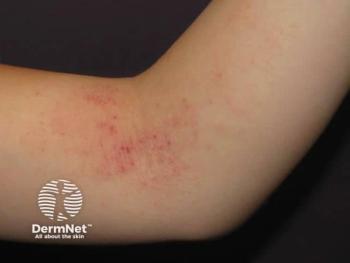
The review found AD can disrupt family life, as caregiving responsibilities can lead to stress, guilt, and reduced opportunities for shared activities.

Panelists discuss how managing atopic dermatitis presents complex clinical challenges, including treatment resistance, medication adherence, identifying triggers, and tailoring therapies to individual patient needs and disease severity.
Panelists discuss how patients with atopic dermatitis face numerous obstacles to optimal care, including limited access to specialists, high treatment costs, inadequate insurance coverage, and the need for more effective long-term management options.
Panelists discuss how atopic dermatitis presents and requires different management approaches across age groups, with distinct challenges in diagnosis, treatment adherence, and quality of life impacts between pediatric and adult populations.

A study using proteome-wide association techniques identified novel protein biomarkers for atopic dermatitis.

Although all observed treatments showed efficacy, the 30 mg dosage of upadacitinib was most successful in relieving itch for atopic dermatitis patients.

The exclusive event brought together physician assistants and nurse practitioners from across the country to review atopic dermatitis and psoriasis patient cases.

Gina Mangin, MPAS, PA-C, discusses how measuring atopic dermatitis treatment success requires evaluating multiple factors, including reduction in itch intensity, improvement in sleep quality, decreased flare frequency, enhanced quality of life, and visible skin healing through standardized assessment tools and patient-reported outcomes.
Gina Mangin, MPAS, PA-C, discusses how identifying atopic dermatitis triggers involves carefully tracking patient exposure to common irritants such as soaps, fabrics, allergens, stress, and environmental factors while monitoring symptom flare-ups to develop targeted prevention strategies.
Gina Mangin, MPAS, PA-C, discusses how developing an effective atopic dermatitis treatment plan requires a personalized, multifaceted approach that combines proper skin care, trigger avoidance, topical medications, and potentially systemic therapies based on the severity of symptoms and individual patient needs.
Advertisement
Advertisement
Trending on Dermatology Times
1
FDA Approves Baricitinib for Adolescents With Severe Alopecia Areata
2
Dr. Charrow Highlights Earlier Biologic Use and Deroofing in Hidradenitis Suppurativa
3
From Mechanism to Management: Navigating Male Pattern Hair Loss and New Topical Therapies
4
Tremfya Meets Primary, Major Secondary Endpoints in Phase 4 STAR Study of Axial PsA
5