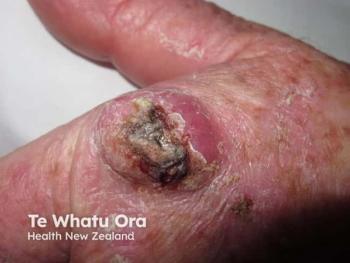
Shannon Trotter, DO, moderated a Dermatology Times Case-Based Roundtable event on how pharmacokinetics, adverse event timing, and trial response criteria should shape hedgehog pathway inhibitor selection in advanced BCC.
A split-face trial finds adding ivermectin to KTP laser modestly boosts rosacea redness reduction and cuts papules/pustules, without extra downtime.
A randomized, evaluator-blinded split-face clinical trial evaluated whether adding topical ivermectin 1% cream enhances the efficacy of potassium–titanyl-phosphate (KTP) 532 nm laser therapy for treating facial erythema in patients with rosacea.1 The combination regimen was safe and well-tolerated, supporting its potential role as an adjunctive strategy in laser-based rosacea management.
Persistent erythema and telangiectasia are hallmark features of rosacea and are commonly treated with vascular lasers. However, because rosacea is a chronic relapsing condition, optimizing treatment strategies that maximize outcomes while minimizing the number of laser sessions remains an important goal.
Topical ivermectin targets Demodex mites, which are present in increased density in rosacea and may contribute to inflammation through activation of innate immune pathways such as toll-like receptor signaling. In addition, ivermectin has been shown to downregulate proinflammatory mediators involved in rosacea pathogenesis, including IL-8, LL-37, TNF-α, and other inflammatory pathways.2
The single-site, evaluator-blinded, randomized split-face study (
The primary endpoint was the change in the Normalized Erythema Index (NEI), an objective measure of facial redness derived from standardized digital image analysis. Secondary endpoints included the Skin Redness Index (SRI), Clinical Erythema Assessment (CEA), Physician Global Assessment (PGA), telangiectasia severity scores, counts of papules and pustules, patient satisfaction, and safety outcomes.
At baseline, there were no significant differences between the 2 treatment sides in erythema indices, telangiectasia severity, or inflammatory lesion counts. By week 16, both treatment approaches produced significant improvements in erythema and overall disease severity. However, the side treated with both KTP laser and topical ivermectin demonstrated a significantly greater reduction in NEI compared with laser alone. The median relative reduction in NEI was 16.6% on the combination side versus 5.3% on the laser-only side (p = 0.04).
Despite this difference in the primary objective measure, other erythema-related assessments did not show statistically significant differences between the treatment arms. Reductions in the SRI, CEA scores, telangiectasia severity, PGA ratings, and patient satisfaction were similar on both sides of the face. Nonetheless, when outcomes were analyzed across all visits using mixed models, the combination treatment showed a statistically significant overall improvement in NEI compared with laser alone.
The most notable additional benefit of ivermectin was observed in the reduction of inflammatory lesions. Across all study visits, the combination side showed a significantly greater reduction in papules and pustules compared with laser treatment alone (p = 0.02). Both treatment arms demonstrated significant decreases in inflammatory lesion counts over time, but the improvement was more pronounced when ivermectin was included.
Safety outcomes were favorable for both treatment strategies. No serious adverse events were reported during the study. Post-treatment effects such as redness, edema, and purpura occurred at similar rates on both sides of the face, and the addition of ivermectin did not significantly increase downtime following laser treatment. Overall tolerability was good, and adherence to topical therapy was high.
Several limitations should be considered when interpreting the results. The study sample was relatively small, and the split-face design may have allowed for potential crossover effects from systemic absorption of topical ivermectin. Additionally, participants generally had low baseline inflammatory activity, which may have limited the ability to detect larger differences in erythema-related clinical scores. The inclusion of patients with variable flushing patterns may also have influenced photographic redness measurements.
Despite these limitations, the study confirms that KTP 532 nm laser therapy effectively improves both erythema and inflammatory lesions in rosacea. Adjunctive use of topical ivermectin appears to provide additional benefit in reducing papules and pustules and may modestly enhance improvements in objective erythema measurements.
References
1. Heidemeyer K, Cazzaniga S, Junge A, et al. Treatment of redness in rosacea with potassium-titanyl-phosphate (KTP) 532 nm laser with and without topical 1% ivermectin cream: a randomized split-face trial. J Dermatolog Treat. 2026;37(1):2635882. doi:10.1080/09546634.2026.2635882
2. Chen C, Wang P, Zhang L, et al. Exploring the Pathogenesis and Mechanism-Targeted Treatments of Rosacea: Previous Understanding and Updates. Biomedicines. 2023;11(8):2153. Published 2023 Jul 31. doi:10.3390/biomedicines11082153