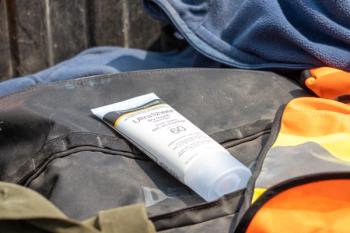
Two new Neutrogena facial sunscreens incorporate bemotrizinol, the first new sunscreen active ingredient added to the US OTC monograph in decades.
Two clinic cases illustrate why dermatologic providers must apply broad general medicine training in every encounter.
A patient came into clinic complaining of itching that had been going on for 30 years. On the surface, this sounds like a routine chief complaint — the kind we encounter daily. We've all learned to navigate hyperbolic statements, and sometimes it's tempting to dismiss them. But other times, the experience is very real, and our job is to differentiate the dramatic from the truly suffering.
This particular patient was a longstanding one of mine. As my medical assistant briefed me before the visit, I paused and asked, "Is this the elderly woman I see regularly for her extensive history of skin cancer?" They nodded. I walked in, greeted her warmly, and began my standard history — type of itch, duration, relieving and exacerbating factors, the usual. She doubled down, insisting the itching had persisted for 3 decades. I scanned her arms and trunk and found nothing: no erythema, no induration, no wheals, no rash whatsoever.
After talking with her a bit longer, I asked what must have seemed like an odd question: "This may sound unrelated, but have you been urinating more frequently, or experienced any pain with urination?" She nodded. I suspected a UTI, called her primary care physician, and got her in that same day. Sure enough, her urine dipstick was positive and she was started on antibiotics. She recovered — and her itch resolved with it.
The reason I share this story is to encourage us as dermatologic providers not to forget our foundational training in general medicine. Stay alert, ask the questions, and don't dismiss the patient. This was made easier for me because of the years I had spent with this patient and the rapport we had built. Something felt off — in her answers, in her presentation — and that instinct pushed me to think beyond skin-based causes. It is easy to label patients as "difficult" or write off their complaints, but we must always consider the full picture.
A second patient came in for evaluation of a painful lump in her axilla — new, abrupt in onset, and not improving. I had seen her before for adult-onset acne, and I knew her breakouts were exacerbated by hormonal therapy. On examination, I palpated the axillary vault for the usual suspects: a cyst, early hidradenitis suppurativa, lymphadenopathy etc. Nothing. She mentioned her arm felt heavy, which she attributed to pain radiating from the axilla. Pulses were intact, no erythema, no induration.
Further history revealed she had just returned from a ski trip, though she denied any falls or trauma she could recall. My suspicion shifted immediately to a possible blood clot — given her hormone replacement therapy and a recent long flight. I sent her to her primary care physician for imaging, and indeed, she had clots in her arm and axilla. She has since made a full recovery.
This is another example of why we must trust our clinical judgment and follow the history wherever it leads.
I hope these cases inspire you to play detective in your own practice. After all, Sherlock Holmes — perhaps the most famous fictional detective — was actually modeled after a dermatologist. Sir Arthur Conan Doyle based the character on his attending physician, Dr. Joseph Bell, whose gift for keen observation and diagnostic reasoning lives on in all of us who dare to look beyond the obvious.